
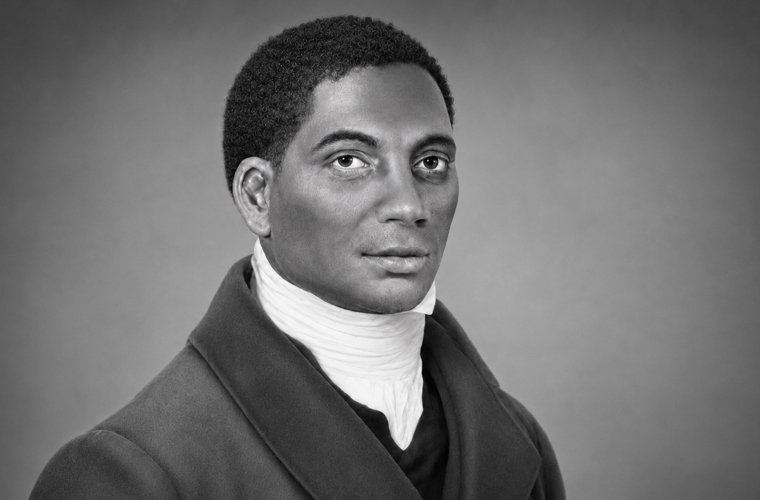
John Gloucester (1776–1822) was a pioneering African American Presbyterian minister, educator, and church founder who played a foundational role in the development of Black Presbyterianism in the United States. He is widely recognized as the first African American to be ordained as a Presbyterian minister in the U.S. and the founder of the First African Presbyterian Church in Philadelphia—the first African American Presbyterian congregation in the nation. Born into slavery in 1776 in Blount County, Tennessee (the same year the Declaration of Independence was signed), Gloucester was originally named Jack. Even while enslaved, he demonstrated remarkable faith and evangelistic zeal, converting other enslaved people to Christianity at an early age.
His life changed when Rev. Gideon Blackburn, a white Presbyterian minister and missionary at New Providence Presbyterian Church, recognized his potential. Blackburn personally taught him theology and other subjects, then purchased him specifically to secure his freedom. Although a petition to the Tennessee legislature was initially denied, Blackburn obtained a certificate of manumission through local courts in 1806. Upon gaining freedom at around age 30, Jack adopted the name John Gloucester.
Education and Path to Ministry
Gloucester pursued formal religious training and became the first African American student at Greeneville College (now Tusculum University) in 1806. He was among only a handful of African Americans receiving college-level religious instruction at the time. In 1807, he traveled with Blackburn to Philadelphia. There, he began preaching to free Black residents, many of whom were seeking a Presbyterian worship community. His early sermons in a house on Gaskill Street attracted growing crowds, leading to the organization of the First African Presbyterian Church in 1807. The congregation later moved to a larger space at the corner of 7th and Shippen (now Bainbridge) Streets, where a dedicated church building was constructed and dedicated in 1811. Gloucester’s path to full ordination involved several steps. He was licensed to preach by the Presbytery of the Union in East Tennessee and later sent on missionary work, including a period in Charleston, South Carolina. He returned to Tennessee and was formally ordained on April 13, 1810, at Baker’s Creek Presbyterian Church in Maryville, Tennessee.
Family and Personal Life
While still enslaved, Gloucester had married Rhoda. Their family remained in bondage in Tennessee after his manumission. He worked diligently to raise funds—eventually gathering around $1,500—to purchase their freedom. His wife and four children (John Jr., Jeremiah, Stephen, and Mary) joined him in Philadelphia around 1810. A fifth child, James, was born free in Philadelphia.
All four sons followed in their father’s footsteps and became Presbyterian ministers:
- John Jr., Jeremiah, and Stephen pastored in Philadelphia.
- Jeremiah founded the Second African Presbyterian Church (1824).
- Stephen founded Lombard Central Presbyterian Church (1844).
- James founded Shiloh Presbyterian Church in Brooklyn, New York (1849).
Ministry and Legacy
Gloucester served as pastor of the First African Presbyterian Church until his death. He mentored prominent figures, including Samuel Cornish (a key early African American Presbyterian leader and journalist), who spent formative years under his influence in Philadelphia from 1815 onward. He died of pneumonia on May 2, 1822, in Philadelphia at approximately age 45–46. His congregation continued to grow and evolve, eventually contributing to New River Presbyterian Church in West Philadelphia through mergers and moves. Gloucester’s pioneering work helped establish a strong tradition of Black Presbyterian leadership and independent Black congregations in the early 19th century. Memorials to his legacy include the John Gloucester Memorial Scholarships administered by the Presbytery of Boston for Presbyterian college students.
Historical Significance
John Gloucester’s life exemplifies resilience, faith, and determination in the face of slavery and systemic barriers. From enslaved evangelist to ordained minister and church founder, he blazed a trail for African American Presbyterianism that endures more than two centuries later. His story, drawn from sources like Octavius Catto’s A Semi-Centenary Discourse, continues to inspire congregations and scholars of American religious history.