
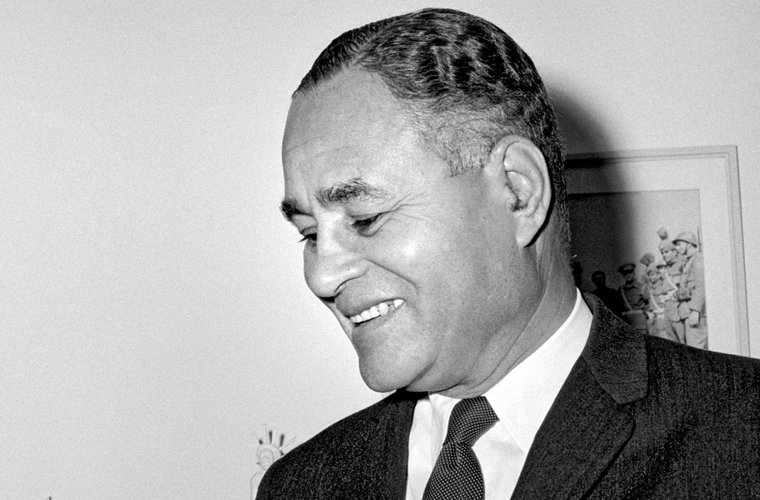
Ralph Johnson Bunche (August 7, 1904 – December 9, 1971) was an American political scientist, diplomat, and United Nations official who became the first African American and the first person of African descent to win the Nobel Peace Prize. He received the award in 1950 for his mediation of the 1949 Armistice Agreements between Israel and Arab states following the 1948 Arab–Israeli War. Bunche was born in Detroit, Michigan, to Fred Bunche, a barber who served a white-only clientele, and Olive (Johnson) Bunche, an amateur musician. His maternal grandmother, Lucy Taylor Johnson (often called “Nana”), who had been born into slavery, played a pivotal role in his upbringing and instilled in him a strong sense of racial pride and self-belief.
When Bunche was around 10, the family moved to Albuquerque, New Mexico, hoping the dry climate would help his parents’ health. Both parents died within a few years (his mother from tuberculosis in 1917), leaving Bunche and his sisters in the care of their grandmother. The family relocated to the South Central neighborhood of Los Angeles in 1918. Bunche contributed to the household finances through odd jobs such as selling newspapers and working as a houseboy.
Despite these hardships, Bunche excelled academically and athletically. He was valedictorian of Jefferson High School, where he participated in debate, football, basketball, baseball, and track. He attended the University of California, Los Angeles (UCLA) on an athletic scholarship, working as a janitor to cover personal expenses. In 1927, he graduated summa cum laude and as valedictorian with a major in international relations, also earning membership in Phi Beta Kappa.


He earned a master’s degree in political science from Harvard University in 1928. With support from a Rosenwald Fellowship and funds raised by the Black community in Los Angeles, he conducted research in Africa for his doctoral work. In 1934, he became the first African American to earn a PhD in political science from an American university (Harvard), with a dissertation on “French Administration in Togoland and Dahomey” that won the Toppan Prize. He later pursued postdoctoral studies in anthropology at Northwestern University, the London School of Economics, and the University of Cape Town.
Academic and Early Career
Bunche joined the faculty of Howard University in 1928, founding and chairing its Department of Political Science (1928–1950). He was a key figure in the Howard School of International Relations and influenced generations of students. In 1936, he published A World View of Race, critiquing race as a social construct used to justify prejudice and imperialism. He contributed significantly to Gunnar Myrdal’s landmark study An American Dilemma (1944) as chief research associate, focusing on racial dynamics in the United States. During World War II, he worked in the Office of Strategic Services (OSS, precursor to the CIA) as a senior analyst on colonial affairs. He later transferred to the U.S. State Department, where he advised on African and colonial issues.
United Nations Career and Peacekeeping
Bunche was deeply involved in the founding of the United Nations. He participated in the 1944 Dumbarton Oaks Conference and the 1945 San Francisco Conference that drafted the UN Charter. He joined the UN Secretariat in 1946 as head of the Trusteeship Department, playing a major role in decolonization efforts in Africa and Asia. He helped draft chapters on non-self-governing territories and trusteeship, and championed self-determination and equal rights.
His most famous achievement came in the late 1940s amid the Arab–Israeli conflict. Appointed as chief aide to UN mediator Count Folke Bernadotte, Bunche took over as acting mediator after Bernadotte’s assassination in September 1948. Based on the island of Rhodes, he conducted intense negotiations—famously including billiards sessions with Israeli representative Moshe Dayan—leading to the 1949 Armistice Agreements between Israel and Egypt, Jordan, Lebanon, and Syria. This success earned him the 1950 Nobel Peace Prize; he was the first Black Nobel laureate.
Bunche rose to become UN Under-Secretary-General for Special Political Affairs (1957) and later Under-Secretary-General. He oversaw or mediated numerous crises, including the 1956 Suez Crisis (Sinai), the 1960 Congo Crisis (as special representative under Dag Hammarskjöld), Yemen (1963), Cyprus (1964), India-Pakistan (1965), and Bahrain (1970). He was instrumental in UN peacekeeping operations and decolonization. He briefly served as acting Secretary-General in 1953 and maintained a close working relationship with several UN leaders.
Civil Rights and Broader Impact
Though his UN role limited overt activism, Bunche was a lifelong advocate for civil rights. He supported the NAACP, participated in the 1963 March on Washington, and marched with Martin Luther King Jr. in the 1965 Selma to Montgomery marches. He criticized segregation and racial prejudice as scientifically baseless and incompatible with democracy, while urging both Black and white Americans toward responsibility and equality. He served on the New York City Board of Education and various university boards, and received numerous honors, including the Spingarn Medal (1949), the Presidential Medal of Freedom (1963), and dozens of honorary degrees.
Personal Life and Legacy
In 1930, Bunche married Ruth Ethel Harris, a teacher he met at Howard University. They had three children: Joan (1931–2015), Jane (1933–1966, whose death was ruled a suicide), and Ralph Jr. (1943–2016). He had grandchildren, including diplomat Ralph J. Bunche III. Bunche suffered from diabetes, heart disease, and kidney issues in later years. He resigned from the UN in 1971 and died on December 9, 1971, in New York City at age 67. He is buried in Woodlawn Cemetery in the Bronx.
Ralph Bunche’s legacy endures as a symbol of intellectual excellence, diplomatic skill, and commitment to peace and justice. Institutions like the Ralph J. Bunche Center at UCLA, schools, and programs (such as the APSA’s Ralph Bunche Summer Institute) honor his contributions to education, international relations, and civil rights. He exemplified the belief that “no problem in human relations is insoluble” through reason, persistence, and optimism.
His life story—from overcoming poverty and racial barriers in early 20th-century America to shaping global institutions—remains an inspiring testament to the power of education and principled diplomacy.