
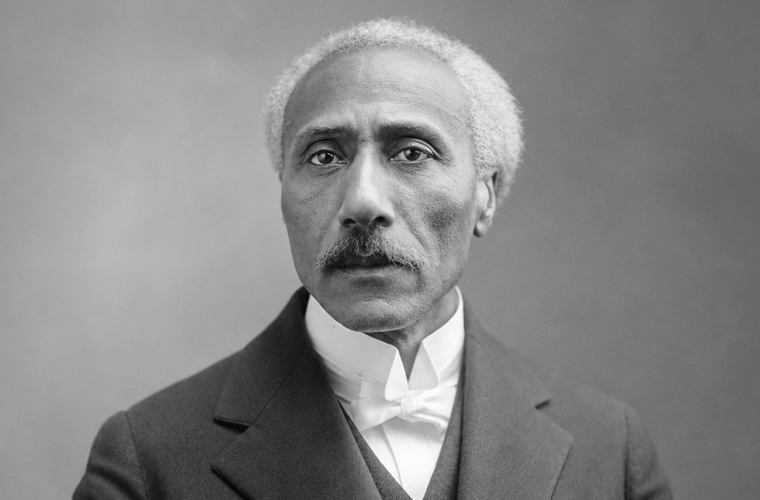
Reverdy Cassius Ransom (January 4, 1861 – April 22, 1959) was a prominent American Christian socialist, civil rights activist, orator, editor, and the 48th bishop of the African Methodist Episcopal (AME) Church. Born in Flushing, Ohio (not Virginia, as sometimes misstated), to Harriet Johnson (African American) and George Ransom, Reverdy grew up amid post-Civil War racial inequalities. His mother, a domestic servant, played a pivotal role in his education, arranging tutoring by white families she worked for and supporting his pursuit of higher education. The family moved to Cambridge, Ohio, in 1869, where Reverdy attended segregated public schools. He enrolled at Wilberforce University in 1881, briefly transferred to Oberlin College (where he protested segregation in facilities, leading to the loss of his scholarship), and returned to graduate from Wilberforce in 1886.
He was licensed to preach before graduation and ordained as a deacon in 1886, marking the start of his lifelong commitment to the AME Church. Ransom served in numerous AME congregations across the United States, including in Altoona and Tyrone, Pennsylvania; Springfield and Cleveland, Ohio; Chicago, Illinois; Nashville, Tennessee; Columbia, South Carolina; and New York, New York.
In Chicago starting in 1896, he established the Institutional Church and Social Settlement, one of the early examples of the “institutional church” model that combined worship with social services. This included a gymnasium, reading rooms, kindergarten, youth clubs, a Men’s Sunday Club, and programs for job training, counseling, childcare, and education aimed at African American migrants from the South. His activism against gambling led to the church being bombed in 1903, yet he persisted in his work. He later established a mission in Manhattan called the Church of Simon of Cyrene (around 1913), focusing on ministry to the urban poor. He was known for supporting figures like poet Paul Laurence Dunbar. Ransom was an eloquent orator. He became the first African American to address an audience at Faneuil Hall in Boston, delivering the “William Lloyd Garrison Oration” on December 11, 1905.
Deeply committed to civil rights and social justice, Ransom co-founded and spoke at the second meeting of the Niagara Movement in 1906 at Storer College in Harpers Ferry, West Virginia (a key precursor to the NAACP). He delivered a passionate speech on “The Spirit of John Brown” and advocated against lynchings and racial violence. He opposed Booker T. Washington’s more accommodationist approach, aligning instead with W.E.B. Du Bois and others who demanded full civil rights and active protest.
As a Christian socialist, Ransom critiqued capitalism and individualism, arguing that socialism aligned with Christian teachings to address inequality and resource distribution. He viewed the struggles of African Americans as a divine forging process to strengthen them for greater contributions to society. In 1918, he ran for U.S. Congress as an independent but was removed from the ballot due to petition issues.
Ransom served as editor of the AME Church Review, a significant platform for discussing racial issues, theology, and social concerns, until he was elected bishop in 1924 in Louisville, Kentucky. He served actively as bishop until 1952 (26 years as bishop and 64 years as a minister overall) and held roles such as chairman of the Board of Trustees at Wilberforce University. His writings and sermons addressed topics like youth opportunities, African missions, theology, and civil rights.
Ransom married three times: first to Leanna Watkins (1881–1886), then to Emma S. Connor (1887–1943), and finally to Georgia Myrtle Teal (1943–1959). The Emma Ransom House YWCA in Harlem was named in honor of his second wife for her work supporting young Black women. He had two children.
Bishop Ransom died on April 22, 1959, at age 98 in Wilberforce, Ohio. His legacy includes the Bishop Reverdy Cassius Ransom Memorial Library at Payne Theological Seminary on the Wilberforce University campus, dedicated in 2009. Monuments honor him in his hometown of Flushing, Ohio. He is remembered as a bridge between faith, social gospel activism, and the fight for racial equality in the late 19th and early 20th centuries—a leader who integrated spiritual guidance with practical social programs and bold advocacy against segregation and injustice. Ransom’s life exemplified the AME Church’s tradition of militant leadership for African American advancement, influencing generations through his ministry, writings, and institutional innovations.