
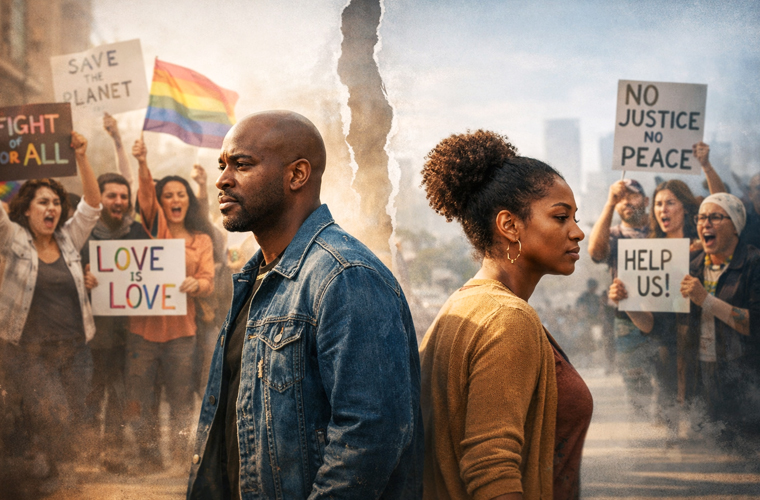

Why Many African Americans Are Stepping Back from Non-Reciprocal Causes
African Americans have long been at the forefront of social justice movements in the United States, from the Civil Rights era’s marches and boycotts to the Black Lives Matter protests against police brutality. Their activism has often centered on issues directly tied to systemic racism, economic inequality, voting rights, and police violence affecting Black communities. However, in recent years—particularly in the mid-2020s—some segments of the African American community have shown a deliberate distancing from certain protests and causes perceived as unrelated to their core struggles.
This shift is not rooted in apathy or indifference to broader injustice but in a growing sense of strategic prioritization, historical exhaustion, and pragmatic self-preservation. A central driver is the realization that Black Americans have frequently fought their battles largely alone, with limited genuine support from other groups, and have now largely stopped providing relentless, unreciprocated support for non-African American causes.
Historical Context of Black Activism
African Americans have historically built coalitions and shown solidarity with other marginalized groups. During the Civil Rights Movement of the 1950s and 1960s, nonviolent protests targeted segregation and discrimination, inspiring global liberation movements. Black leaders like Martin Luther King Jr. and Malcolm X linked their fight to international anti-colonial struggles. More recently, connections have been drawn between Black experiences and those of Palestinians, immigrants, and LGBTQ+ communities, often through shared themes of state violence, displacement, and discrimination.
Yet this solidarity has not always been reciprocal or equally rewarded. Many African Americans have participated in broader progressive causes—anti-war efforts, immigrant rights marches, environmental justice campaigns, and more—only to see their specific concerns sidelined once immediate goals were met or political winds shifted. In many instances, when Black communities have called for support on issues like ongoing police violence or economic disparities, that reciprocity has been absent or inconsistent.
Reasons for Distancing in Recent Years
Several factors contribute to this emerging reluctance to engage in protests not centered on Black-specific issues, with a central theme being the fatigue from one-sided alliances:
- Protest Fatigue and Resource Prioritization
After years of high-visibility activism—especially following the 2020 racial reckoning—many feel exhausted. Black communities have disproportionately borne the risks of protesting (police targeting, arrests, violence), with limited systemic change in return. Some argue it’s time to focus energy inward: building Black-owned businesses, mental health support, local organizing, and economic empowerment rather than joining every national march. - Perceived Lack of Reciprocity and One-Sided Solidarity
A key driver is the repeated experience of fighting battles largely alone. Black Americans have historically shown up for other groups’ causes—immigration reform, international solidarity movements, and broader progressive fights—yet often receive little comparable support when facing their own crises. This has led to frustration that “we’ve carried the load long enough” without mutual investment. Recent examples, such as lower Black participation in certain anti-Trump or immigration-related protests in 2025, reflect a deliberate choice to stop being the default “mule” for every coalition while Black-specific issues remain unresolved. - Safety and Strategic Calculations
Protests against administrations or policies often draw heavy police presence or risks of escalation. Black participants face disproportionate targeting, a pattern seen in past movements. Some influencers and community voices have advised sitting out mass events to avoid being baited into scenarios that could justify crackdowns or martial law fears. - Focus on Core Issues
Many emphasize addressing persistent disparities in policing, economic opportunity, education, and health outcomes that directly impact Black lives. Broader causes—while valid—are seen as distractions when foundational problems remain unresolved. This isn’t isolationism but a call for others (especially those with less historical burden) to lead on issues outside Black-specific concerns, and to demonstrate genuine reciprocity when Black communities need allies.
Examples of Lack of Reciprocity
Several documented patterns illustrate where African American causes have received limited or inconsistent support from other marginalized groups, even as Black communities have shown solidarity:
- Immigrant Communities and Immigration Reform
African Americans have joined immigrant rights efforts, including major marches and advocacy for reform. However, anti-Blackness within some immigrant communities—particularly Latino and Asian groups—has persisted as a barrier. Reports and community commentary highlight systemic prejudice, where Black issues like police violence or economic disparities receive less attention or solidarity during Black crises. This dynamic has fueled perceptions that Black support for immigration causes has not been matched with equivalent backing for core Black concerns. - LGBTQ+ Movements
Black LGBTQ+ individuals have been central to both broader LGBTQ+ rights and Black liberation (e.g., through historical figures and modern BLM organizing). Yet, anti-Blackness in some non-Black LGBTQ+ spaces has been noted, including exclusion, a lack of centering Black voices on police brutality (which disproportionately affects Black trans and queer people), or sidelining Black-specific demands. While many support BLM, reciprocity has often been uneven, with support waning when it conflicts with other priorities. - Pro-Palestine and International Solidarity
Black Americans have long drawn parallels between U.S. police brutality and Palestinian struggles, with historical and recent solidarity from Civil Rights leaders to BLM platforms. Growing Black support for Palestinian causes includes calls for ceasefires and shared oppression themes. However, some point to limited reciprocal visibility for Black-specific domestic issues within certain pro-Palestine coalitions, where competing priorities or anti-Black attitudes can sideline African American concerns. - Broader Progressive and Philanthropic Spaces
Post-2020 efforts often shifted focus away from sustained investment in Black communities, with philanthropic data showing less funding for Black-led organizations than for others, despite high needs. This reinforces views that Black activism supports coalitions without commensurate return.
These examples highlight recurring frustrations from historical patterns and community observations, not a universal absence of support—many individuals and groups actively ally—but underscore why reciprocity feels lacking.
Implications and Ongoing Debate
This distancing has sparked discussion within and beyond the community. Critics view it as isolationist, potentially weakening broader progressive coalitions. Supporters frame it as self-care, realism, and maturity—recognizing that true allyship requires mutual investment, not one-sided sacrifice after centuries of disproportionate effort.
African American activism remains vibrant, often through quieter, community-level efforts rather than large-scale street protests. The choice to step back from certain causes reflects a deeper reckoning: after fighting alone or with minimal support for so long, many are insisting that solidarity must be earned and reciprocal, not assumed or expected without return.
Ultimately, this evolution highlights a community prioritizing survival and progress on its own terms—while still open to alliances that genuinely advance shared liberation through honest dialogue, mutual accountability, and recognition that no group’s struggle exists in a vacuum.