
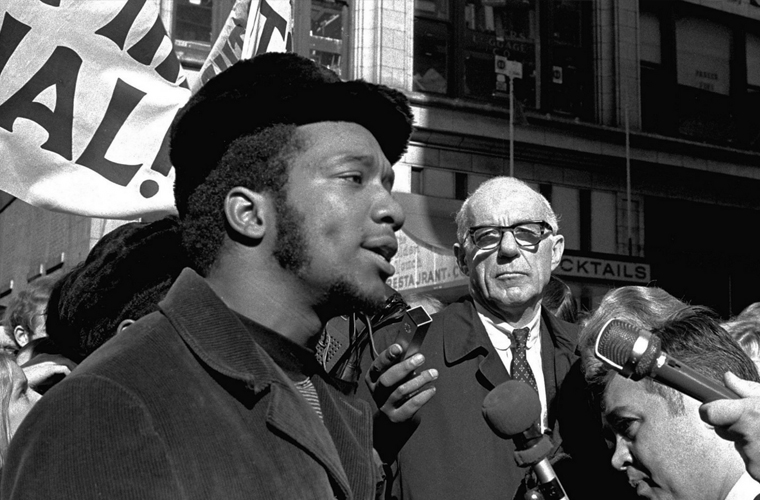
Fred Hampton (August 30, 1948 – December 4, 1969) was a charismatic American activist, revolutionary socialist, and deputy chairman of the Illinois chapter of the Black Panther Party (BPP). At just 21 years old when he was assassinated, he became one of the most influential figures in the late 1960s Black Power and civil rights movements, known for his powerful oratory, community organizing, and ability to build multiracial coalitions against racism, poverty, and police brutality.
Early Life and Education
Fredrick Allen Hampton Sr. was born in Summit (or Summit Argo), Illinois, near Chicago, to Francis and Iberia Hampton, who had migrated from Louisiana as part of the Great Migration. He was the youngest of three children and grew up primarily in the Chicago suburb of Maywood after the family moved there when he was about 10. His parents worked at the Argo Starch Company. The family had a personal connection to racial violence: Iberia had babysat Emmett Till, whose 1955 lynching in Mississippi deeply affected young Fred and heightened his awareness of injustice.
Hampton excelled academically and athletically at Proviso East High School in Maywood, graduating with honors in 1966. He was a gifted student who hoped at one point to play center field for the New York Yankees. In high school, he organized protests, including walkouts against the exclusion of Black students from homecoming queen competitions and for hiring more Black teachers and administrators. He also participated in the school’s Interracial Cross Section Committee. After high school, he enrolled in a pre-law program at Triton Junior College (now Triton College) in River Grove, Illinois, aiming to use legal knowledge to combat police brutality and injustice.


Early Activism with the NAACP
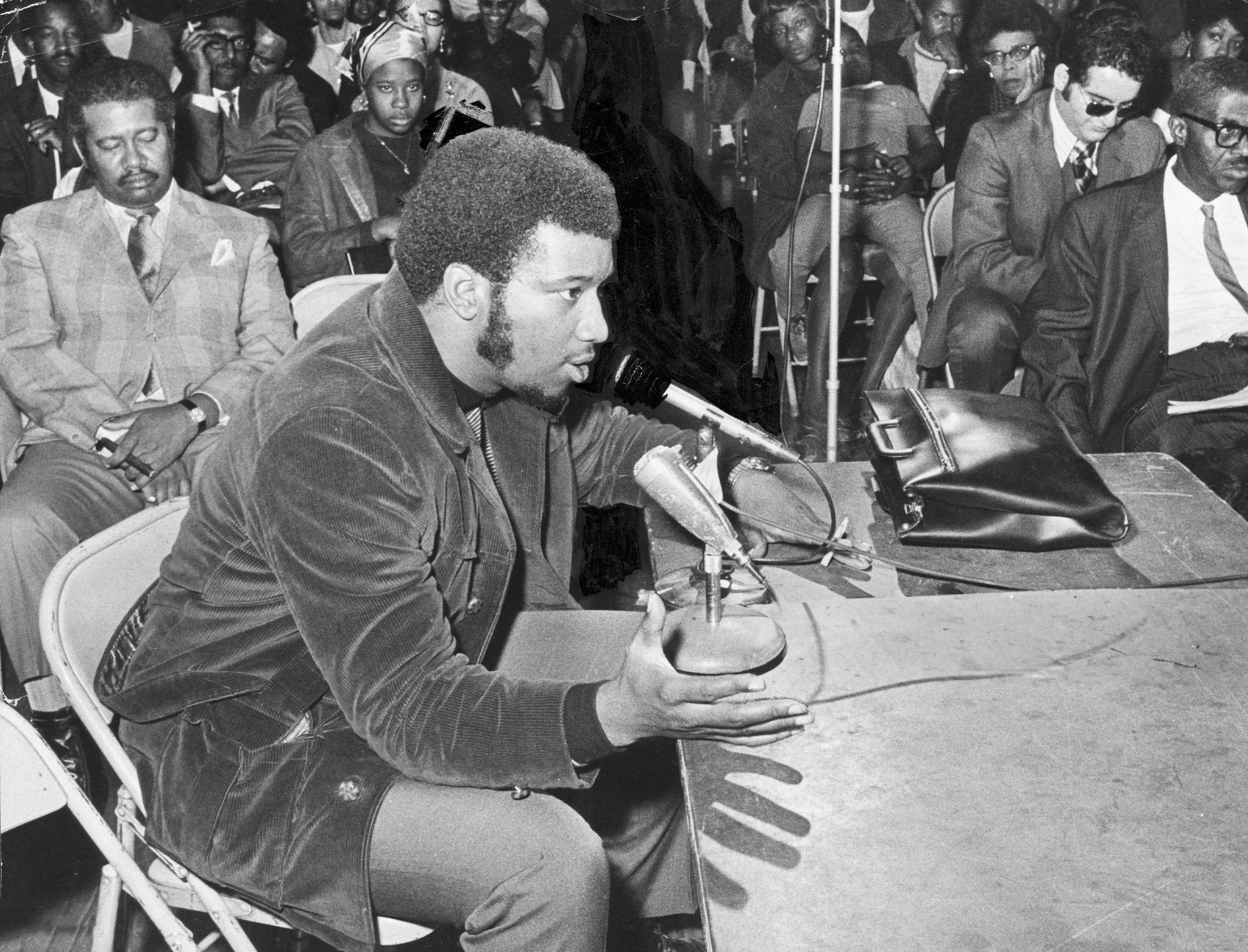
Hampton’s activism began in earnest through the National Association for the Advancement of Colored People (NAACP). He led the Youth Council of the West Suburban Branch, growing it significantly and mobilizing around 500 young people. His efforts successfully lobbied for better academic services, recreational facilities (including advocacy for an integrated public swimming pool in Maywood), and resources for Black children in the community. He participated in rallies and demonstrations, sometimes facing arrests on charges like disorderly conduct. These experiences, combined with repeated negative encounters with police, pushed him beyond the more moderate approach of the NAACP.
Leadership in the Black Panther Party
In 1968, Hampton joined the Black Panther Party, founded in Oakland, California, by Huey P. Newton and Bobby Seale. He quickly rose to become chairman of the Illinois chapter and deputy chairman nationally, leveraging his organizing experience from the NAACP.
Key initiatives under his leadership in Chicago included:
- Free Breakfast Program: Providing meals to children, which fed hundreds daily and served as a model for broader social programs (inspiring aspects of later USDA efforts, though the Panthers faced sabotage and smears).
- People’s Clinic and other community services: Health care, political education classes, and efforts to address poverty and substandard housing.
- Police patrols and community supervision: Monitoring and challenging police brutality.
Hampton was a skilled orator and Marxist-Leninist who emphasized class struggle over narrow nationalism. He taught political education, organized rallies, and built alliances. He negotiated truces among rival Chicago street gangs (such as the Blackstone Rangers) and stressed unity across racial and ethnic lines.
The Rainbow Coalition
One of Hampton’s most enduring achievements was founding the Rainbow Coalition (sometimes called the First Rainbow Coalition), a multiracial alliance that united the Black Panthers with the Young Lords (Puerto Rican organization), the Young Patriots (poor white Southern/Appalachian group), and others, including elements of Students for a Democratic Society (SDS) and street gangs.
The coalition addressed shared issues like poverty, police brutality, racism, and inadequate housing through joint actions and resource-sharing. Hampton famously articulated its philosophy: “We say you don’t fight racism with racism. We’re gonna fight racism with solidarity. We say you don’t fight capitalism with no black capitalism; you fight capitalism with socialism.” He viewed racism as a byproduct of capitalism and fascism as the ultimate threat, advocating revolutionary socialism and “power anywhere there’s people.”
FBI Surveillance and Assassination
Hampton was targeted early by the FBI’s COINTELPRO program, which aimed to “neutralize” perceived threats from Black nationalist and leftist groups. The FBI opened a file on him in 1967, placed him on the Agitator Index, and used informants like William O’Neal (who infiltrated the Chicago Panthers as security director and Hampton’s bodyguard).
On December 4, 1969, in a predawn raid on Hampton’s apartment at 2337 W. Monroe Street (often used as a BPP hub), Chicago police—acting on information from the FBI and state’s attorney’s office, including a floor plan provided by O’Neal—fired over 90-100 shots. Hampton, who had been drugged (via a sedative allegedly provided by O’Neal), was shot multiple times while sleeping, including fatal shots to the head. Fellow Panther Mark Clark was also killed; others were wounded. Only one shot was fired by the Panthers. The raid was initially portrayed as a shootout, but evidence later revealed it as an assassination. A 1982 civil lawsuit settlement awarded $1.85 million (shared among survivors and families) from the federal government, Cook County, and the City of Chicago. Hampton’s funeral drew thousands, with eulogies from figures like Jesse Jackson and Ralph Abernathy. His son, Fred Hampton Jr., was born weeks later to his partner Deborah Johnson (later Akua Njeri).
Legacy and Impact
Fred Hampton’s life, though brief, left a profound mark. His emphasis on intersectional solidarity, community service, and revolutionary politics influenced later movements, including aspects of Black Lives Matter organizing and multiracial coalitions. Chicago has commemorated him with “Fred Hampton Day” resolutions, and his childhood home in Maywood is preserved. He is remembered through documentaries (e.g., The Murder of Fred Hampton), books, music, and art. His words continue to inspire: “You can kill a revolutionary, but you can’t kill the revolution.” Hampton embodied the idea that young leaders could drive systemic change through education, service, and unity. His assassination highlighted government repression but also underscored the resilience of the movements he helped build.