
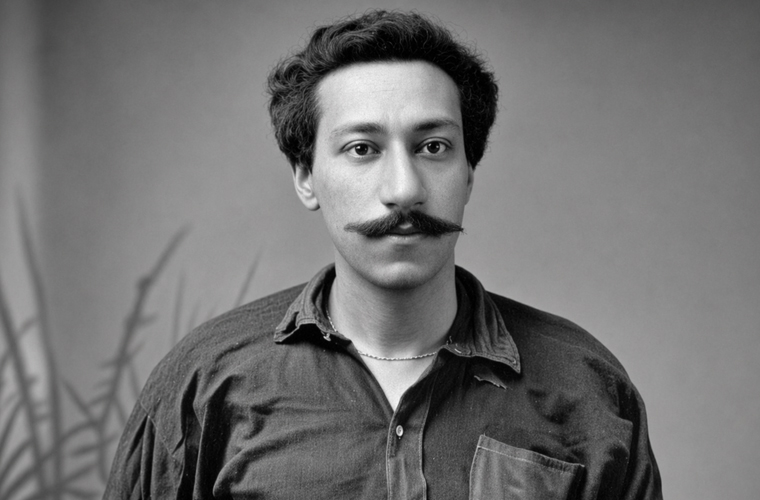
The first black professional footballer in the world was born in Ghana in 1865
Arthur Wharton (28 October 1865 – 12 December 1930) was a pioneering British-Ghanaian athlete and footballer, widely recognized as the world’s first black professional footballer and the first to play in England’s Football League. Wharton was born in Jamestown, Gold Coast (now part of Accra, Ghana), as Arthur “Kwame” Wharton. His father, Henry Wharton, was a Grenadian missionary of Scottish and West African descent. His mother, Annie Florence Egyriba (or Grant), belonged to Ghanaian Fante royalty. He attended Mfantsipim School in Ghana. After his father died in 1873, Arthur was sent to England around age 10 (some sources say 1882–1883 at age 19) for education. He trained as a Methodist missionary at Cleveland College in Darlington but soon abandoned this path to pursue sports full-time.
Athletic Achievements
Wharton was a versatile all-round sportsman, excelling in multiple disciplines:
- Sprint: In 1886, he equaled the amateur world record of 10 seconds for the 100-yard dash at the AAA Championships at Stamford Bridge, London—the first official world record in the event. He retained the title in 1887. His record stood for over 30 years. He was the first northerner to win the national 100-yard championship.
- Cycling: He became a cycling champion.
- Cricket: He played professionally for local teams in Yorkshire and Lancashire and briefly managed the Durham County Cricket team in 1914.
- Rugby: He also played rugby.
Football Career
Wharton began as an amateur goalkeeper for Darlington F.C. around 1885–86, where his unorthodox, athletic style (including a powerful punch and speed that occasionally allowed him to play as a winger) drew attention. He was spotted by Preston North End and joined them as an amateur for the 1886–87 season. He helped them reach the FA Cup semi-finals, keeping a notable clean sheet against Renton. Though associated with Preston’s famous “Invincibles” era, he left in 1888 before their Double-winning 1888–89 season to focus on running. He had a brief, unsuccessful trial appearance for a Sheffield Wednesday & District team in 1888. In 1889, he turned professional with Rotherham Town, becoming the first black professional footballer. He played against Liverpool in the first-ever match at Anfield in 1892 while with Rotherham.


.
Subsequent clubs included:
- Sheffield United (1894–95): Understudy to William “Fatty” Foulke; played three matches, including one in the First Division against Sunderland, making him the first mixed-heritage player in the top flight.
Stalybridge Rovers (1895, and later return).
Ashton North End (1897).
Stockport County (1901–02, Second Division): His final professional matches, including against Newton Heath (later Manchester United).
He was known for pioneering goalkeeping techniques and entertainment value, but faced racial prejudice that likely prevented international recognition, such as an England call-up.
Personal Life
In 1890, he married Emma Lister (1866–1944) in Rotherham. By 1891, he ran the Albert Tavern as a landlord. Later, he opened a tobacconist shop in Ashton-under-Lyne. The couple had no children mentioned in sources.
Later Life and Death
After retiring from football in 1902, Wharton struggled. He worked as a colliery haulage hand (miner) at Yorkshire Main Colliery in Edlington and lived in Moorthorpe, West Yorkshire. He developed a drinking problem and faced financial hardship, despite his upper-middle-class colonial background. During World War I, he served as a corporal in the Volunteer Training Corps (Territorial Force reserves).
He died penniless on 12 December 1930 (some sources say 13 December), aged 65, at Springwell Sanatorium in Balby, near Doncaster. He was buried in an unmarked pauper’s (third-class) grave in Edlington Cemetery, South Yorkshire.
Legacy and Recognition
For decades, Wharton was largely forgotten due to the era’s racial attitudes and his modest later life. In 1997, the anti-racism organization Football Unites, Racism Divides (FURD) campaigned successfully for a headstone on his grave. The Arthur Wharton Foundation, founded by Shaun Campbell, has worked to preserve and promote his story.
Memorials and tributes now exist, including statues or plaques in Darlington, Rotherham, and at St. George’s Park (England FA headquarters). His life has been documented in books (e.g., Phil Vasili’s The First Black Footballer), films, and exhibitions. He symbolizes pioneering achievement against adversity, trailblazing for black athletes in British sport. Wharton’s story highlights both the barriers of Victorian/Edwardian racism and the enduring impact of talent and determination. He remains a key figure in Black British history and football heritage.