
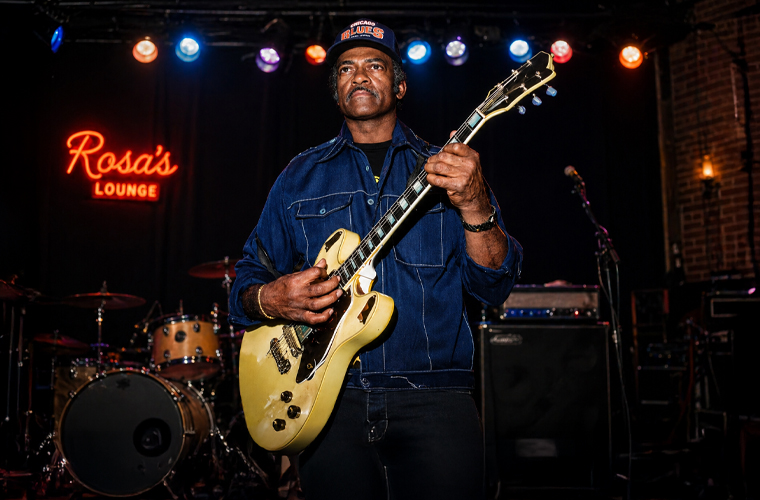
Jimmy “Fast Fingers” Dawkins (October 24, 1936 – April 10, 2013) was a prominent American Chicago blues and electric blues guitarist, singer, and bandleader. He became best known as a key figure in the “West Side sound” of Chicago blues—a smoother, more modern, and urban style compared to the rawer, harder-edged South Side tradition associated with Muddy Waters and Howlin’ Wolf. Though his nickname suggested flashy, high-speed playing, Dawkins often downplayed it as a stylistic misnomer. His guitar work featured dramatic, economical phrasing with tremolo, full chords (often in minor keys), surging intensity, and a singing quality that conveyed deep emotion without showmanship. He paired this with a mellow, expressive singing voice that avoided shouting. Dawkins preferred slower, introspective blues and played more for personal satisfaction than audience spectacle, as noted in a 1990 New York Times review of his performance at Manny’s Car Wash in New York: “Whereas most bands play for the audience, Mr. Dawkins played for himself.”
Early Life
James Henry Dawkins was born on October 24, 1936, in Tchula, Mississippi, in the Delta region. He grew up in Pascagoula, a coastal town where the easy-swinging sounds of New Orleans jazz and blues mixed with traditional Mississippi Delta blues, shaping his musical sensibility from an early age. An only child (though some family accounts mention siblings in later contexts), he taught himself to play guitar without formal training. In 1955, at age 19, Dawkins moved to Chicago amid the Great Migration. He took a day job in a box factory while immersing himself in the city’s vibrant blues scene at night. He quickly built a reputation as a reliable session musician and sideman in West Side clubs, associating with figures like Magic Sam, Billy Boy Arnold, and Luther Allison.
Career Breakthrough and Peak Years
Dawkins remained primarily a sideman and club player through much of the 1960s. His big break came in 1969 when his friend, fellow West Side guitarist Magic Sam, helped bring him to the attention of Delmark Records owner Bob Koester. That year, Delmark released Dawkins’ debut solo album, Fast Fingers. It earned the Grand Prix du Disque from the Hot Club de France, giving him international recognition and cementing the nickname he would carry (sometimes reluctantly) for the rest of his life.
His follow-up, All for Business (1971), featured singer Andrew “Big Voice” Odom and guitarist Otis Rush, further showcasing his West Side sound. Dawkins recorded additional albums in the early 1970s, including Tribute to Orange and Transatlantic 770, and became a frequent presence on the European blues circuit, where audiences embraced traditional and modern electric blues more enthusiastically than many American crowds at the time. He also toured Japan and performed with backing musicians such as guitarist James Solberg, organist Jon Preizler, bassist Sylvester Boines, and drummer Jimi Schutte. Throughout his career, Dawkins contributed a column to the influential blues magazine Living Blues. His playing influenced and earned admiration from major guitarists, including Buddy Guy, Eric Clapton, and Stevie Ray Vaughan. Critics often described his style as intense yet controlled, with a focus on feel, rhythm, and emotional depth rather than pure speed or flash.
Later Career and Legacy-Building
By the 1980s, Dawkins released fewer recordings under his own name and shifted focus toward supporting the broader blues community. He founded his own label, Leric Records, and used it to promote and record artists such as Tail Dragger Jones, Queen Sylvia Embry, Little Johnny Christian, and Nora Jean Bruso (née Wallace). He continued occasional touring and recording into the 1990s and 2000s, with releases like Kant Sheck Dees Bluze (1992), Blues and Pain (1994), Me, My Guitar & the Blues (1997), and Tell Me Baby (2004). In 1995, he received three W.C. Handy Award nominations: for Best Blues Instrumentalist – Guitar, Contemporary Blues Album of the Year (Blues and Pain), and Blues Song of the Year (“Fool in Heah”). A reissue of Fast Fingers earned a nomination for Best Reissue Blues Album in 1999. Dawkins remained active as a performer and mentor until near the end of his life, embodying the resilience and community spirit of Chicago’s blues scene.
Musical Style and Influences
Dawkins embodied the West Side Chicago blues aesthetic: slicker production, jazz-tinged influences from New Orleans (via his Pascagoula upbringing), and a modern urban edge. His guitar work emphasized dramatic dynamics, minor-key passages, tremolo effects, and full chords interspersed with sparse, singing single-note lines. He was not a high-speed shredder despite the “Fast Fingers” moniker; instead, his playing “slashed and surged” with emotional weight and rhythmic mastery. He drew from Delta blues roots while incorporating the polished, soulful feel of Chicago’s electric scene. His mellow vocal delivery complemented his guitar, creating a balanced, introspective sound that stood out in an era of more extroverted performers.
Discography Highlights
Solo Albums (selected):
- Fast Fingers (1969, Delmark) — Debut and award-winning breakthrough.
- All for Business (1971, Delmark) — Featuring Otis Rush and Andrew Odom.
- Blisterstring (1976, Delmark)
- Hot Wire ’81 (1981)
- Kant Sheck Dees Bluze (1992, Earwig)
- Blues and Pain (1994)
- Me, My Guitar & the Blues (1997)
- Born in Poverty (1999, archival)
- Tell Me Baby (2004)
He also recorded live and collaborative projects in Europe (e.g., Tribute to Orange, Come Back Baby on Storyville) and appeared as a sideman on albums by Luther Allison and Carey Bell. Dawkins released material on labels including Delmark, Storyville, Earwig, and his own Leric imprint.
Personal Life and Death
Dawkins married Verdia, and the couple had six children, along with numerous grandchildren and great-grandchildren. He lived in Chicago for most of his adult life and was known for his generosity and dignity within the blues community. He died at his home in Chicago on April 10, 2013, at age 76. The cause was not publicly specified. He was buried at Burr Oak Cemetery in Alsip, Illinois. Tributes poured in from the blues world, remembering him as a West Side pioneer, skilled guitarist, supportive label head, and authentic voice of Chicago blues.
Legacy
Though he never achieved mainstream commercial stardom in the United States, Jimmy “Fast Fingers” Dawkins left a lasting mark on Chicago blues. His recordings captured a vital era of the West Side sound, his support of younger and peer artists helped sustain the tradition, and his international tours helped spread authentic electric blues abroad. Guitarists and fans continue to revisit Fast Fingers and his other works for their emotional depth, technical command, and unpretentious power. Dawkins represented the working-class backbone of the blues: a self-taught musician who balanced factory work with club gigs, built a career through persistence and community ties, and ultimately prioritized the music and its practitioners over personal fame. His story remains a cornerstone of Chicago blues history.