
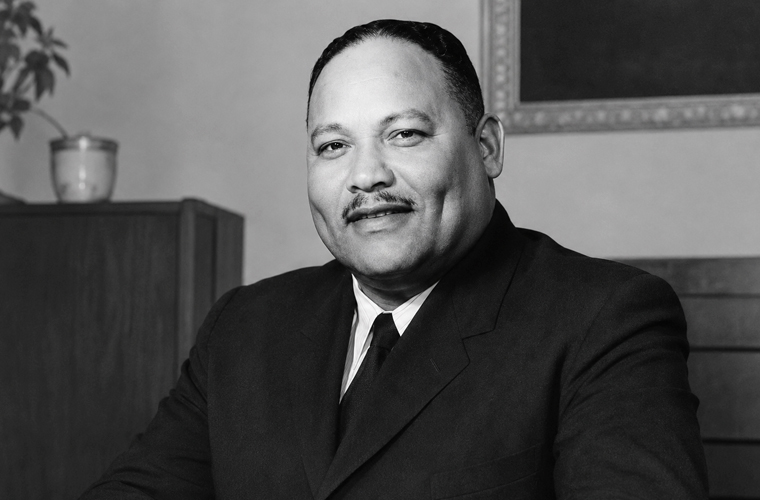
Rev. George Washington Lee (December 25, 1903 – May 7, 1955) was an African American Baptist minister, entrepreneur, civil rights leader, and voting rights activist who became one of the earliest martyrs of the modern Civil Rights Movement. He was assassinated in Belzoni, Mississippi, for his courageous efforts to register Black voters in the Jim Crow South.
Early Life and Background
Born on Christmas Day 1903 in Edwards, Mississippi, George Wesley (or Washington) Lee grew up in deep poverty. His mother was an illiterate plantation worker. His early family life was difficult: his mother remarried an abusive stepfather, and she died when George was still young. His aunt then raised him. Despite these hardships and the limited opportunities available to Black children in rural Mississippi, Lee graduated from high school in 1921—a significant achievement at the time.
He moved to New Orleans, Louisiana, where he worked on the banana docks and took a correspondence course in typesetting, gaining valuable skills. During the Great Depression in the early 1930s, Lee accepted a call to preach and relocated to Belzoni, Mississippi, in the heart of the Mississippi Delta. There, he built a life as a community leader, serving as pastor at multiple Baptist churches. He opened a grocery store and, with his wife Rosebud (née Curry), operated a printing press from their home. These businesses provided economic independence that later supported his activism.
Activism and Voter Registration Efforts
In the early 1950s, Rev. Lee emerged as a key figure in the fight against Black disenfranchisement. Black residents vastly outnumbered whites in Humphreys County, yet systemic barriers—including poll taxes, literacy tests, intimidation, and violence—had kept African Americans from voting since the late 19th century. Lee became the first African American to register to vote in Humphreys County since Reconstruction.
In 1953, Lee and fellow grocer Gus Courts co-founded the Belzoni chapter of the NAACP. Lee later served as its president (Courts was also a leader). Working together, they launched voter registration drives. Despite enormous risks, they successfully registered approximately 92–100 Black voters in Belzoni and the surrounding area by 1954–1955. Lee used his pulpit to encourage registration and his printing press to produce materials urging political participation. Lee also served as vice president of the Regional Council of Negro Leadership (RCNL), an organization focused on economic self-sufficiency, skill-building, and voting rights for Black Mississippians. He spoke at RCNL events, including a major rally in Mound Bayou in April 1955 that drew thousands.
Opposition and Assassination
Belzoni earned the nickname “Bloody Belzoni” due to his involvement in the intense racial violence and repression. Local white leaders formed a White Citizens’ Council, which used economic intimidation, threats, firings, credit denials, and violence to suppress civil rights activity and maintain white supremacy. Lee and other activists faced repeated threats and demands to remove their names from the voter rolls. He refused to back down.
On the night of May 7, 1955, while driving home on Church Street in Belzoni, Rev. Lee was shot. Gunshots—reported as shotgun blasts—ripped into his car, shattering his jaw and tearing off much of the lower half of his face. He crashed into a nearby house and died en route to or at Humphreys County Medical Center at age 51.
When NAACP Mississippi field secretary Medgar Evers investigated, the local sheriff, Ike Shelton, dismissed the killing as a car accident and outrageously claimed the lead pellets in Lee’s jaw were dental fillings. Federal investigators and NAACP inquiries pointed to members of the White Citizens’ Council, but local authorities resisted prosecution, and the case was never solved. Lee’s wife, Rosebud, insisted on an open-casket funeral to expose the brutality of the attack. More than 1,000 mourners attended the service.
Legacy and Remembrance
Rev. George Lee’s murder highlighted the deadly stakes of the voting rights struggle in Mississippi and galvanized further activism. He is listed among the first names on the Civil Rights Memorial in Montgomery, Alabama, and is recognized as an early martyr of the movement. In April 2019, the Equal Justice Initiative dedicated a monument in Montgomery honoring Rev. Lee and 23 other victims of racial violence from the 1950s. Community members, family, and activists gathered for the occasion. In Belzoni, the Rev. George Lee Museum of African American History and Heritage, founded and operated by Ms. Helen Sims, preserves his memory and the broader story of the local v struggle alongside figures like Fannie Lou Hamer.
Rev. George Lee’s life exemplified the transition from self-made community leader to fearless activist. Through his faith, business acumen, and determination, he challenged one of the most entrenched systems of racial oppression in America, paving the way for the Voting Rights Act a decade later. His sacrifice remains a powerful reminder of the cost of democracy and the enduring fight for equality.