
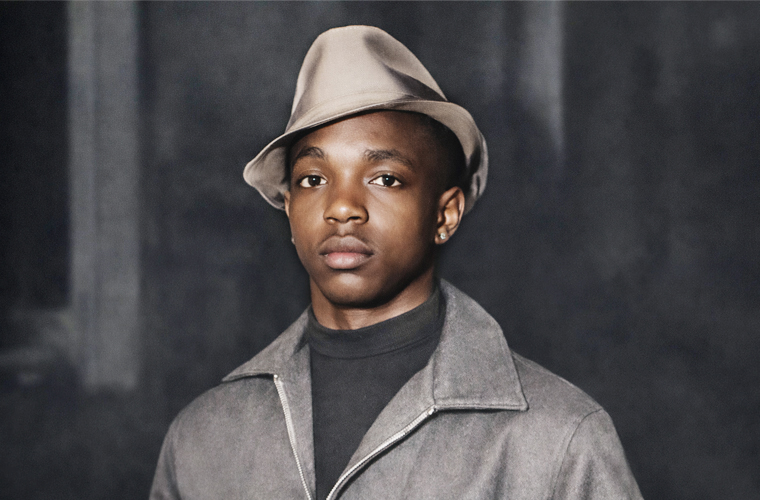
Robert James Hutton, widely known as “Lil’ Bobby” or “Little Bobby Hutton,” was born on April 21, 1950, in Jefferson County, Arkansas, near Pine Bluff. He was the youngest of three children born to John D. Hutton and Dolly Mae Mitchner-Hutton. His family faced repeated harassment from racist vigilante groups often linked to the Ku Klux Klan, which were referred to locally as “nightriders.” This constant threat prompted the Hutton family to leave the South and relocate to Oakland, California, in 1953, when Bobby was about three years old. Their move was part of the second wave of the Great Migration, as many Black families sought safety and better opportunities away from Jim Crow-era violence.
Little is documented about Hutton’s childhood in Oakland beyond the typical challenges faced by Black youth in a working-class, racially tense urban environment during the 1950s and 1960s. As a young person, he reportedly struggled with reading. Still, he later taught himself, eventually studying works by W.E.B. Du Bois and mastering the Black Panther Party’s Ten-Point Program by heart. This self-improvement reflected his growing commitment to education and community empowerment.
In December 1966, at just 16 years old, Hutton met the founders of the Black Panther Party, Huey P. Newton and Bobby Seale, at the North Oakland Neighborhood Anti-Poverty Center, a government-funded program that employed local youth. Intrigued by their vision and the party’s newly articulated Ten-Point Program—which demanded full employment, decent housing, quality education, an end to police brutality, and Black self-determination—Hutton became the first recruit to the newly formed Black Panther Party for Self-Defense. He was also appointed its first treasurer and remained the youngest member throughout his time with the organization. Hutton joined because he wanted to make a tangible difference in his community, particularly by addressing poverty, police harassment, and systemic inequality. The Panthers’ emphasis on armed self-defense within legal bounds and community service resonated deeply with him.
As treasurer and an early member, Lil’ Bobby quickly immersed himself in party activities. These included patrolling Oakland neighborhoods to monitor and deter police brutality, often carrying firearms openly as permitted by California law at the time, distributing the Black Panther newspaper, and participating in community organizing efforts. One notable example was when Panthers intervened to pressure city officials to install a stoplight at a dangerous intersection where children were frequently being hit by cars.
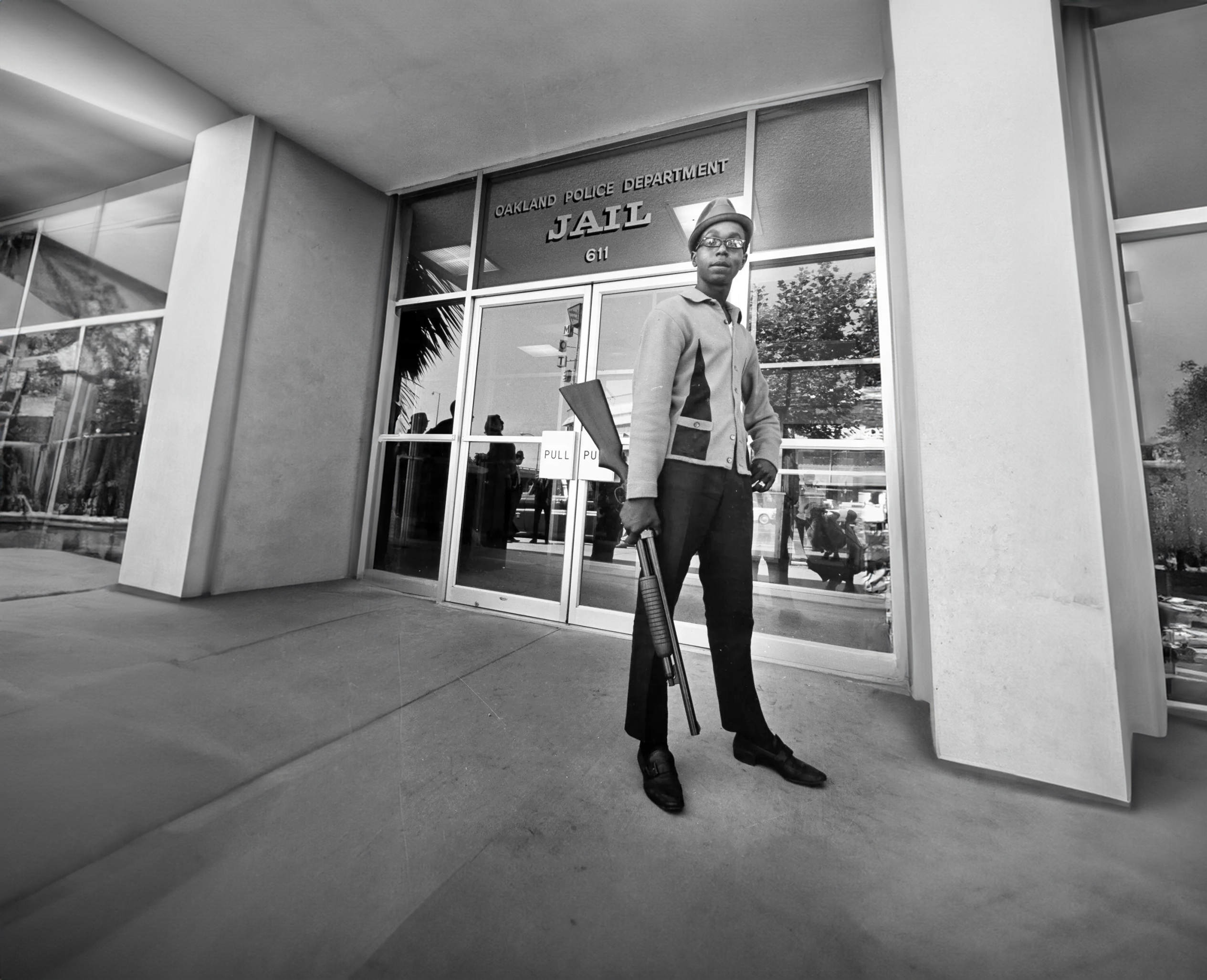
On May 2, 1967, Hutton participated in one of the Black Panther Party’s most high-profile early actions. A group of about thirty Panthers, including Hutton, traveled to the California State Capitol in Sacramento to protest the Mulford Act, a bill aimed at restricting the open carry of loaded firearms. The armed but peaceful protest drew national media attention. Hutton and several others were arrested afterward at a nearby gas station. He faced another arrest on May 22, 1967, for allegedly violating an old 1887 law prohibiting firearms near a jail. These incidents highlighted the party’s strategy of using visible armed presence to assert rights and challenge authority, while also showing the legal pushback they encountered. Hutton embodied the party’s ideals as a dedicated, community-oriented young activist who believed in self-defense, education, and service. Party leaders and members viewed him as a symbol of the next generation—youthful, committed, and full of potential.
Hutton’s life ended tragically on April 6, 1968, just fifteen days before his eighteenth birthday. Two days after the assassination of Dr. Martin Luther King Jr., amid nationwide riots and unrest, Hutton was riding in a car with Eldridge Cleaver, the party’s Minister of Information, and other Panthers. The group became involved in a confrontation with Oakland police officers during which two officers were shot and wounded. Hutton and Cleaver fled to a house on 28th Street in West Oakland, where a roughly ninety-minute shootout ensued. Police fired tear gas, setting a small fire and heavily damaging the building. When the standoff ended, Hutton and Cleaver surrendered.
Accounts of what happened next differ sharply. According to the Panther perspective, including Eldridge Cleaver’s account, Hutton voluntarily emerged, stripped down to his underwear to prove he was unarmed, raised his hands in surrender, and followed police instructions. Despite this, officers shot him more than twelve times, killing him. Cleaver later described it as first-degree murder. Bobby Seale speculated that police may have mistaken Hutton for a higher-profile target. The police perspective maintained that Hutton ignored commands to halt, may have tried to flee, and was possibly wearing a long coat that obscured his hands, leading officers to believe he was armed. Hutton died at age seventeen from multiple gunshot wounds. He became the first Black Panther Party member killed by police, an event that outraged the party and its supporters, who viewed it as a stark example of police brutality and excessive force against a surrendering teenager.
Hutton’s funeral was held on April 12, 1968, at the Ephesians Church of God in Christ in Berkeley, California. Approximately 1,500 people attended the service, with Bobby Seale delivering a moving eulogy that praised Hutton as “a living example of infinite love for his people.” A subsequent rally at a park near Lake Merritt in Oakland drew over 2,000 mourners, where actor and activist Marlon Brando gave a eulogy and spoke passionately about the injustice. Hutton was buried at Mountain View Cemetery in Oakland. His death intensified the Black Panther Party’s resolve and helped transform it from a local Oakland organization into a national movement with chapters across the United States. It fueled recruitment and became a rallying cry against police violence.
Bobby Hutton’s short life, packed with activism despite his youth, left a lasting impact. DeFremery Park in West Oakland was unofficially called “Lil’ Bobby Hutton Park” soon after his death, and the City of Oakland officially renamed it Bobby Hutton Park around 1998. Annual commemorations, including “Lil’ Bobby Hutton Day” since 1998, feature speakers, performers, and tributes organized by family and former Panthers. In his honor, the Commemoration Committee for the Black Panther Party established the Lil’ Bobby Hutton Literacy Campaign/Program, which promotes education, reading, and self-improvement in the community—echoing Hutton’s own journey of teaching himself to read and internalizing revolutionary texts. The program continues to serve as an inspiration for youth from similar backgrounds.
Huey P. Newton dedicated his 1973 autobiography Revolutionary Suicide to Hutton. Culturally, he is remembered in films such as the 1995 movie Panther, in music through references in songs by Tupac Shakur and others, and in literature and art. Hutton symbolizes the idealism, sacrifice, and vulnerability of young Black activists in the 1960s Black Power movement. His story highlights themes of police accountability, community self-defense, education as liberation, and the human cost of the struggle for racial justice. Though he lived only seventeen years, “Lil’ Bobby” became an enduring martyr whose legacy of courage and commitment continues to inspire generations.