
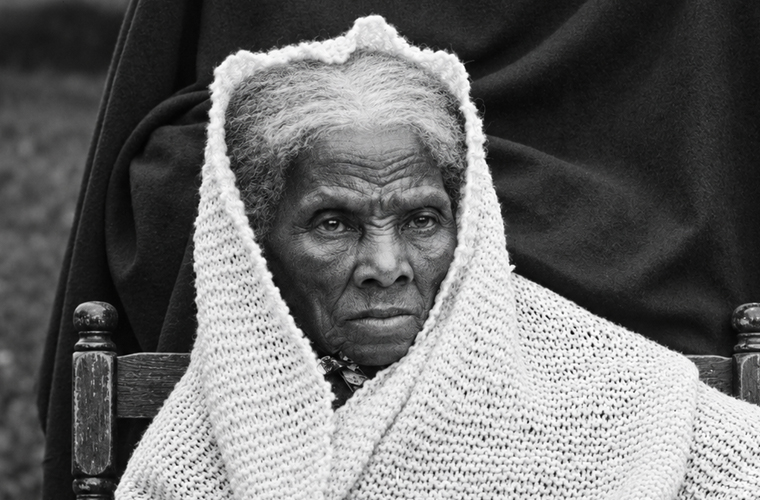
Harriet Tubman (born Araminta “Minty” Ross, c. March 1822 – March 10, 1913) was an American abolitionist, Underground Railroad conductor, Civil War scout, spy, nurse, and women’s suffrage advocate. Born into slavery in Dorchester County on Maryland’s Eastern Shore, she escaped in 1849 and returned repeatedly to lead approximately 70 enslaved people to freedom, earning the nickname “Moses.” She later served the Union Army and spent her final decades in Auburn, New York, supporting civil rights, women’s suffrage, and care for the elderly and poor.
Early Life and Enslavement
Tubman was born around early 1822 (estimates range from 1820–1825; midwife records and research support 1822) to enslaved parents Harriet “Rit” Green and Ben Ross. Rit was owned by the Brodess family; Ben by Anthony Thompson. The couple had nine children: Linah, Mariah Ritty, Soph, Robert, Araminta (Minty), Benjamin, Rachel, Henry, and Moses. The family was frequently separated by sales and hiring-out.
From about age five or six, she was hired out as a nursemaid, field hand, cook, and woodcutter. She endured beatings and neglect. Around age 12–13 (c. 1834–1835), she was struck in the head by a heavy iron weight thrown by an overseer at another enslaved person she refused to help restrain. The injury caused lifelong seizures, headaches, and vivid dreams or visions she interpreted in religious terms; it also left her with narcolepsy-like episodes.
Her father was manumitted in 1840 under the terms of his enslaver’s will. Around 1844, she married John Tubman, a free Black man, and took the first name Harriet (honoring her mother). The marriage did not free her, and the couple had no children. In 1849, after her enslaver Edward Brodess died and she feared being sold, she escaped. An initial attempt with two brothers failed when they turned back; she then fled alone, guided by the North Star and the Underground Railroad network, reaching Philadelphia, Pennsylvania.


Underground Railroad Conductor
From 1850 to about 1860, Tubman made roughly 13 trips back to Maryland, personally guiding about 70 family members and friends to freedom in the North and Canada (especially after the Fugitive Slave Act of 1850). She also provided instructions that helped dozens more escape independently. Early exaggerated claims of 300 people across 19 trips (from biographer Sarah Bradford) have been revised downward by modern scholarship based on Tubman’s own accounts and records. She never lost a “passenger,” traveling mostly by night, using disguises, coded signals, and safe houses. A substantial reward was offered for her capture.
She resettled her parents in Auburn, New York (on land she purchased with help from allies, including William H. Seward), and became connected to leading abolitionists such as Frederick Douglass, William Still, and John Brown. She supported Brown’s efforts (though she did not participate in the 1859 Harpers Ferry raid) and spoke publicly about her experiences.
Civil War Service
When the Civil War began, Tubman volunteered with Union forces. In 1862, she went to South Carolina (Port Royal/Beaufort area), working as a nurse, cook, and laundress for Black soldiers and formerly enslaved people (“contrabands”). She also gathered intelligence as a scout and spy behind Confederate lines.
On June 1–2, 1863, she guided Colonel James Montgomery’s 2nd South Carolina Infantry (an African American regiment) in the Combahee River Raid. The operation destroyed Confederate supplies and liberated more than 700 enslaved people, many of whom later joined the Union Army. She is widely recognized as the first woman to lead an armed U.S. military expedition. She continued nursing and scouting through the war’s end, often with little or delayed pay.
”
Later Life, Activism, and Legacy
After the war, Tubman returned to Auburn. In 1869, she married Civil War veteran Nelson Davis (about 20 years her junior); they adopted a daughter, Gertie. Davis died in 1888. Tubman struggled financially for years; she eventually received a widow’s pension (raised to $20 per month in 1899) after long advocacy. She supported herself by farming, selling produce, and accepting donations while maintaining an open-door policy for those in need.
She became active in the women’s suffrage movement, speaking alongside figures such as Susan B. Anthony and attending early meetings of the National Association of Colored Women. In 1896–1908, she worked to establish the Harriet Tubman Home for the Aged (and Indigent Negroes) on land she donated to the African Methodist Episcopal Zion Church; it opened in 1908. She herself moved into the home in 1911. Tubman died of pneumonia on March 10, 1913, at about age 91, and was buried with military honors at Fort Hill Cemetery in Auburn. Her last words reportedly referenced preparing a place for others.
Tubman is remembered as an icon of courage, resistance to slavery, and lifelong service. Sites include the Harriet Tubman Underground Railroad National Historical Park (Maryland) and Harriet Tubman National Historical Park (Auburn, New York). She has appeared on U.S. postage stamps, a World War II Liberty ship was named for her, and she was posthumously promoted to brigadier general in the Maryland National Guard in 2024. Plans to place her portrait on the $20 bill have been discussed but not implemented. Biographies (including those by Sarah Bradford in her lifetime and later scholarly works by Kate Clifford Larson and others) and cultural depictions continue to highlight her life. Tubman’s own words capture her resolve: “I had reasoned this out in my mind; there was one of two things I had a right to, liberty or death; if I could not have one, I would have the other.” And of her Underground Railroad work: “I never ran my train off the track, and I never lost a passenger.