
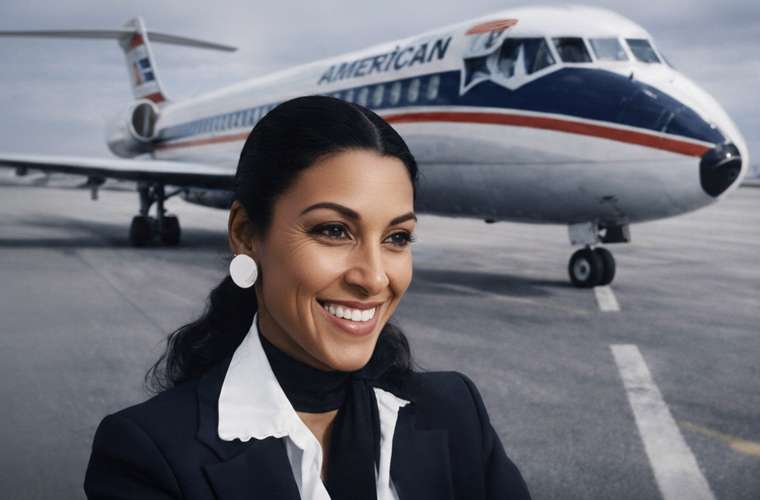
Jill Elaine Brown (also known as Jill E. Brown or Jill Brown-Hiltz), born in 1950 in Baltimore, Maryland, is a pioneering American aviator and retired pilot. She holds the historic distinction of being the first African American woman to become a pilot for a major U.S. passenger airline.
Raised in Baltimore, Brown grew up in a family with an interest in aviation—her parents were Gilbert Brown, who owned a construction company, and Elaine Brown, an art teacher in the local school district. Her passion for flying ignited at a young age. At age 17, she began taking flight lessons and earned her private pilot’s license, soloing in a Piper J-3 Cub. She later flew family and friends in the family’s Piper Cherokee 180D, jokingly calling it “Brown’s United Airlines.” In 1972, she graduated from the University of Maryland with a degree in home economics.
Military Service and Early Challenges
In 1974, Brown made history as the first African American woman admitted to the U.S. Navy’s pilot training program. Her swearing-in was administered by Tuskegee Airman Spann Watson and received significant coverage in African American media. However, she found the rigid military protocols and discipline incompatible with her personality. After about six months in primary flight training, she left the program and received an honorable discharge in 1974. This brief experience still provided foundational skills she carried into her civilian career.


Path to Commercial Aviation
After leaving the Navy, Brown taught home economics for a few years while continuing to build her flying hours privately. Inspired by an article about Warren H. Wheeler—a fellow Black pilot founding Wheeler Airlines (the first African American-owned and FAA-certificated airline)—she reached out to him. Initially hired as a ticket-counter clerk at the airline’s headquarters in Durham, North Carolina, due to no immediate pilot openings, she worked her way up to a pilot position. Over approximately two years (around 1976–1978), she accumulated the required flight hours (including the 1,200 needed for major airline eligibility) while flying for Wheeler Airlines.
Breakthrough Achievement
In 1978, at age 28, Brown was hired by Texas International Airlines (a major U.S. passenger carrier that later merged into Continental Airlines). This made her the first African American woman to serve as a pilot for a major American passenger airline—a landmark that shattered racial and gender barriers in commercial aviation during an era when the industry remained overwhelmingly white and male. She flew passenger routes for about one year but felt the airline may have hired her partly for publicity value rather than merit, prompting her departure.
Later Career and Advocacy
Brown then joined Zantop International Airlines, a cargo carrier based near Detroit, Michigan, where she piloted cargo aircraft until 1985, gaining further experience on larger planes. In the late 1980s and 1990s, she faced ongoing challenges in the industry. She applied multiple times to United Airlines but was rejected, leading her to file a lawsuit in 1990 (with some sources citing 1987), alleging racial and sexual discrimination. The federal court ultimately ruled in United’s favor in 1997.
After retiring from active flying, Brown-Hiltz has advocated for greater opportunities and rights for African American pilots and women in aviation. Her trailblazing career continues to inspire efforts toward diversity in the field, as documented in aviation history exhibits, Black history resources, and organizations like the Organization of Black Aerospace Professionals (OBAP).
Her legacy stands as a testament to perseverance amid systemic obstacles, helping open doors for future generations of Black and female aviators in commercial and military aviation.