
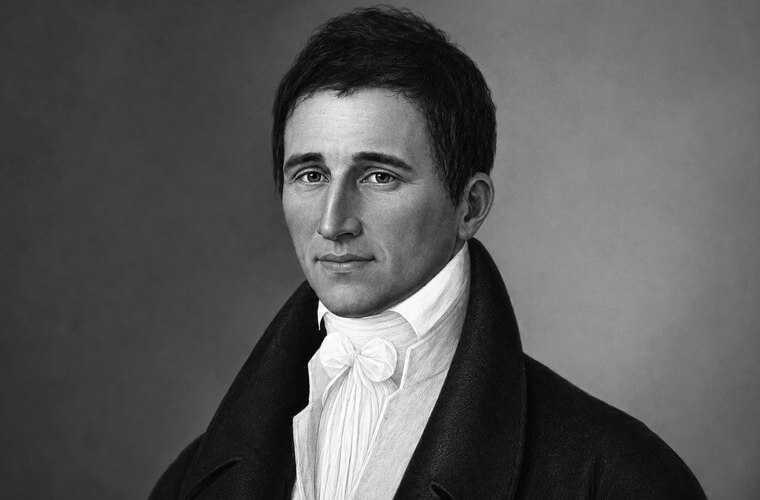
Daniel Coker (1780–1846) was an African American clergyman, missionary, educator, writer, and abolitionist who played a pivotal role in the founding of the African Methodist Episcopal (AME) Church and became one of the earliest African American missionaries to Africa. Born Isaac Wright around 1780 in Baltimore County or Frederick County, Maryland, Coker was the son of Edward Wright, an enslaved African American, and Susan Coker, a white indentured servant (accounts vary slightly on his parents’ exact status). Under Maryland law at the time, he was born into slavery due to his father’s status. He grew up in a household with his white half-brothers and was allowed to attend school alongside them, serving as a valet. As a teenager, he fled to New York to escape recapture, adopted the name Daniel Coker, and joined the Methodist Episcopal Church. He later returned to Baltimore, where friends purchased his freedom. This allowed him to teach at a school for Black children and preach openly.
Ministry and Abolitionism in the United States
Ordained as a deacon in 1802 by Bishop Francis Asbury, Coker became a prominent Methodist preacher and educator in Baltimore. He founded the Bethel Charity School for Black children and established the African Bethel Church (later Bethel A.M.E. Church) in response to racial discrimination within the white-dominated Methodist Church. A bold abolitionist, in 1810 he published A Dialogue Between a Virginian and an African Minister, one of the few anti-slavery pamphlets written and published in the slaveholding South. The work used a scholastic dialogue format to argue against slavery and is noted for its literary quality.
In 1816, Coker represented his Baltimore congregation at the first national convention of Black Methodist societies in Philadelphia. Alongside Richard Allen and others, he helped establish the African Methodist Episcopal Church—the first independent Black denomination in the United States. He was elected the first bishop but declined the position (possibly due to controversy over his light skin tone), deferring to Allen. He served as the first secretary of the new church.
Missionary Work and Later Life in Africa
Frustrated by ongoing challenges in Baltimore—including a brief expulsion from his church connection—Coker turned to emigration efforts. In 1820, he sailed aboard the Elizabeth with his family and other emigrants under the auspices of the American Colonization Society (ACS). The group aimed to establish a settlement in West Africa. After landing on Sherbro Island (in present-day Sierra Leone), disease devastated the expedition, killing most of the white agents and many settlers. Coker assumed leadership and guided the survivors to the mainland, settling in Hastings near Freetown, Sierra Leone. He became a key figure in the British colony, serving as a government administrator, church organizer, and missionary. He founded the West African Methodist Church and ministered to liberated Africans. Coker remained in Sierra Leone for the rest of his life, becoming the patriarch of a prominent Creole family. His descendants, including his son Daniel Coker Jr., continued to play important roles in Freetown society. He died in 1846.
Daniel Coker was a trailblazer who bridged American abolitionism and African missionary work. As a founder of the AME Church, he helped create an enduring institution for Black religious independence. His writings, educational efforts, and leadership during the perilous early colonization of Sierra Leone demonstrated remarkable resilience and vision. Later AME leaders, such as Bishop Henry McNeal Turner, praised his foundational contributions to both the church in America and early Methodist communities in Africa.
His life exemplifies the complex intersections of slavery, freedom, faith, and the back-to-Africa movement in the early 19th century.