
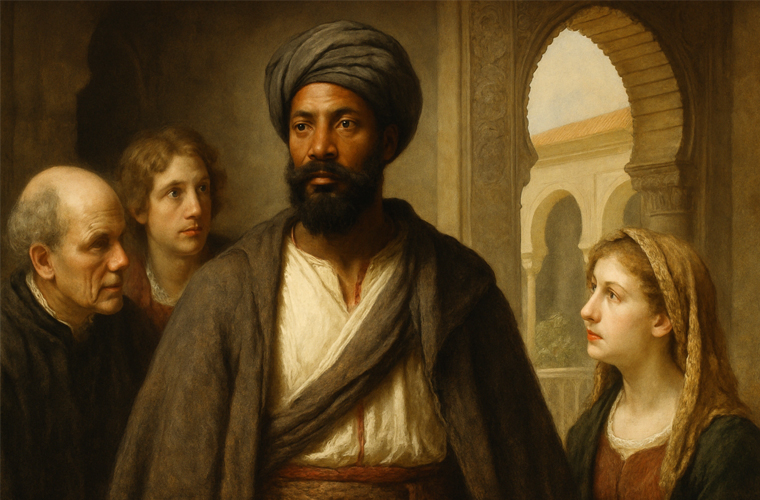
The Enigmatic Legacy of the “Moor”: A Term Shrouded in History, Myth, and Misuse
If the word “Moor” rings a bell from dusty novels, Renaissance paintings, or even heated online debates about identity, yet leaves you scratching your head in confusion, you’re far from alone. This seemingly straightforward term has danced through centuries of Western imagination, morphing from a geographic label into a catch-all for exoticism, otherness, and outright prejudice. At its core, “Moor” isn’t a fixed ethnic or racial category—it’s a fluid concept, wielded like a brushstroke in the grand canvas of history. It has evoked the splendor of medieval Islamic Spain, the terror of invading “infidels” in Christian chronicles, and the sensual shadows in European art. Unpacking it reveals not just a word, but a mirror to how societies have projected their fears and fascinations onto the unfamiliar.
Roots in the Ancient World: From Berbers to a Broader Shadow
The story begins in antiquity, with the Latin term Maurus, which the Romans coined around the 1st century BCE to describe the indigenous peoples of Mauretania—a vast Roman province spanning modern-day Morocco, Algeria, and parts of Tunisia and Libya. These were primarily Berber tribes, North Africa’s resilient inhabitants, known for their nomadic herding, fierce warrior traditions, and early adoption of Christianity before the arrival of Islam. The name Maurus likely derived from the Greek mauros, meaning “dark” or “black,” which hints at early skin-color associations, although it originally signified geography more than phenotype.
As the Roman Empire crumbled in the 5th century CE, waves of migrations and conquests blurred these lines. The term lingered in Byzantine and early medieval texts, but it truly gained traction with the rise of Islam. By the 7th century, Arab armies had swept across North Africa, converting and allying with Berber groups. “Moor” evolved into a shorthand for these Muslim North Africans, especially as they ventured northward. In European eyes, it became synonymous with the “Saracen” hordes of the Crusades—any non-Christian from the Islamic world, regardless of origin. This slippage from ethnicity to religion set the stage for centuries of ambiguity.
The Golden Age of al-Andalus: Conquest, Culture, and Conflict
The Moors’ most vivid chapter in European history unfolded in 711 CE, when Tariq ibn-Ziyad, a Berber general under the Umayyad Caliphate, led a daring amphibious invasion across the Strait of Gibraltar (which the Spanish later named *Jebel Tariq*, or “Tariq’s Mountain,” anglicized to Gibraltar). With an army of around 7,000–12,000 mostly Berber troops, Tariq crushed the Visigothic kingdom at the Battle of Guadalete, toppling King Roderic in a matter of weeks. What followed was no mere raid but a transformative era: the Iberian Peninsula, rechristened *al-Andalus*, blossomed into one of the medieval world’s most vibrant hubs.
Under Muslim rule, which lasted nearly eight centuries in varying degrees, al-Andalus became a beacon of multiculturalism. Cordoba, its glittering capital, rivaled Baghdad in splendor, boasting streetlights, public libraries with over 400,000 volumes, and aqueducts that irrigated lush orchards. Intellectuals from diverse faiths converged here: Jewish philosopher Maimonides penned treatises on medicine and ethics; Muslim polymath Averroes (Ibn Rushd) revolutionized Aristotelian philosophy, influencing Thomas Aquinas; and Christian scholars like Gerard of Cremona translated Arabic texts on algebra, optics, and astronomy into Latin, fueling Europe’s eventual Renaissance.
Architecturally, the Moors left indelible marks—the Alhambra’s intricate arabesques in Granada, the Great Mosque of Cordoba’s hypnotic horseshoe arches, and Seville’s Alcázar palace, blending Islamic geometry with local Roman influences. Economically, al-Andalus thrived on silk trade, citrus exports, and advanced agriculture, introducing Europe to rice, sugarcane, and irrigation techniques that turned arid lands green. Yet, this prosperity masked simmering tensions. The population was a mosaic: Arab elites, Berber soldiers, converted muladies (local Iberians), and Mozarabs (Christians under Muslim rule). Power struggles, like the 750 CE Abbasid revolt that toppled the Umayyads, fragmented the emirate into taifas (petty kingdoms), inviting opportunistic incursions.
The Reconquista: Erosion and Expulsion
By the 11th century, Christian kingdoms in the north—Asturias, Leon, Castile, and Aragon—began chipping away at al-Andalus, driven by a mix of religious zeal, territorial ambition, and resentment toward what they saw as foreign overlords. The Reconquista, as it’s romanticized in Spanish historiography, was less a unified crusade than a grinding series of sieges and alliances. Key victories included the 1085 capture of Toledo by Alfonso VI, which yielded a treasure trove of Arabic manuscripts, and the brutal 1212 Battle of Las Navas de Tolosa, where a Christian coalition shattered the Almohad Caliphate’s grip.
The final act played out in 1492, a year etched in infamy. Catholic Monarchs Ferdinand II of Aragon and Isabella I of Castile, fresh from funding Columbus’s voyage, besieged Granada, the last Muslim stronghold under the Nasrid dynasty. Emir Muhammad XII (“Boabdil”) surrendered on January 2, marking the end of Islamic rule. The triumph was bittersweet: In the Edict of Expulsion, Ferdinand and Isabella decreed that all Jews must convert or leave, while Muslims (*Moriscos*) faced forced baptisms and cultural erasure. By 1609, Philip III expelled some 300,000 Moriscos, scattering descendants to North Africa and beyond. This “purification” of Spain cemented the Moors’ image as a vanquished foe, but the term had already seeped into Europe’s collective psyche.
Echoes in Art and Literature: From Noble Warriors to Eroticized Villains
As the Moors faded from Iberian soil, their specter haunted Western culture. In medieval chansons de geste like *The Song of Roland*, they appear as swarthy pagans, slain by heroic knights. Renaissance artists amplified the exotic allure: Titian’s *Ecce Homo* features a turbaned Moorish attendant, symbolizing distant opulence, while Velázquez’s court portraits subtly nod to Spain’s mudéjar (Moorish-influenced) heritage. In literature, the 16th-century picaresque novel *Lazarillo de Tormes* mocks Moorish conversos, reflecting post-expulsion paranoia about “crypto-Muslims.”
No invocation rivals William Shakespeare’s *Othello, the Moor of Venice* (c. 1603). The titular protagonist, a valiant general in Venice’s multicultural melting pot—a hub of trade with Ottoman ports and African outposts—is both exalted and undermined. Othello’s “sooty bosom” and tales of “anthropophagi” (man-eaters) evoke the era’s blurred lines between Moors as North African Muslims or sub-Saharan Africans via the trans-Saharan slave trade. Yet, Iago’s venomous whispers—”an old black ram / Is tupping your white ewe”—tap into Elizabethan stereotypes: the lascivious, jealous Moor, hypermasculine yet inherently treacherous. This duality mirrored real Venetian encounters; by the 1500s, “blackamoors” (a term blending “black” and “Moor”) denoted enslaved Africans or Ottoman envoys, often caricatured in masques with blackened faces and bells. Such tropes persisted, influencing 19th-century Orientalism—from Delacroix’s *Women of Algiers* to Kipling’s imperial yarns—where Moors embodied the thrilling yet dangerous “East.”
Modern Reinventions: From Fringe Ideologies to Cultural Reclamation
Fast-forward to the 20th and 21st centuries, and “Moor” resurfaces in unexpected corners. In the U.S., the Moorish Science Temple, founded in 1913 by Noble Drew Ali, reframed it as a badge of African-American pride, claiming descent from ancient Moabites (a biblical twist on Moors) to assert spiritual sovereignty. This evolved into the controversial Moorish sovereign citizens, a splinter of the broader sovereign movement. Adherents, often facing legal troubles, brandish homemade “Moorish” passports and liens, insisting that pre-Columbian Moors “discovered” America and exempt them from taxes or traffic laws. Courts routinely dismiss these claims as pseudohistory, but they underscore the term’s enduring magnetism—a shortcut to imagined indigeneity in a nation grappling with racial legacies.
Today, amid decolonization efforts, scholars and activists reclaim “Moor” to highlight al-Andalus’s hybridity, countering Eurocentric narratives. Exhibitions like the Louvre’s 2022 “Al-Andalus” show or books such as María Rosa Menocal’s *The Ornament of the World* celebrate its tolerance, while DNA studies reveal the genetic tapestry of modern Iberians, with North African markers in up to 20% of Spaniards. Yet, the term’s vagueness persists: In pop culture, from Disney’s *Aladdin* to HBO’s *Game of Thrones*, “Moorish” evokes vague medieval fantasy, glossing over the human cost.
In the end, the Moor’s allure lies in its elusiveness—a linguistic ghost that has justified conquests, inspired masterpieces, and fueled delusions. It reminds us that labels, once loosed, rarely stay tethered to truth, evolving instead into tools for whoever wields them next. As we navigate our own era of identity flux, perhaps it’s time to retire the Moor as a monolith and honor the diverse voices it once obscured.