
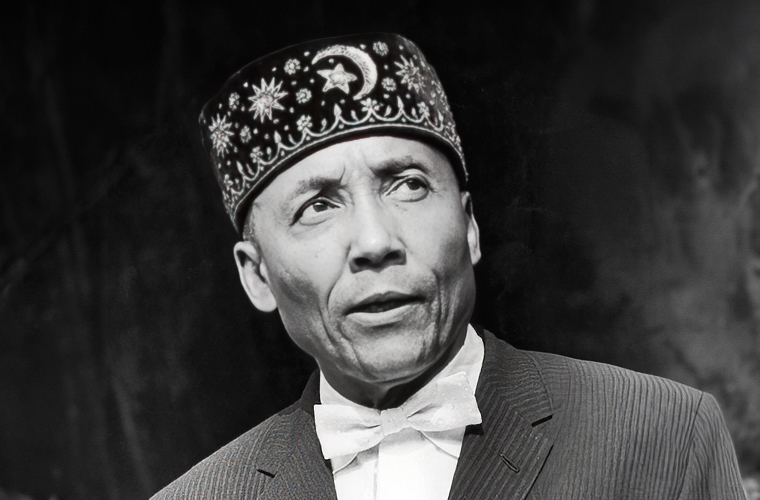
Elijah Muhammad (born Elijah Robert Poole; October 7, 1897 – February 25, 1975) was an influential American religious leader who served as the leader of the Nation of Islam (NOI) from 1933/1934 until he died in 1975. Under his guidance, the NOI transformed from a small Detroit-based group into a significant national organization with tens of thousands of members, particularly during the civil rights era. He promoted black nationalism, economic self-sufficiency, moral discipline, and a distinctive theology that blended elements of Islam with unique racial and eschatological teachings.
Elijah Muhammad was born Elijah Robert Poole in Sandersville, Georgia, the seventh of thirteen children to William Poole Sr. (a Baptist lay preacher and sharecropper) and Mariah Hall (a homemaker and sharecropper). His parents were descendants of formerly enslaved people. He received only a limited formal education, attending school through the fourth grade before working in sawmills and brickyards and as a sharecropper to support his family.
At age 16, he left home and took various jobs. He witnessed racial violence, including lynchings, which deeply affected him. In 1917, he married Clara Evans (later Clara Muhammad), with whom he had eight children. Facing oppression and economic hardship in the Jim Crow South, the Poole family joined the Great Migration around 1923, moving north to Hamtramck/Detroit, Michigan, in search of better opportunities. There, amid the challenges of the post-World War I era and the Great Depression, Elijah struggled with unemployment and briefly turned to alcohol.
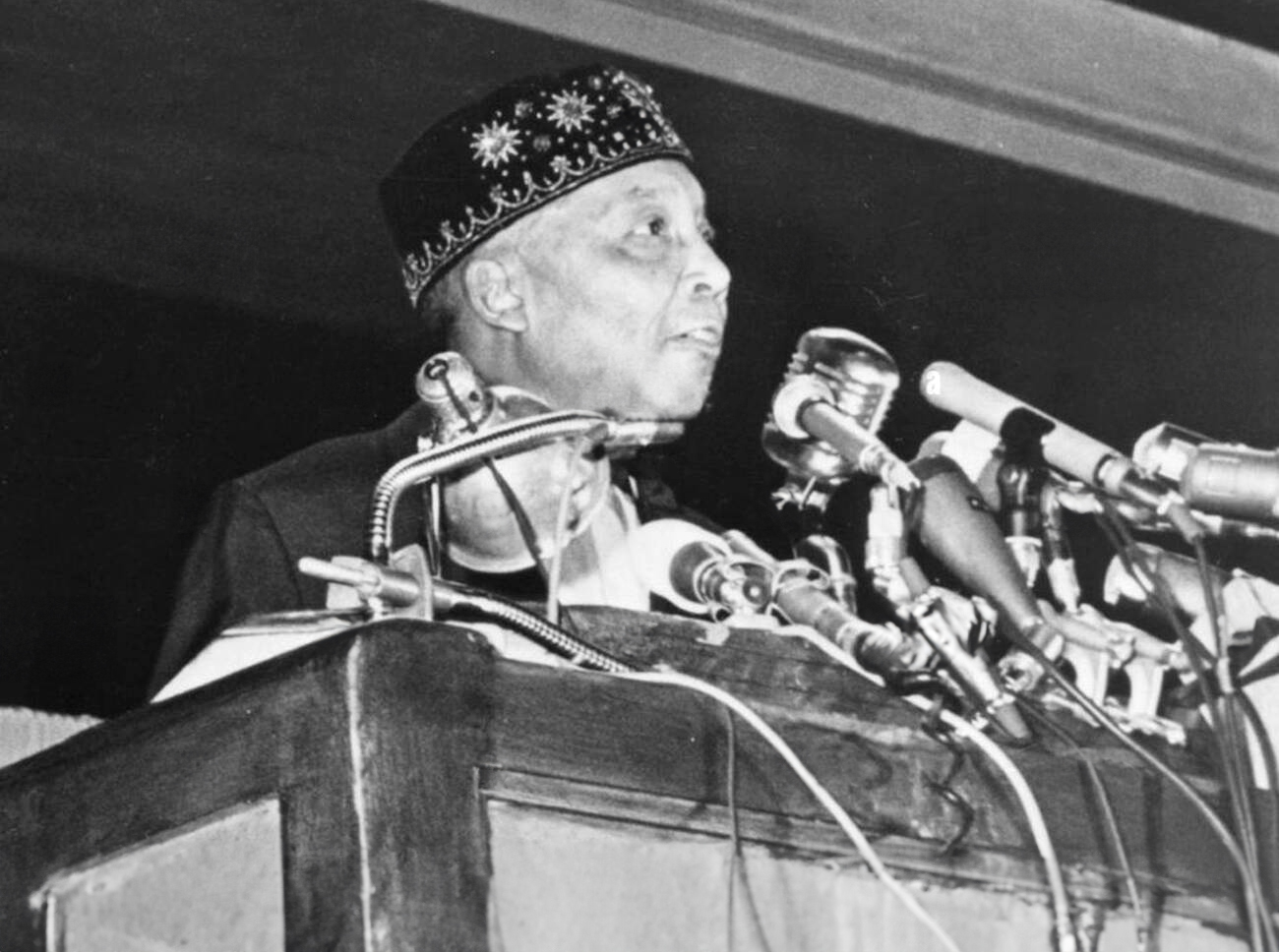


Conversion and Rise in the Nation of Islam
In 1931, at his wife’s urging, Poole attended a lecture by Wallace Fard Muhammad (also known as W.D. Fard), the founder of the Nation of Islam (originally the Allah Temple of Islam) in Detroit. Fard taught a message of black empowerment, racial pride, and independence, portraying black people as the “original” humans and criticizing Christianity as a tool of oppression. Poole became a devoted follower, quickly rising in the organization. Fard gave him the name first Elijah Karriem and later Elijah Muhammad, appointing him Chief Minister and eventually turning leadership over to him.
When Fard mysteriously disappeared in 1934, Elijah Muhammad assumed full control, moving the headquarters to Chicago (Temple No. 2) after internal conflicts in Detroit. He faced early challenges, including arrests related to the University of Islam (the NOI’s school system) and police confrontations. He established additional temples, published the newspaper Final Call to Islam, and built organizational structures like the Fruit of Islam (a paramilitary security force) and the Muslim Girls Training program.
Leadership, Teachings, and Growth
Muhammad’s teachings emphasized black self-reliance, separation from white society, and moral reform. Core elements included:
- Theology: Black people as the original race; whites as “devils” created by the scientist Yakub (a narrative drawn from his interpretation of history and scripture). He taught that Fard was the incarnation of Allah (God in person), and that Muhammad himself was the Messenger of Allah. The teachings incorporated Islamic practices (e.g., prayer, dietary laws) but diverged significantly from orthodox Sunni or Shia Islam.
- Economic and Social Program: He encouraged black-owned businesses, farms, and institutions. By the 1970s, the NOI owned a vast empire including grocery stores, bakeries, farms, real estate, a bank, and schools in dozens of cities. He promoted discipline, abstaining from pork, alcohol, drugs, gambling, and other vices. His book How to Eat to Live outlined strict dietary guidelines aimed at health and longevity.
- Draft Resistance and Imprisonment: During World War II, he and many followers refused the military draft on religious and political grounds. He was convicted of draft evasion and served about four years in prison (1942–1946), during which Clara Muhammad and others kept the organization running.
The NOI grew substantially in the 1950s and 1960s, boosted by high-profile converts like Malcolm X (a key lieutenant and national spokesman until their split) and Muhammad Ali (whom Elijah renamed). Malcolm X’s charisma helped dramatically expand membership, though tensions arose over issues including Muhammad’s personal conduct and differing views on integration vs. separation. Malcolm left the NOI in 1964 and was assassinated in 1965; three NOI members were convicted (though controversies remain). Muhammad denied involvement.
He authored several books, including Message to the Blackman in America (1965), Our Saviour Has Arrived, and the two-volume How to Eat to Live.
Personal Life and Controversies
Muhammad married Clara in 1917; she played a crucial role in the organization. They had eight children together. He also fathered additional children outside the marriage (estimates suggest at least 23 children total), which became a point of contention, especially with Malcolm X. These personal matters contributed to internal strains.
His separatist and racial rhetoric made him highly controversial. Critics accused him of promoting hatred or black supremacy, while supporters praised his impact on empowerment, reducing crime and addiction among followers, and fostering pride and economic independence. He faced FBI surveillance and efforts to undermine the NOI.
Later Years and Death
In his final years, Muhammad moderated some rhetoric, focusing more on self-improvement. His health declined due to heart disease, diabetes, bronchitis, and asthma. He died of congestive heart failure on February 25, 1975, in Chicago at age 77. He was succeeded by his son Warith Deen Mohammed (formerly Wallace Muhammad), who shifted the organization toward orthodox Sunni Islam. A faction led by Louis Farrakhan later revived the original NOI teachings.
Legacy
Elijah Muhammad remains a pivotal yet polarizing figure in 20th-century African American history. He influenced generations through calls for self-determination, discipline, and black economic power. His movement impacted civil rights discourse, even as it offered an alternative to integrationist approaches. High-profile followers like Malcolm X and Muhammad Ali amplified his reach, and his ideas continue to resonate in discussions of black nationalism, Islam in America, and community uplift. Biographies and portrayals in films (e.g., Malcolm X) keep his story alive. His life exemplifies the complexities of leadership amid racial injustice—blending spiritual vision, organizational acumen, and controversial doctrines into a lasting movement.