
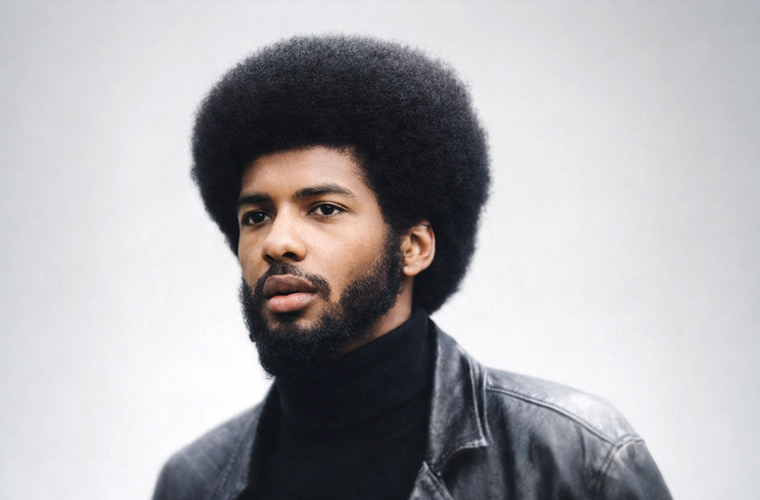
John Jerome Huggins Jr. (February 11, 1945 – January 17, 1969) was an American activist and a key leader in the Los Angeles chapter of the Black Panther Party (BPP). Though his life was cut short at age 23, he played a significant role in building the Southern California branch of the organization, focusing on political education, community organizing, student activism at UCLA, and survival programs that addressed the needs of Black communities.
Born in New Haven, Connecticut, Huggins grew up in a middle-class African American family—one of the prominent Black families in the area. His father, John Huggins Sr., managed the exclusive Yale Fence Club, while his mother worked at Yale’s Sterling Library. The family emphasized education and respectability; Huggins attended the prestigious Hopkins School (a private grammar school where he was one of the few Black students) before graduating from James Hillhouse High School.
As a young man, he was an avid reader with a room filled with hundreds of books. He briefly enlisted in the United States Navy, serving as a Class A radarman during the Vietnam War era. This experience reportedly exposed him to the realities of military conflict and contributed to his growing political awareness and questioning of U.S. foreign policy. After his service, he attended Lincoln University in Pennsylvania, a historically Black university, where he met Ericka Jenkins (later Ericka Huggins).
Move to Activism and the Black Panther Party
In 1967–1968, Huggins and Ericka left college and drove to Los Angeles, initially working in an automobile factory to support themselves while becoming deeply involved in the Black Panther Party. The Southern California chapter was founded in 1968 by Alprentice “Bunchy” Carter, a former gang leader turned revolutionary. Huggins quickly rose as a key figure, serving as deputy chairman (or, in some accounts, captain and later deputy minister of information) alongside Carter, who was deputy minister of defense.
Huggins helped establish and expand the LA chapter’s operations. He focused on:
- Political education — He collaborated on curricula that included revolutionary texts (such as works by Lenin) and emphasized grassroots learning, even teaching illiterate community members to read.
- Community programs — These included mutual aid efforts, liberation schools, and recruitment.
- Student organizing — He enrolled at UCLA under the High Potential Program (an initiative for underrepresented students that evolved into the Academic Advancement Program) and joined the Black Student Union (BSU). He worked to influence the development of an Afro-American Studies program (now the Bunche Center).
He and Ericka married in 1968 (though some accounts describe their union as a committed partnership without a formal legal ceremony). Their daughter, Mai Huggins, was born in December 1968. Both were committed to the BPP’s Ten-Point Program, which demanded freedom, justice, employment, education, and an end to police brutality and exploitation of Black communities. Huggins was known for his charisma, intellectual depth, and dedication to building community power through education and service rather than solely armed self-defense.
Death at UCLA
On January 17, 1969, Huggins and Bunchy Carter were shot and killed in Campbell Hall on the UCLA campus during a Black Student Union meeting—the meeting aimed to discuss leadership for the new Afro-American Studies Center. The shooters were members of the US Organization (also known as United Slaves), a rival Black nationalist/cultural nationalist group led by Maulana Karenga. Claude “Chuchessa” Hubert was identified as the gunman who killed both men; other US members (including the Stiner brothers) were involved or charged.
Accounts of the incident vary: some describe it as erupting from heated arguments or derogatory comments. At the same time, the Black Panther Party maintained it was a planned ambush, with Panthers unarmed per a prior agreement. The broader context involved competition for influence on campus and ideological differences between the BPP’s revolutionary socialism and the US’s cultural nationalism.
Later revelations from the Church Committee hearings and declassified documents showed that the FBI’s COINTELPRO program actively exacerbated tensions. The FBI sent forged letters and engaged in disinformation to provoke conflict between the BPP and US Organization, aiming to destabilize both groups as part of efforts to neutralize Black militant organizations. Huggins was shot in the back; Carter was also killed in the exchange. At the time, Ericka Huggins had given birth to their daughter just weeks earlier. John Huggins’ death, alongside Carter’s, was a major blow to the Los Angeles BPP chapter but did not end its work. Ericka Huggins relocated with their infant daughter to New Haven, where she founded and led the New Haven chapter of the Black Panther Party, which gained national attention amid later trials.
Huggins is remembered as an “unsung” yet vital leader who bridged student activism, community service, and revolutionary politics. Annual memorials at UCLA (often called the Carter-Huggins Commemoration) honor both men for their roles in pushing for Black studies, community programs, and resistance to systemic oppression. His family connections extended to figures like scholar-activist Ruth Wilson Gilmore, who has cited the personal impact of his death on her path toward abolitionist work.
Though his active period in the BPP was brief (roughly 1967–1969), Huggins exemplified the Party’s dual emphasis on self-defense and “survival programs” — free breakfast for children, health clinics, political education, and efforts to empower Black communities. His life highlights the intense pressures, internal rivalries, and state repression faced by Black Power activists in the late 1960s. Huggins’ story is often told in conjunction with his wife, Ericka’s long career as an educator, poet, and activist, underscoring themes of love, loss, and continued struggle within the movement. He remains a symbol of youthful commitment to radical change and the human cost of the fight for Black liberation.