
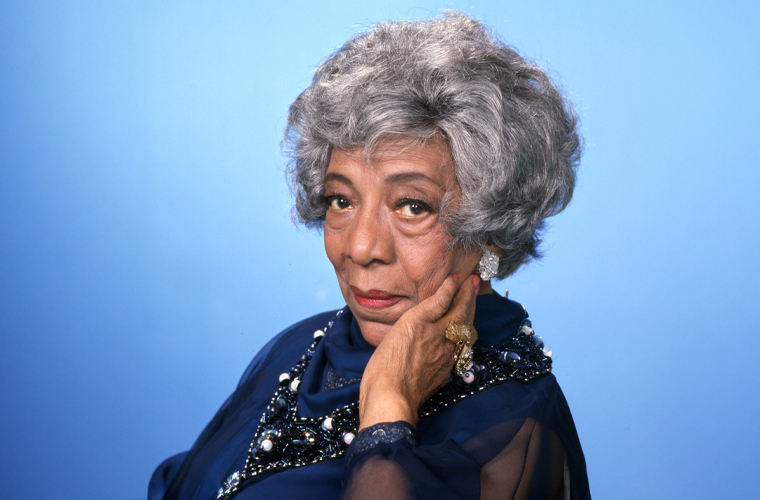
Zara Frances Cully (January 26, 1892 – February 28, 1978), known professionally as Zara Cully (and sometimes Zara Cully-Brown), was a trailblazing American character actress whose remarkable career spanned over five decades before she achieved widespread fame in her 80s as the sharp-tongued, fiercely protective Olivia “Mother Jefferson” on the CBS sitcom The Jeffersons.
Born in Worcester, Massachusetts, as the eldest of ten children to Ambrose E. Cully and Nora Ann (née Gilliam) Cully—who had migrated from North Carolina—Zara grew up in a large family. She graduated from the Worcester School of Speech and Music, laying the foundation for her lifelong passion for performance, elocution, and drama. Early in her career, she left Worcester as a young woman (likely in her late teens or early 20s) and built a multifaceted life in the arts.
In the 1910s and beyond, she married James M. Brown Jr. in 1914; their union lasted until he died in 1968 and produced four children, though two predeceased her (a baby daughter in 1919 and son James M. Brown III in 1972). Surviving children included Mary Gale “Polly” Buggs (married to John A. Buggs, a Deputy Director of the U.S. Civil Rights Commission) and Emerson Brown. Grandchildren and great-grandchildren also survived her.


Cully relocated to Jacksonville, Florida, where she taught drama at Edward Waters College (a historically Black institution) and ran her own private studio for about 15 years. She earned the affectionate title of Florida’s “Dean of Drama” through her work as a teacher, writer, producer, director, and performer in local theater. She participated actively in community productions, honing skills that would define her later screen work.
In 1940, after performing in New York City, she gained acclaim as “one of the world’s greatest elocutionists,” a testament to her mastery of clear, expressive speech and diction—skills rooted in her Worcester education. However, facing persistent racism and Jim Crow-era hostility in the South, she chose to leave Florida and move to Hollywood. There, she became a regular at the Ebony Showcase Theatre, a key venue for Black performers, and began transitioning to screen roles later in life.
Her on-screen career started modestly in the 1960s, during television’s Golden Age. She made her TV debut in 1966 on Run for Your Life, followed by appearances in prestigious anthologies and series like Playhouse 90, The People Next Door (CBS Playhouse), A Dream for Christmas, Cowboy in Africa, The Name of the Game, Mod Squad, and Night Gallery.
In film, she appeared in notable works including The Liberation of L.B. Jones (1970), Brother John (1971, starring opposite Sidney Poitier), The Learning Tree, The Great White Hope, Sugar Hill (1974, where she played a voodoo queen in this Blaxploitation classic), Darktown Strutters (1975), and others like Ghetto Woman.
Her breakthrough came in 1974, at age 82, when she guest-starred as Mother Jefferson on the All in the Family episode “Lionel’s Engagement.” The character—George Jefferson’s meddling, opinionated, and hilariously critical mother—proved so popular that she carried the role to the spinoff The Jeffersons (1975–1978). Standing at just 5’2″, Cully delivered iconic, witty one-liners, often shading daughter-in-law “Weezy” (Isabel Sanford), doting on grandson Lionel, and staunchly defending son George (Sherman Hemsley). Her performance brought sass, dignity, and heart to the role, making her a fan favorite and instant celebrity despite her advanced age.
Health issues marked her later years: she battled pneumonia and a collapsed lung, missing much of season 3 of The Jeffersons, and continued working amid declining health. Remarkably, she never smoked or drank, yet succumbed to lung cancer on February 28, 1978, at age 86 in Los Angeles, during the show’s fourth season. At the time, she was one of television’s oldest active performers.
Zara Cully’s legacy endures as a dedicated craftsman who excelled in theater, education, and screen work, overcoming barriers of race, age, and region. Though fame arrived late, her portrayal of Mother Jefferson remains one of the most memorable in 1970s sitcom history, proving talent knows no timeline.