
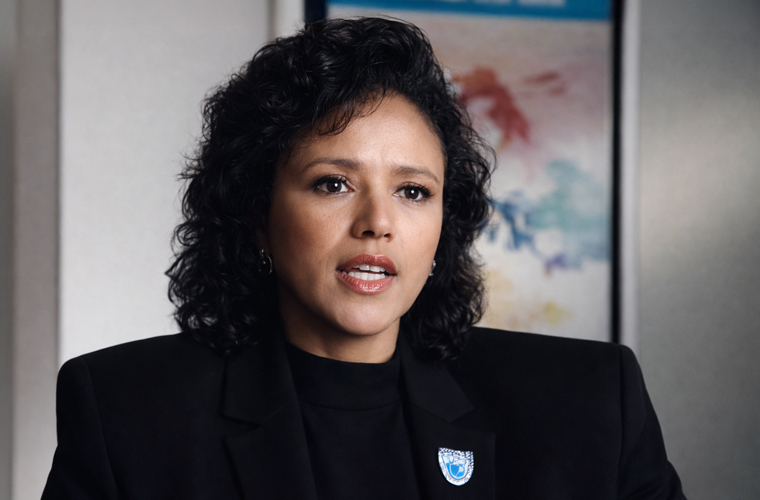
Elaine Brown (born March 2, 1943) is an American activist, writer, singer-songwriter, and prison reform advocate best known as the first and only woman to serve as Chairwoman of the Black Panther Party (BPP) from 1974 to 1977. Based in Oakland, California, she has dedicated decades to Black liberation, community empowerment, and challenging systems of racism, capitalism, and mass incarceration. Brown was born in North Philadelphia to Dorothy Clark, a dress factory worker, and was raised in a single-parent household amid economic hardship in a low-income, predominantly Black neighborhood. Her father was largely absent during her childhood; she learned at age 14 that he was a respected neurosurgeon (or dentist, per some accounts) who had subsidized aspects of her education without direct involvement.
Despite these challenges, Brown attended a special elementary school and later Philadelphia High School for Girls. She received classical piano and ballet lessons and excelled academically, including in Latin. Her education exposed her to predominantly white environments and elite classmates, creating a contrast with her home life that shaped her early awareness of class and racial divides. She briefly attended Temple University before dropping out to pursue a music career.
Path to Activism and Music Career
In the mid-1960s, Brown moved to Los Angeles seeking opportunities as a songwriter and singer. There, she became involved with figures in the music industry, including Jay Richard Kennedy, a music executive who introduced her to ideas around capitalism, communism, and social justice. She recorded two albums: Seize the Time (1969, Vault Records) and Until We’re Free (1973, Motown Records), blending her artistic talents with revolutionary themes.
The 1968 assassination of Dr. Martin Luther King Jr. profoundly impacted Brown, accelerating her shift toward radical activism. She joined the Black Panther Party in 1968 as a rank-and-file member in Los Angeles. Her initial roles included studying revolutionary literature, selling the Black Panther newspaper, and helping establish community “Survival Programs,” such as free breakfasts for children, free buses for prison visits, and legal aid. Brown quickly rose through the ranks. In 1971, she joined the BPP Central Committee as Minister of Information, replacing the expelled Eldridge Cleaver—the only woman to hold such a high position at that time. She contributed to the party’s publications and publicity efforts, including work around the New Haven trial of Bobby Seale and Ericka Huggins.
In 1974, BPP co-founder Huey P. Newton fled to Cuba to evade criminal charges and appointed Brown as Chairwoman (initially as Defense Minister in some accounts). She led the organization until 1977, becoming the first and only woman to head the Party. Under her leadership, the BPP emphasized electoral politics and community service over armed confrontation.
Key achievements included:
- Spearheading the successful campaign to elect Lionel Wilson as Oakland’s first Black mayor.
- Founding the Panther Liberation School (a model educational program for inner-city children).
- Expanding Survival Programs like free breakfast initiatives and health clinics.
- Building alliances with labor unions and progressive groups, which helped influence California politics (e.g., support for Jerry Brown’s gubernatorial campaign).
Brown worked to address gender dynamics within the male-dominated Party, advocating for greater leadership roles for women, though she later described internal challenges, including sexism and violence.
Brown resigned in 1977 (some accounts note her effective departure around 1978) amid internal tensions, following Huey Newton’s return from Cuba. She cited concerns over an ordered beating of a female Panther member and broader issues of safety and direction. She left Oakland with her daughter, Ericka, and moved to Los Angeles, later spending time in Paris. Many viewed her exit as a significant turning point for the Party’s decline.
After leaving the BPP, Brown focused on raising her daughter, writing, and continued activism.
She authored two major books:
- A Taste of Power: A Black Woman’s Story (1992, Pantheon Books; later Anchor Books) — A candid memoir detailing her childhood, rise in the Panthers, experiences with power, sexism, and the revolutionary movement. It has been praised for its frankness on personal and political struggles and is slated for film adaptation (with Alicia Keys reportedly attached at one point). It has been reissued internationally and as an audiobook.
- The Condemnation of Little B (2002) — A critique of the criminal justice system, mass incarceration, and societal failures affecting young Black men, drawing parallels to W.E.B. Du Bois’s work and examining the case of a child tried as an adult.
Brown has lectured widely on prison reform, Black liberation, and social justice at universities, conferences, and events. She has advocated for issues like the criminalization of poverty and support for the oppressed. In recent years, she has served as CEO (or COO, in some references) of Oakland & the World Enterprises (founded in 2014), a nonprofit that supports formerly incarcerated people and others in building businesses and achieving economic self-sufficiency.
“A woman in the Black Power movement was considered, at best, irrelevant. A woman asserting herself was a pariah. If a black woman assumed a role of leadership, she was said to be eroding black manhood, to be hindering the progress of the black race. She was an enemy of the black people[…] I knew I had to muster something mighty to manage the Black Panther Party.”
A major ongoing project is the Black Panther Apartments, a 79-unit 100% affordable housing complex with retail space in West Oakland, completed around 2024 and fully leased by late that year. The initiative aims to revitalize the community and provide stable housing. In 2024, a street was named “Elaine Brown Way” in Oakland in her honor. She has remained active through 2026, delivering keynotes (e.g., at MLK events) and supporting causes such as legal defense committees.


Brown has one daughter, Ericka Abram (born Ericka Brown), fathered by Black Panther member Raymond “Masai” Hewitt, though he was largely absent from Ericka’s life. Brown has spoken openly about balancing motherhood with activism and the personal costs of her revolutionary path, including relationships and survival in a high-risk environment. She has described fearing for her life during and after her BPP tenure. She is also a singer-songwriter with a history of performing revolutionary music.
Elaine Brown’s life embodies resilience, leadership, and unapologetic commitment to Black self-determination. As the only woman to chair the Black Panther Party, she broke barriers in a male-dominated movement while advancing community programs that influenced later activism, including echoes in movements like Black Lives Matter. Her work highlights the intersections of race, class, gender, and power. She continues to advocate for economic justice, housing, and prison reform, emphasizing practical community-building over rhetoric.
Brown’s official website (sisterelainebrown.com) provides further details on her ongoing projects and writings. Her story remains a powerful testament to one woman’s navigation of revolution, personal sacrifice, and enduring activism.