
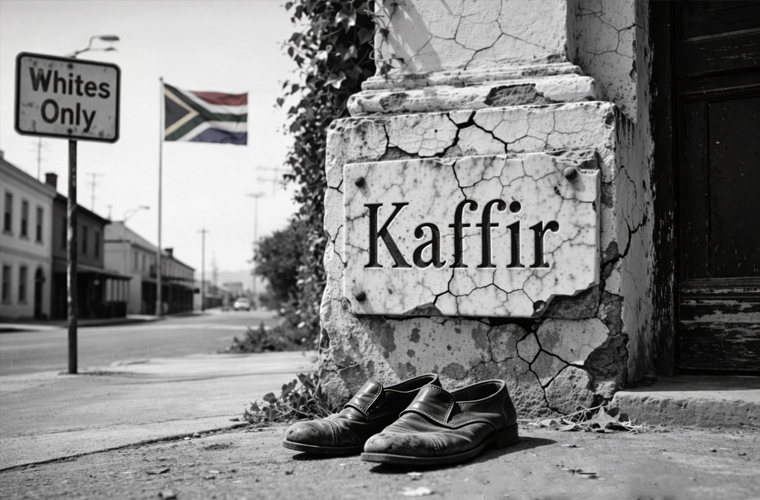
The word “Kaffir“—often pluralized as “Kaffirs”—carries a heavy historical burden. What began as a neutral or religious descriptor in Arabic has evolved into one of the most derogatory racial slurs in modern English, particularly within the context of South African history. Its usage evokes the brutal legacy of colonialism, apartheid, and systemic racism. This article explores the etymology, historical application, and contemporary implications of the term, aiming to shed light on its origins while underscoring why it remains profoundly offensive today.
Etymology: From Arabic Roots to Colonial Adaptation
The term “Kaffir” traces its origins to the Arabic word *kāfir* (كافر), which literally means “unbeliever” or “infidel.” In Islamic theology, it refers to someone who rejects or denies the faith of Islam. This usage dates back centuries and was not inherently racial; it was a religious classification applied to non-Muslims.
European explorers and colonizers encountered the word in the 16th century through interactions in the Islamic world and along African trade routes. By the 17th century, it had entered European languages, including English, as “Kaffir” or “Caffre.” In the context of sub-Saharan Africa, Portuguese and Dutch traders adapted it to describe indigenous peoples they viewed as “heathens” outside the Abrahamic faiths. Over time, this religious connotation morphed into an ethnic one, specifically targeting Black African populations.
The Oxford English Dictionary notes that the derogatory shift likely occurred as Muslim communities in Africa used it pejoratively against non-Muslim indigenous groups, a nuance that European settlers amplified during colonization.
Historical Usage in South Africa: A Tool of Oppression
In South Africa, “Kaffir” became synonymous with Black Africans during the era of Dutch and British colonialism. The term first appeared in records from the 17th century, when Dutch settlers at the Cape of Good Hope used it to refer to the Khoisan and later Bantu-speaking peoples, such as the Xhosa and Zulu. It was not applied universally; for instance, it was more commonly directed at Xhosa and Zulu groups, while Tswana and Sotho peoples were often called “Blacks” instead.
The word permeated colonial administration and conflict. During the “Kaffir Wars” (1779–1878)—a series of frontier clashes between British forces and Xhosa warriors—it was embedded in official nomenclature, including terms like “Kaffirland” and “British Kaffraria.” These conflicts displaced thousands and entrenched racial hierarchies.
Under apartheid (1948–1994), “Kaffir” was weaponized as a slur by white South Africans to dehumanize and subjugate Black people. It appeared in hate speech, signage, and everyday vitriol, reinforcing the regime’s ideology of white supremacy. Post-apartheid, its utterance has led to legal repercussions; in 2010, a Johannesburg businessman was fined for calling a Black employee a “Kaffir,” highlighting its status as hate speech under South African law.
Cultural references, like the 1995 kwaito song “Kaffir” by Arthur Mafokate, have reclaimed or satirized the term to critique its legacy, turning it into a commentary on racial mockery.
Modern Implications: Offensiveness and Global Echoes
Today, “Kaffir” is universally recognized as a racial epithet in South Africa and beyond, comparable to the N-word in its capacity to inflict emotional harm. Its use can result in social ostracism, workplace dismissals, or criminal charges. The term’s persistence in global discourse underscores unfinished reckonings with colonial language.
Interestingly, “Kaffir” has non-racial connotations in other contexts, which complicate its legacy. In botany, Citrus hystrix—a Southeast Asian lime used in Thai cuisine—is known as the “Kaffir lime.” This name likely stems from Malay traders’ use of the word for non-Muslims, applied to the fruit’s origins, but it has sparked debate over whether to rename it to avoid offense. Similarly, “Kaffir corn” refers to sorghum, a staple crop, with origins in the same colonial lexicon.
In Islamic contexts outside Africa, kafir retains its theological meaning without racial overtones, though English transliterations can confuse.
The story of “Kaffirs” is a microcosm of how language can encode power imbalances. From an Arabic descriptor of faith to a colonial slur enforcing racial terror, its journey reflects broader histories of exploitation. In an era of decolonization and cultural sensitivity, understanding terms like this is essential—not to preserve them, but to dismantle their lingering toxicity.
Educators, writers, and speakers are encouraged to avoid “Kaffir” entirely, opting for respectful alternatives. As South Africa continues healing from apartheid’s scars, reclaiming narratives around such words offers a path to equity. By confronting this history, we honor the dignity of those it once sought to erase.