
Courage, Crisis, and the Fight for Equal Education
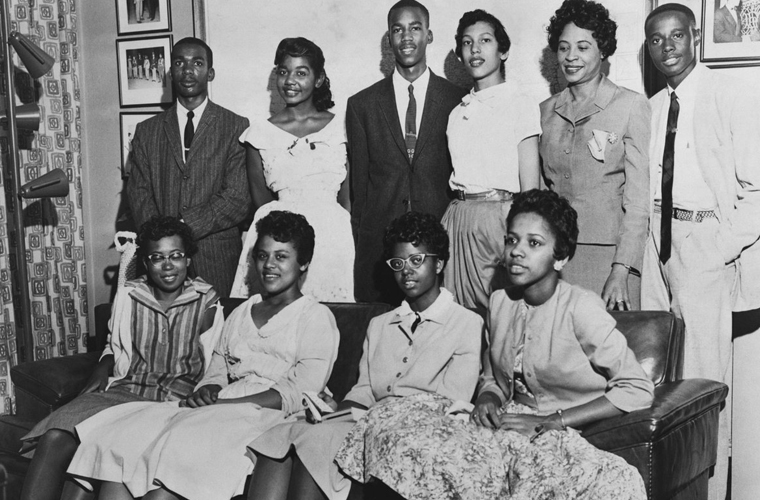
In September 1957, nine African American teenagers walked into history at Little Rock Central High School in Arkansas. Their attempt to attend a previously all-white school became one of the most dramatic tests of the Supreme Court’s landmark Brown v. Board of Education decision and a defining moment of the civil rights movement. Confronted by a hostile mob, the Arkansas National Guard under Governor Orval Faubus, and intense political resistance, the students known as the Little Rock Nine forced the federal government to intervene with military force. Their persistence under extreme pressure helped affirm that constitutional rights could not be nullified by state defiance or mob violence.
Background: From Brown to the Blossom Plan
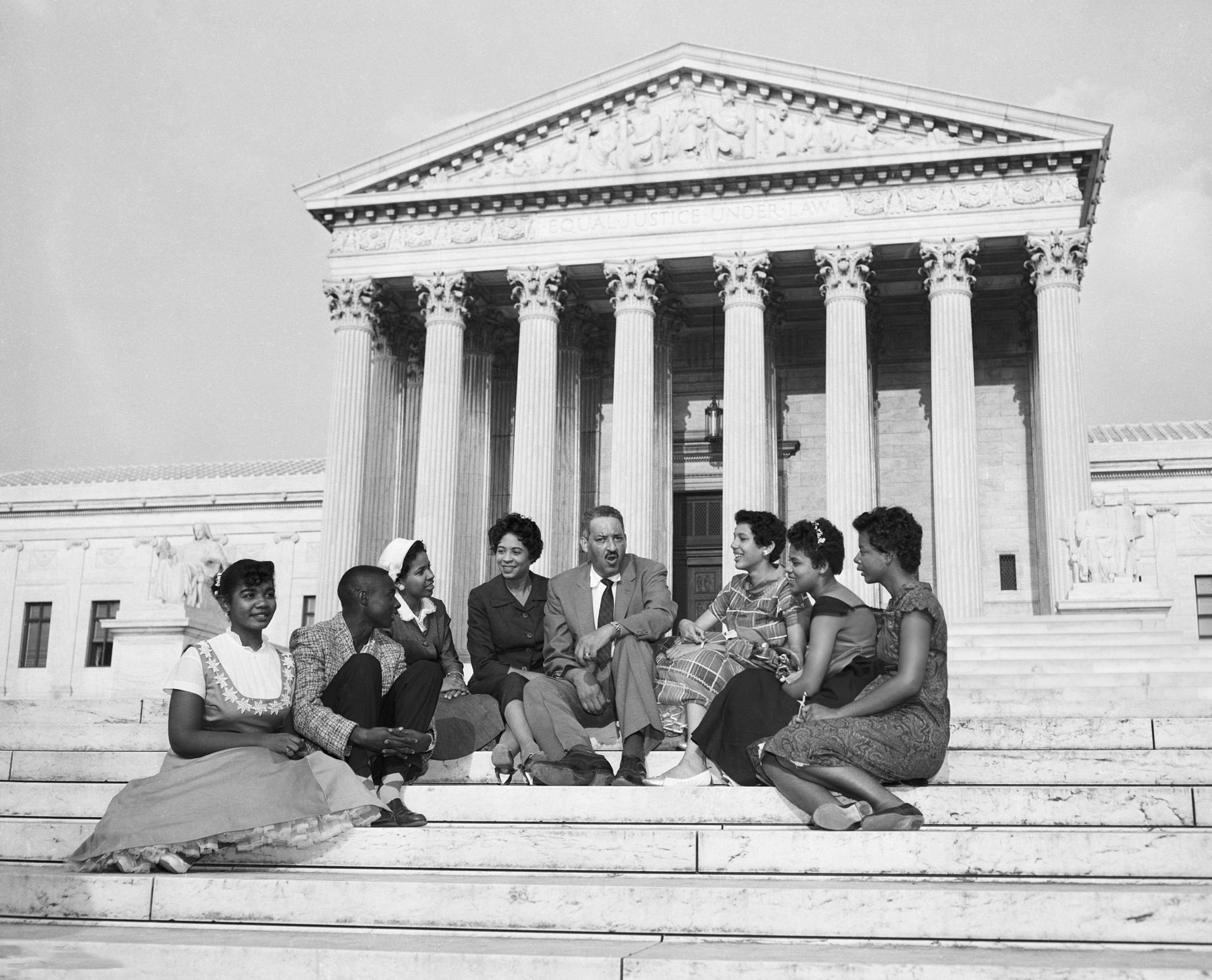
On May 17, 1954, the U.S. Supreme Court ruled unanimously in Brown v. Board of Education of Topeka that racial segregation in public schools violated the Equal Protection Clause of the Fourteenth Amendment. The “separate but equal” doctrine established by Plessy v. Ferguson (1896) was overturned for education. A year later, in Brown II, the Court ordered desegregation to proceed “with all deliberate speed.”
Little Rock’s school board, led by Superintendent Virgil Blossom, responded with a gradual plan approved in May 1955. Known as the Blossom Plan (or Little Rock Phase Program), it called for desegregation to begin at the high school level in the fall of 1957 at Central High School, then expand downward over six years. Students could transfer out of schools where their race was in the minority, a provision expected to keep most Black schools largely segregated. Federal courts upheld the plan after the local NAACP challenged delays.
Central High, a large, well-resourced school, stood in sharp contrast to the underfunded Black schools such as Horace Mann High and Paul Laurence Dunbar Junior High. Black families saw integration as a path to better academic opportunities, even though students were told they could not join extracurricular activities, teams, or social events. Daisy Bates, president of the Arkansas NAACP and co-publisher (with her husband L.C. Bates) of the Arkansas State Press, recruited and advised the students. From roughly 100 volunteers, school officials selected nine who lived in the Central attendance zone and had strong academic records.
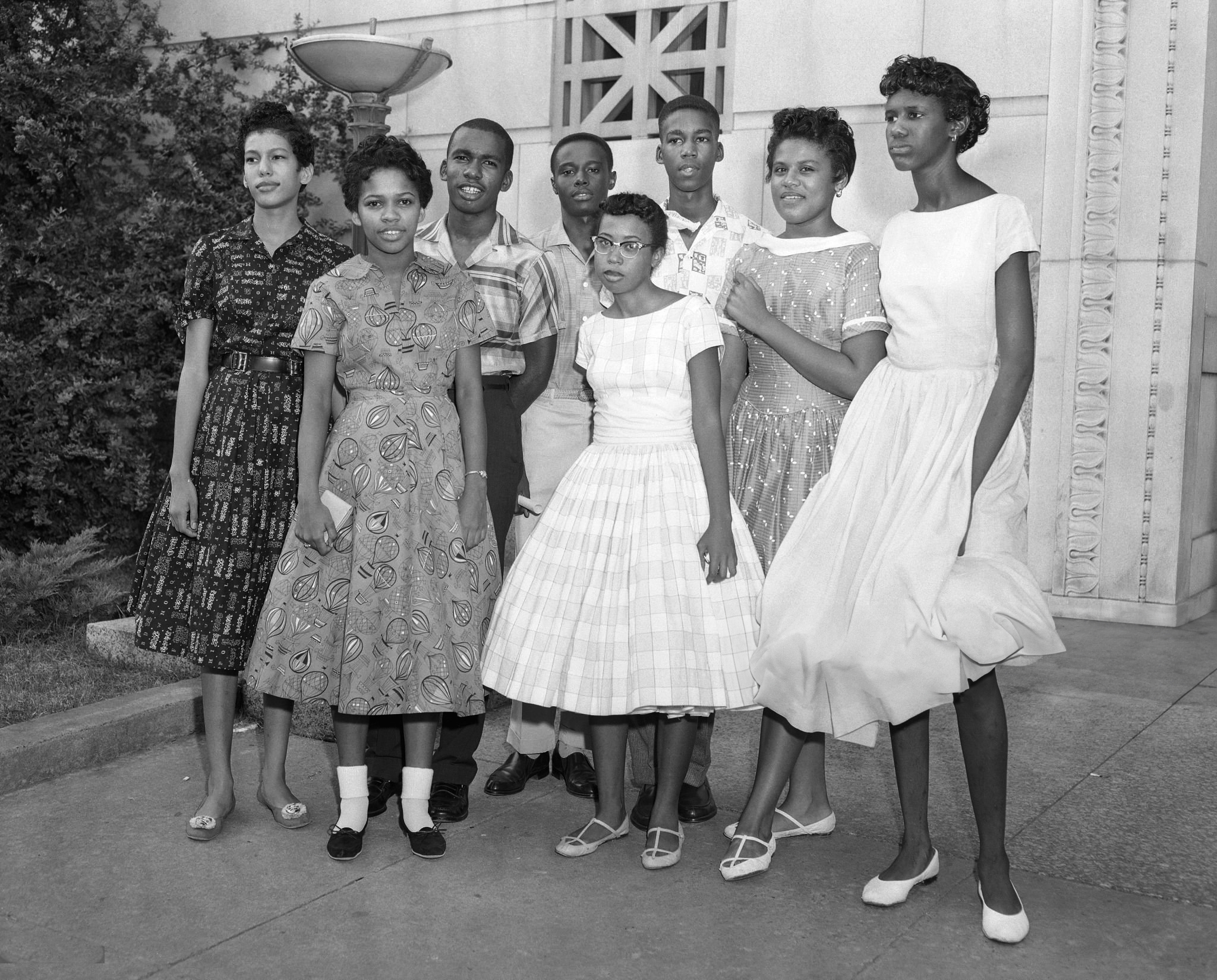
The Little Rock Nine were:
- Minnijean Brown (later Trickey)
- Elizabeth Eckford
- Ernest Green
- Thelma Mothershed (later Wair)
- Melba Pattillo (later Beals)
- Gloria Ray (later Karlmark)
- Terrence Roberts
- Jefferson Thomas
- Carlotta Walls (later LaNier)
They ranged in age from 14 to 17. Carlotta Walls was the youngest; Ernest Green was the only senior. Most had attended Horace Mann or Dunbar. They entered Central knowing they would face isolation and hostility but believing education was worth the cost.
The Crisis Unfolds: September 1957
On Labor Day, September 2, 1957, Governor Orval Faubus appeared on television and announced he was calling out the Arkansas National Guard to “maintain order.” He claimed violence was imminent if integration proceeded. The school board advised the Black students not to attend on the first day of school (September 3).
On September 4, the students tried again. Elizabeth Eckford, who had not received the message to meet elsewhere, arrived alone at the corner of 14th and Park Streets. A large, angry white mob surrounded her, screaming racial epithets and threats. National Guardsmen, acting under Faubus’s orders, blocked her from entering. The iconic photographs of Eckford walking stoically through the jeering crowd, with a young white student (Hazel Bryan) shouting behind her, shocked the nation and the world when they appeared in newspapers and on the emerging medium of television. Other students, escorted by ministers arranged by Daisy Bates, were also turned away.
Federal District Judge Ronald Davies ordered desegregation to proceed and later ruled that Faubus had used the Guard solely to prevent integration. On September 20, the Guard was withdrawn. On September 23, the nine students entered Central through a side door under police protection while a mob of more than 1,000 gathered outside. Violence erupted; Black reporters were beaten. Police removed the students for their safety after only a few hours.
President Dwight D. Eisenhower, who had preferred gradual change and initially hoped local authorities would handle the matter, concluded that “mob rule cannot be allowed to override the decisions of the courts.” On September 24, he issued Executive Order 10730, federalizing the Arkansas National Guard and ordering the 101st Airborne Division (“Screaming Eagles”) from Fort Campbell, Kentucky, to Little Rock. Approximately 1,000 paratroopers arrived. On September 25, under armed federal escort, the Little Rock Nine entered Central High for their first full day of classes. Troops remained for the rest of the school year, though the 101st Airborne was largely withdrawn by November and replaced by federalized National Guard units.
Life Inside Central High
Inside the school, the students faced relentless harassment. They were shoved, kicked, spat upon, and subjected to constant verbal abuse. Some white students tried to help or remained neutral, but those who befriended the Nine often faced threats themselves. The students were scattered across different classes and forbidden from extracurricular activities. Guards escorted them between classes but could not enter restrooms, locker rooms, or classrooms, leaving them vulnerable.
Minnijean Brown was the only one expelled. In December 1957, she was suspended after dumping a bowl of chili on two white boys who blocked her path in the cafeteria. In February 1958, she was expelled after calling a girl who had assaulted her “white trash.” Students circulated cards reading “One Down, Eight to Go.” Brown finished high school in New York City while living with psychologists Kenneth and Mamie Clark (whose doll studies had been cited in Brown). The remaining eight completed the year. On May 27, 1958, Ernest Green became the first African American graduate of Central High; Dr. Martin Luther King Jr. attended the ceremony.
Aftermath: The “Lost Year” and Cooper v. Aaron
In 1958, Faubus and the state legislature moved to halt further integration. After the Supreme Court’s September 12, 1958, decision in Cooper v. Aaron—a unanimous ruling affirming that states are bound by the Court’s interpretation of the Constitution and cannot nullify Brown—Faubus closed all four of Little Rock’s public high schools for the 1958–59 school year (the “Lost Year”). Voters approved the closures in a referendum. Many white students attended private schools or schools outside the district; Black students had far fewer options. Some of the Nine completed their education through correspondence courses, transfer, or other schools. Carlotta Walls and Jefferson Thomas later returned and graduated from Central in 1960. Thelma Mothershed received her diploma via correspondence. The schools reopened in 1959 under a new, moderate school board after a recall election ousted segregationist members. Integration proceeded slowly and imperfectly. The crisis damaged Little Rock’s reputation nationally and internationally during the Cold War, when images of American racial violence undermined U.S. claims to moral leadership.


Individual Paths and Collective Recognition
The Little Rock Nine went on to varied and accomplished lives:
- Ernest Green earned degrees from Michigan State University, served as Assistant Secretary of Labor under President Jimmy Carter, and worked in investment banking.
- Melba Pattillo Beals became a journalist, earned advanced degrees, wrote the memoir Warriors Don’t Cry, and taught communications.
- Elizabeth Eckford served in the U.S. Army, earned a history degree, worked as a probation officer, and has remained an advocate for tolerance.
- Minnijean Brown Trickey earned social work degrees in Canada, worked in the Clinton administration on workforce diversity, and has been a longtime activist and speaker.
- Carlotta Walls LaNier graduated from Central, became a real estate broker in Denver, and wrote A Mighty Long Way.
- Terrence Roberts earned a Ph.D. in psychology and became a professor and mental health professional.
- Gloria Ray Karlmark worked in technology and technical writing for IBM in Europe.
- Jefferson Thomas served in the military, worked for the Department of Defense, and remained active with the NAACP until he died in 2010.
- Thelma Mothershed Wair became a teacher and counselor in Illinois; she died in 2024.
In 1958, the group received the NAACP Spingarn Medal (with Daisy Bates). In 1999, President Bill Clinton awarded each the Congressional Gold Medal. They were invited to President Barack Obama’s inauguration. Statues of the Nine stand on the grounds of the Arkansas State Capitol. Little Rock Central High School is now a National Historic Site.
Legacy
The Little Rock Nine demonstrated that ordinary teenagers could force the nation to confront the gap between constitutional principle and lived reality. Their ordeal accelerated national awareness of the costs of resistance to Brown and showed that federal power would, when pressed, enforce court orders. It also revealed the depth of white Southern resistance and the personal toll exacted on those who challenged it.
Progress in school desegregation peaked in later decades and has since partially reversed in many communities through residential patterns, school choice policies, and resegregation by race and class. Members of the Nine have continued to speak about the unfinished work of equal educational opportunity and the importance of teaching accurate history. Their story remains a powerful reminder that the rights guaranteed by law must still be claimed, defended, and lived out by successive generations.
The nine students who walked through the doors of Central High under military escort did more than integrate one school. They helped establish that the Constitution is the supreme law of the land—and that courage in the face of hatred can change the course of a nation.