
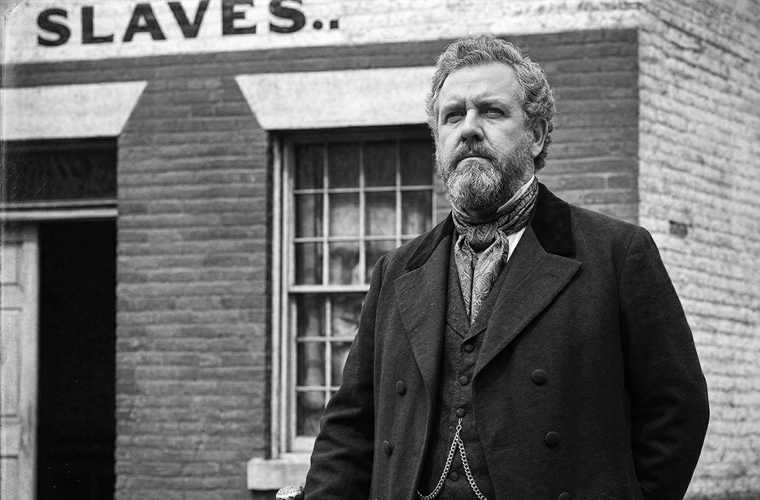
Charles M. Price (of Montgomery County, Maryland) was a 19th-century landowner, enslaver, and businessman in the Washington, D.C. metropolitan area during the lead-up to and early days of the American Civil War. He was a principal owner and resident of Montgomery County, Maryland, and maintained significant ties to the region around Alexandria, Virginia, where he held property and conducted business. Montgomery County, located just north of Washington, D.C., placed him in a border-state environment where sympathies during the sectional crisis were often divided.
Price was actively involved in the institution of slavery. Historical records describe him as a “rebel” sympathizer (Confederate sympathizer). He placed newspaper advertisements seeking enslaved people, indicating his direct participation in the recapture or acquisition of individuals who had escaped or were being traded. He also held enslaved people on property near Alexandria. He co-owned the notorious firm “Price, Birch & Co. – Dealers in Slaves,” a slave-trading business based in Alexandria, Virginia, that bought, sold, and imprisoned enslaved people in a warehouse often referred to as a “slave pen.”
In 1860, Price acquired full title to a key property in Alexandria from his business partner, John C. Cook, through an internal transfer. This transaction consolidated his ownership. The property in question was located in the vicinity of Alexandria, Virginia, a strategically important area at the outset of the Civil War.
As Union troops advanced toward Alexandria in May 1861 (shortly after the fall of Fort Sumter and Virginia’s secession), Price—aligning with his Confederate sympathies—fled south to avoid capture or confrontation. His departure reflected the volatile situation in the border regions and Northern Virginia at the beginning of the war.
While fleeing, Price sold the Alexandria property to his brother-in-law, Solomon Stover, for $6,000. This transaction transferred ownership within the family and likely served to protect or liquidate assets amid the uncertainty of war. Solomon Stover thus became the new owner of the property previously controlled by Price.
Charles M. Price represents a typical profile of a pro-Confederate Maryland resident with economic interests tied to slavery and real estate in Northern Virginia. His actions—advertising for enslaved people, consolidating property ownership in 1860, and fleeing south in May 1861—illustrate the personal and economic disruptions caused by the outbreak of the Civil War in the Washington, D.C. area. The internal family transfer of the Alexandria property to Solomon Stover marked the end of Price’s direct ownership during this turbulent period.