
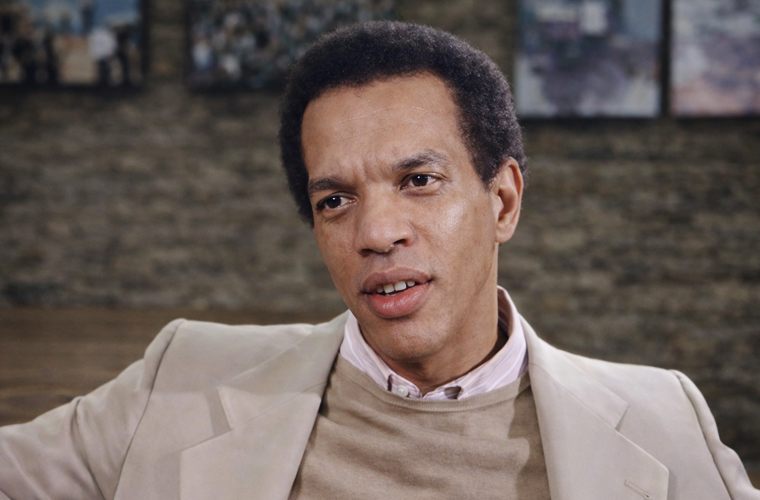
Ivanhoe Donaldson (October 17, 1941 – April 3, 2016) was a prominent American civil rights activist, organizer, and later political advisor whose work helped shape the modern struggle for racial justice and Black empowerment in the United States. Born in Harlem, New York City, and raised in the Bronx, Donaldson was the son of a New York City police officer and a mother passionate about literature and poetry, who named him after the classic novel Ivanhoe by Sir Walter Scott. Of Jamaican descent, he developed an early interest in advocacy while at Andrew Jackson High School.
He enrolled at Michigan State University to study engineering, where he excelled in track and field, contributed to the student newspaper (writing about figures such as Marcus Garvey), and encountered influential ideas through Malcolm X’s speeches on self-reliance. The Greensboro sit-ins of 1960 inspired him to deepen his involvement in civil rights.
In late 1962, while still in college, Donaldson organized a food and medical supply drive on campus in response to Mississippi authorities cutting off surplus commodities to Black sharecroppers in retaliation for SNCC’s voter registration drives. He and his roommate drove a truck loaded with aid to Clarksdale, Mississippi, where they were arrested on fabricated charges (interstate transportation of narcotics after finding aspirin and vitamins), jailed for a week, and released on a high NAACP-posted bond. This harrowing experience propelled him into full-time activism.
In 1963, Donaldson joined the Student Nonviolent Coordinating Committee (SNCC) as a field secretary, working primarily in Mississippi to encourage Black voter registration amid intense danger. He faced brutal violence, including an incident where a police officer shoved a gun into his mouth while he urged Black men to vote, and he narrowly escaped a lynch mob. Known for his militant style and boisterous energy, Donaldson worked in socialist circles and prioritized grassroots empowerment.


He expressed skepticism toward high-profile national events, criticizing the 1963 March on Washington as generating “hoopla” without substantial change, and initially opposing the 1964 Freedom Summer project over concerns that northern volunteers might overshadow local Black leadership.
After Freedom Summer, he shifted focus northward, launching community programs in Columbus, Ohio, to foster self-determination in urban Black communities. In 1965, he managed Julian Bond’s successful campaign for the Georgia House of Representatives and served as SNCC’s key representative during the Selma to Montgomery marches.
By the mid-1960s, as SNCC embraced Black Power under leaders like Stokely Carmichael, Donaldson directed its New York office and advocated for economic justice, international solidarity, and opposition to the Vietnam War. In 1968, he co-founded Afro-American Resources, Inc., in Washington, D.C., which operated the influential Drum and Spear Bookstore, Drum and Spear Press, and Center for Black Education. He also lectured on Afro-American studies at the University of Massachusetts Amherst in 1970.
Donaldson’s political acumen led him to Washington, D.C., politics, where he had long known Marion Barry from SNCC days (Barry was SNCC’s first national chairman). He managed Barry’s campaigns, including his upset 1978 mayoral victory, and served in the administration as deputy mayor for the Department of Employment Services and Economic Development—often described as Barry’s “alter ego” and close advisor. Donaldson married Winifred E. Burrell in 1978; they had one daughter, Tiffany, before divorcing. He left the city government in 1983 to become a vice president at E.F. Hutton.
In the mid-1980s, he faced serious legal troubles: after investigations, he pleaded guilty in 1986 to embezzling approximately $190,000 in city funds, along with related charges like tax fraud and obstruction of justice. He served three years of a seven-year sentence, paid restitution, and was fined. After release, Donaldson returned to consulting in politics and business in Washington, D.C., though with limited success, retiring in 2006.
He passed away from cancer on April 3, 2016, in Washington, D.C., at age 74. Remembered as a dedicated organizer, strategist, and bridge between grassroots activism and political power, Ivanhoe Donaldson’s legacy endures in the histories of SNCC, Black Power, and D.C. governance.