
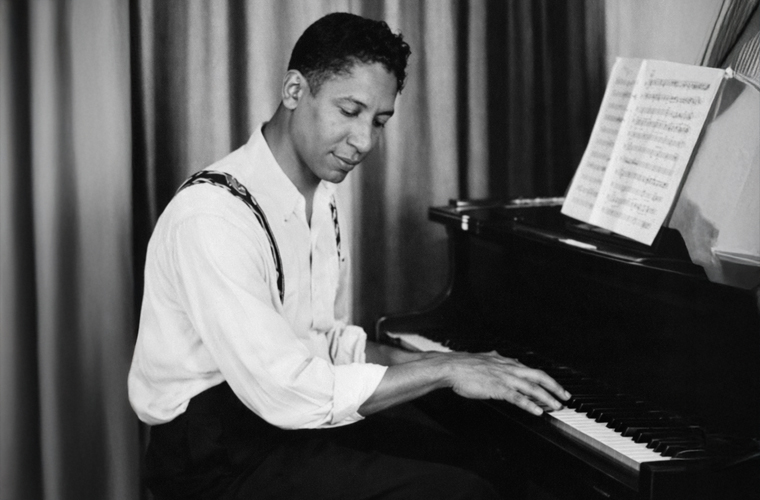
Jelly Roll Morton (born Ferdinand Joseph LaMothe, also spelled LaMenthe or Lemott; c. September 20, 1890 – July 10, 1941) was a pioneering American pianist, composer, arranger, bandleader, and one of the most influential figures in the early development of jazz.
Born in New Orleans, Louisiana, to a Louisiana Creole family, Morton grew up in a musical environment but faced family disapproval of a professional music career, which they viewed as disreputable outside elite contexts like the French Opera House. Displaying prodigious talent on piano from a young age, he began performing in the city’s legendary Storyville district—home to brothels, gambling houses, and vibrant nightlife—by his early teens, playing ragtime, blues, and emerging jazz styles.
Adopting the colorful stage name “Jelly Roll” (a term with risqué connotations of the era), Morton claimed to have “invented jazz in 1902,” a boastful assertion that reflected his strong personality and confidence but also highlighted his role as a transitional figure bridging ragtime and jazz. He blended ragtime’s syncopation with blues feeling, improvisational flair, and elements of classical and popular music, creating sophisticated, pre-arranged compositions that set him apart as jazz’s first major composer and arranger.


From the early 1900s through the 1910s, Morton traveled extensively across the American South, Gulf Coast, and West Coast, performing as a solo act or bandleader while supplementing income through pool hustling, gambling, and other ventures. He composed enduring classics during this period, including “King Porter Stomp,” “Original Jelly Roll Blues,” and “The Animule Dance.”
His peak recording era came in the 1920s, when he led Jelly Roll Morton and His Red Hot Peppers in Chicago and New York for labels like Victor and Gennett. These sessions produced masterpieces such as **”Black Bottom Stomp,” “Dead Man Blues,” “Shoe Shiner’s Drag,” and “Kansas City Stomp,” showcasing intricate arrangements, tight ensemble playing, and his distinctive piano style—often described as bridging ragtime precision with jazz swing and groove.
Despite his innovations and acclaim in the 1920s, Morton struggled in the 1930s due to changing musical tastes (rise of swing), poor business dealings, and the Great Depression. In 1938, folklorist Alan Lomax recorded extensive interviews and performances with Morton for the Library of Congress, where he demonstrated early jazz styles, shared colorful stories of New Orleans music origins, and reinforced his legacy. These sessions helped revive interest in his work.
Morton spent his final years attempting comebacks, managing a club in Washington, D.C., and relocating to California, but health issues (including asthma and heart problems) limited his success. He died in Los Angeles on July 10, 1941, at age 50.
Though his boastful claims sometimes overshadowed his contributions during his lifetime, Jelly Roll Morton is now widely recognized as a foundational architect of jazz—its first true composer, a brilliant arranger, and a key innovator who helped transform the music from regional New Orleans sounds into a national and global art form. His recordings and Library of Congress interviews remain essential listening for understanding jazz’s roots.