
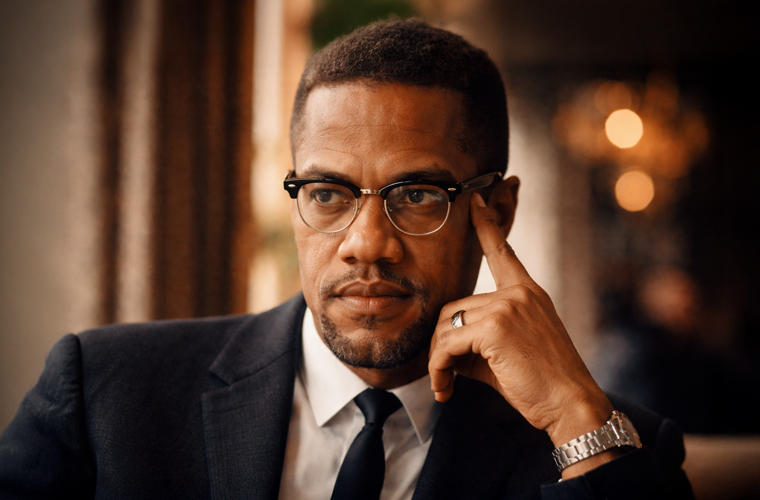
Malcolm X, born Malcolm Little on May 19, 1925, in Omaha, Nebraska, and later known as el-Hajj Malik el-Shabazz, was one of the most influential and transformative figures in 20th-century African American history. A fierce advocate for Black empowerment, self-defense, and human rights, he rose from a troubled youth marked by racism and crime to become a powerful orator, minister for the Nation of Islam (NOI), and eventually a proponent of broader pan-Africanism and orthodox Islam. His life ended tragically with his assassination on February 21, 1965, at age 39, but his ideas—captured vividly in The Autobiography of Malcolm X—continue to inspire generations.
Early Life and Family Tragedy (1925–1940s)
Malcolm was the fourth of seven children born to Earl Little, a Baptist minister and supporter of Marcus Garvey’s Universal Negro Improvement Association (a Black nationalist movement), and Louise Little, who served as national recording secretary for Garvey’s organization. The family faced intense racism; the Ku Klux Klan threatened them in Omaha, prompting a move to Lansing, Michigan.
In 1931, when Malcolm was six, his father died after being hit by a streetcar—Malcolm and his family believed it was murder by white supremacists. The tragedy devastated the household. Louise struggled to support the family, even resorting to gathering dandelion greens for food. In 1939, she suffered a mental breakdown and was committed to a state asylum, where she remained for decades. The children were separated and placed in foster homes or with relatives. Malcolm excelled academically but dropped out of school after eighth grade when a teacher discouraged his ambition to become a lawyer, telling him it was unrealistic for a Black person. He later described this as a pivotal moment of racial disillusionment.
Descent into Crime and Imprisonment (Early 1940s–1946)
As a teenager, Malcolm moved to Boston and then Harlem, adopting the nickname “Detroit Red” (due to his reddish hair). He worked odd jobs but soon turned to street life—hustling, gambling, drug dealing, pimping, and burglary. In 1946, at age 20, he was arrested in Boston for burglary and larceny. Sentenced to 8–10 years, he served time in Charlestown State Prison and later Norfolk Prison Colony.
Prison became a turning point. Encouraged by siblings who had joined the Nation of Islam, Malcolm began a rigorous self-education program, reading voraciously in history, philosophy, and religion. He corresponded with NOI leader Elijah Muhammad and converted to the Nation of Islam around 1948–1950, rejecting his “slave name” Little and adopting “Malcolm X” to symbolize his lost African heritage.

Rise in the Nation of Islam (1952–1963)
Paroled in 1952, Malcolm quickly became one of the NOI’s most dynamic leaders. Under Elijah Muhammad’s guidance, he helped expand the organization from roughly 400 members to tens of thousands by the early 1960s. He established mosques in cities such as Boston, Harlem (Temple No. 7), Detroit, and Philadelphia, and served as the national spokesman.
Malcolm’s fiery speeches emphasized Black self-reliance, separation from white society (which NOI theology viewed as inherently evil), and pride in African heritage. He rejected integrationist approaches like those of Martin Luther King Jr., famously arguing for freedom “by any means necessary.” His charisma, intellect, and unapologetic critique of systemic racism made him a media sensation—and a target.
He married Betty Sanders (Betty Shabazz) in 1958; they had six daughters (Attallah, Qubilah, Ilyasah, Gamilah, and twins Malikah and Malaak, the latter two born posthumously).
Break with the Nation of Islam and Transformation (1963–1964)
Tensions emerged in 1963. Malcolm discovered Elijah Muhammad had fathered children outside marriage with several women in the NOI, shattering his faith in the leader he had viewed as a mentor. In December 1963, after President John F. Kennedy’s assassination, Malcolm remarked that it was “a case of chickens coming home to roost”—a comment that drew widespread backlash. Elijah Muhammad silenced him for 90 days.
In March 1964, Malcolm publicly broke with the NOI. He founded Muslim Mosque, Inc. (for religious activities) and the Organization of Afro-American Unity (OAAU, a secular group focused on pan-Africanism and human rights).
That April, he undertook the hajj pilgrimage to Mecca. Witnessing Muslims of all races praying together profoundly changed him. He converted to Sunni (orthodox) Islam, adopted the name el-Hajj Malik el-Shabazz, and renounced the NOI’s racial separatism. He began emphasizing racism as the problem (not white people inherently) and expressed openness to working with civil rights groups. Travels through Africa and the Middle East further shaped his global human rights perspective.
Assassination and Legacy (1965–Present)
Threats from the NOI intensified. On February 14, 1965, his Queens home was firebombed (his family escaped unharmed). A week later, on February 21, 1965, Malcolm was speaking at the Audubon Ballroom in Harlem when three gunmen rushed the stage and shot him multiple times. He was pronounced dead shortly after. Three NOI members were convicted, though two were exonerated in 2021 after decades of questions about the investigation.
Malcolm’s Autobiography (co-authored with Alex Haley and published in 1965) became a bestseller and cultural touchstone, chronicling his evolution and ideas. His advocacy for Black pride, self-defense, and international solidarity influenced the Black Power movement, the Black Panthers, and later generations of activists.
Today, Malcolm X remains a symbol of uncompromising resistance to oppression. His journey—from “Detroit Red” to global human rights advocate—illustrates the power of self-transformation amid systemic injustice, making him one of the most enduring voices in the struggle for equality and dignity.