
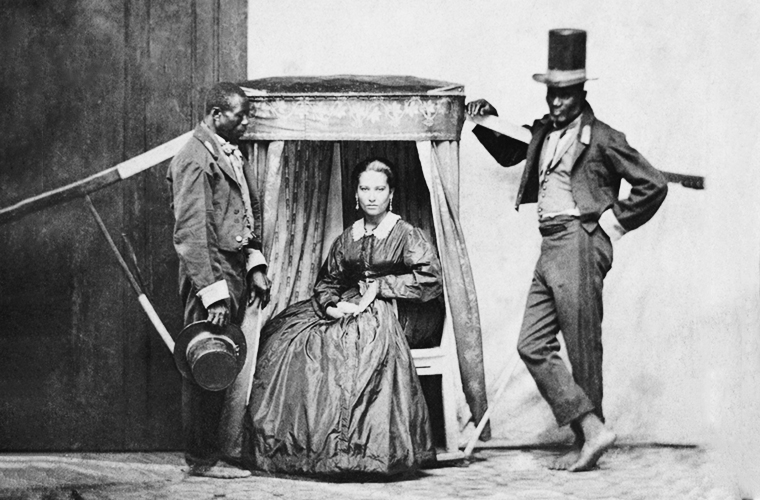
The Brazilian slave trade was one of the largest and most brutal in history. It is estimated that between 1550 and 1888, more than 4 million Africans were forcibly brought to Brazil as slaves. These individuals were primarily used to work on sugar, coffee, and cotton plantations, as well as in mining and other industries.
The Portuguese were the first European power to engage in the transatlantic slave trade, and they dominated the Brazilian slave trade throughout its history. Portuguese traders established forts and trading posts along the West African coast, from which they obtained slaves from a wide range of African societies. These slaves were then transported across the Atlantic in brutal conditions, with many dying during the journey.
Once they arrived in Brazil, enslaved Africans were sold at slave markets in major cities like Rio de Janeiro and Salvador. They were then put to work on plantations or in other industries, where they were subjected to brutal conditions and treated as property rather than human beings. Enslaved individuals were forced to work long hours, often in extreme heat, and were punished severely for even minor infractions.
The legacy of the Brazilian slave trade is still felt in the country today. Despite the abolition of slavery in 1888, Afro-Brazilians continue to face significant social, economic, and political challenges. Racial inequality remains a significant issue in Brazil, with Afro-Brazilians disproportionately affected by poverty, violence, and discrimination. In addition, the country’s history of slavery has contributed to a legacy of racism and prejudice that is deeply ingrained in Brazilian society.
Efforts have been made in recent years to address the legacy of slavery in Brazil. In 2019, for example, the country’s Supreme Court ruled that racism and homophobia are criminal offenses, and a number of initiatives have been launched to promote Afro-Brazilian culture and history. However, much work remains to be done to address the deep-seated inequalities and injustices that continue to affect Afro-Brazilians.