
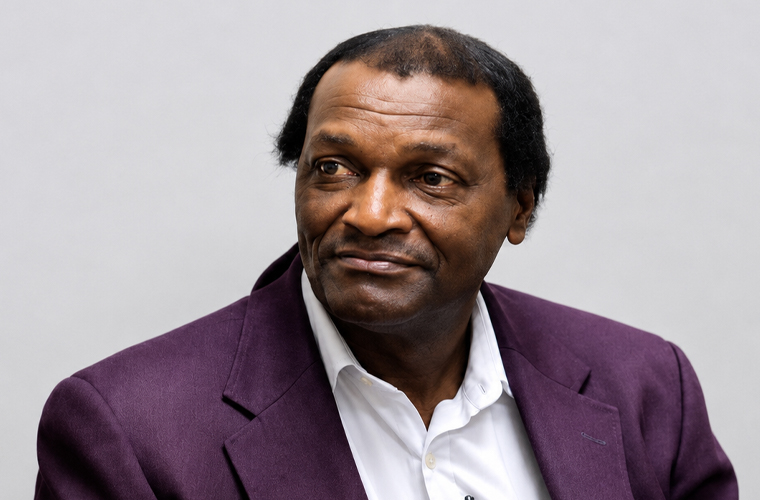
Walter Lee Gadsden (born around 1947/1948 – died after 1996) was an African American man best known as the subject of one of the most iconic photographs of the Civil Rights Movement: Bill Hudson’s image from May 3, 1963, showing him being attacked by a police dog during demonstrations in Birmingham, Alabama. Gadsden grew up in a poor, predominantly Black section of Birmingham, Alabama. His family experienced the harsh realities of Jim Crow segregation, including discrimination in education, employment, and daily life. In a 1996 oral history interview with the Birmingham Civil Rights Institute (BCRI), he discussed his parents’ origins (one from the Selma area) and the tense relationship between his community and the Birmingham Police Department, which often involved aggression and violence. He attended Ullman High School (sometimes misreported in early coverage as Parker High School) and was a tenth-grader, about 15 years old, at the time of the famous incident.
On May 3, 1963, during the Children’s Crusade phase of the Birmingham Campaign led by Dr. Martin Luther King Jr. and other activists, Gadsden was not a formal participant or “foot soldier” in the organized marches. He skipped school out of curiosity about the crowds, the arrests of his classmates, and reports that King might be downtown. He went to Kelly Ingram Park to observe. While near the park and trying to move out of the way of demonstrators, he was grabbed by the collar by a police officer (often identified as Dick Middleton) and brought close to a lunging German Shepherd police dog. Gadsden instinctively raised his knee to protect himself. Photographer Bill Hudson captured the moment, and the Associated Press distributed it.
The photo appeared prominently in The New York Times and many other newspapers worldwide the next day. It became a powerful symbol of police brutality against peaceful (or even bystander) Black demonstrators, galvanizing national and international support for the civil rights movement. It helped shift public opinion and contributed to pressure on Birmingham’s leaders. Gadsden was arrested that day simply for being present. His family’s primary reaction was anger that he had skipped school, not celebration of any heroic role. In his later reflections, he emphasized that he had not actively joined the movement and corrected narratives that portrayed him as a deliberate protester.
Several men later claimed to be the youth in the photo. Still, contemporary reporting (including a 1963 Jet Magazine interview) and Gadsden’s BCRI oral history, corroborated by a classmate, confirmed his identity. After the events of 1963, Gadsden did not pursue a high-profile role in the movement. He moved to Atlanta, Georgia, where he lived for many years. In his 1996 BCRI interview, he reflected on the outcomes of the Birmingham Campaign—such as the integration of public facilities and schools—while expressing some reservations about how the movement unfolded and lingering racial attitudes in both Birmingham and Atlanta. He preferred the term “colored” for self-identification over other terms common at the time.
He worked as a freelance photographer and ran a photography business. He viewed his famous image with some ambivalence, noting in the oral history that he did not seek notoriety from it, though his likeness later inspired elements of memorials, such as a statue at the Birmingham Civil Rights Institute. Walter Gadsden’s image remains one of the most enduring visual records of the fight against segregation. It illustrates how the violence of Jim Crow extended even to bystanders and children, amplifying the moral urgency of the Civil Rights Movement. While he rejected being cast as a central activist, his involuntary encounter underscored the pervasive nature of systemic oppression.
His story, preserved through oral history and contemporary accounts, adds nuance to the photograph: it captures a reflexive act of self-protection by a curious teenager rather than a staged heroic pose, highlighting the human reality behind iconic symbols. The image continues to be displayed in museums (e.g., High Museum of Art) and featured in histories of the era.
Gadsden’s life exemplifies both the power of visual journalism to drive change and the personal cost borne by ordinary individuals caught in historic moments.