
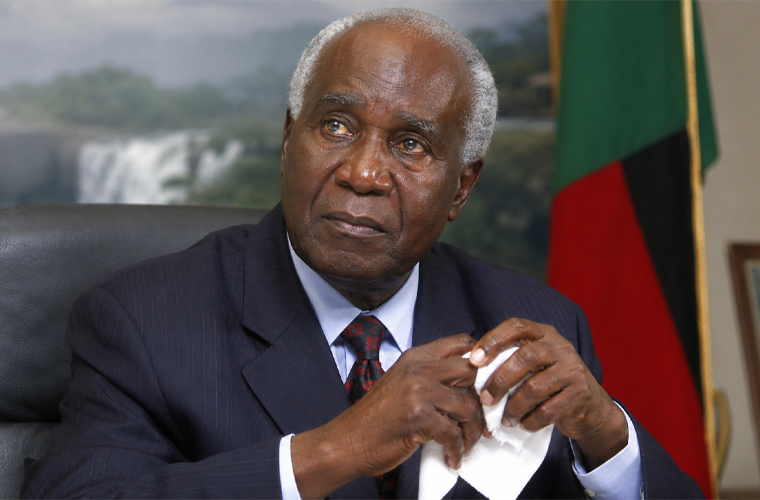
Kenneth Kaunda (also known as KK) was a Zambian teacher, independence leader, and politician who served as the first President of Zambia from 1964 to 1991. Born Kenneth David Buchizya Kaunda on April 28, 1924, at Lubwa Mission near Chinsali in Northern Rhodesia (now Zambia), he was the youngest of eight children. His father, Reverend David Kaunda, was a Church of Scotland missionary and teacher from Nyasaland (now Malawi). His mother, Helen Nyirenda Kaunda, was a teacher and the first African woman to teach in colonial Northern Rhodesia. They worked among the Bemba people.
Kaunda’s father died when he was young. He followed his parents’ footsteps into teaching, working in Northern Rhodesia, Tanganyika (now Tanzania), and Southern Rhodesia. He attended Munali Training Centre in Lusaka (1941–1943) and was influenced by Mahatma Gandhi’s writings on non-violent resistance.
Political Career and Path to Independence
In the early 1950s, Kaunda became active in the Northern Rhodesian African National Congress (later Zambian African National Congress). Dissatisfied with its leadership under Harry Nkumbula, he broke away and helped found the United National Independence Party (UNIP) in 1959, becoming its leader. He played a central role in the campaign for independence from British colonial rule. Northern Rhodesia gained independence as the Republic of Zambia on October 24, 1964. Kaunda became the country’s first Prime Minister and then its first President.
Presidency (1964–1991)
As president, Kaunda pursued socialist policies under “Zambian Humanism,” emphasizing unity, self-reliance, and pan-Africanism. He nationalized key industries (especially copper mining), hosted liberation movements from neighboring countries (such as ANC, SWAPO, MPLA, and ZAPU), and supported anti-colonial struggles across Southern Africa. In 1973, following political unrest, he established a one-party state under UNIP. His long rule faced challenges including the 1970s oil crisis, falling copper prices, economic decline, and growing calls for multiparty democracy. In 1991, he allowed multiparty elections and was defeated by Frederick Chiluba of the Movement for Multi-Party Democracy.
After leaving office, Kaunda faced some political difficulties, including a brief stripping of his Zambian citizenship in 1998 (later reversed). He remained active in public life, advocating for HIV/AIDS awareness (after losing a son to the disease), pan-African unity, and peace initiatives. Kaunda died on June 17, 2021, at age 97 in Lusaka from pneumonia. He was survived by several children (he and his wife Betty had eight children; she passed away in 2012). He is buried at Embassy Park in Lusaka.
Kaunda is remembered as Zambia’s founding father and a towering figure in Africa’s independence movements. He is praised for fostering national unity (“One Zambia, One Nation”), supporting regional liberation, and his personal discipline and vision. Critics point to authoritarian tendencies during one-party rule and economic mismanagement that contributed to hardship. Nevertheless, he remains a revered symbol of Zambia’s birth as a nation.
“I want to be remembered as a person who worked for the unity of Africa.”— Kenneth Kaunda