
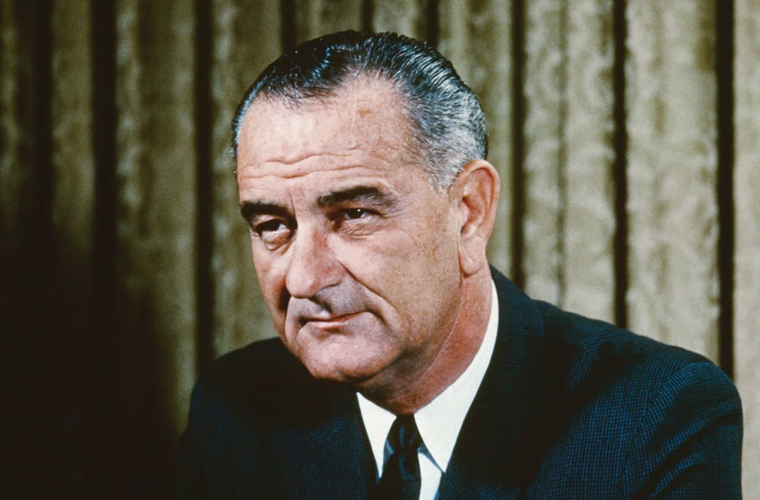
Lyndon B. Johnson, born on August 27, 1908, and passed away on January 22, 1973, was an American politician who served as the 36th President of the United States from 1963 to 1969. He was a member of the Democratic Party. Johnson was born in Stonewall, Texas, and grew up in a rural farming community. He had a long and successful career in politics, serving in various positions before becoming president. He began his political career in the House of Representatives, where he served from 1937 to 1949. He was then elected to the U.S. Senate, where he served from 1949 to 1961.
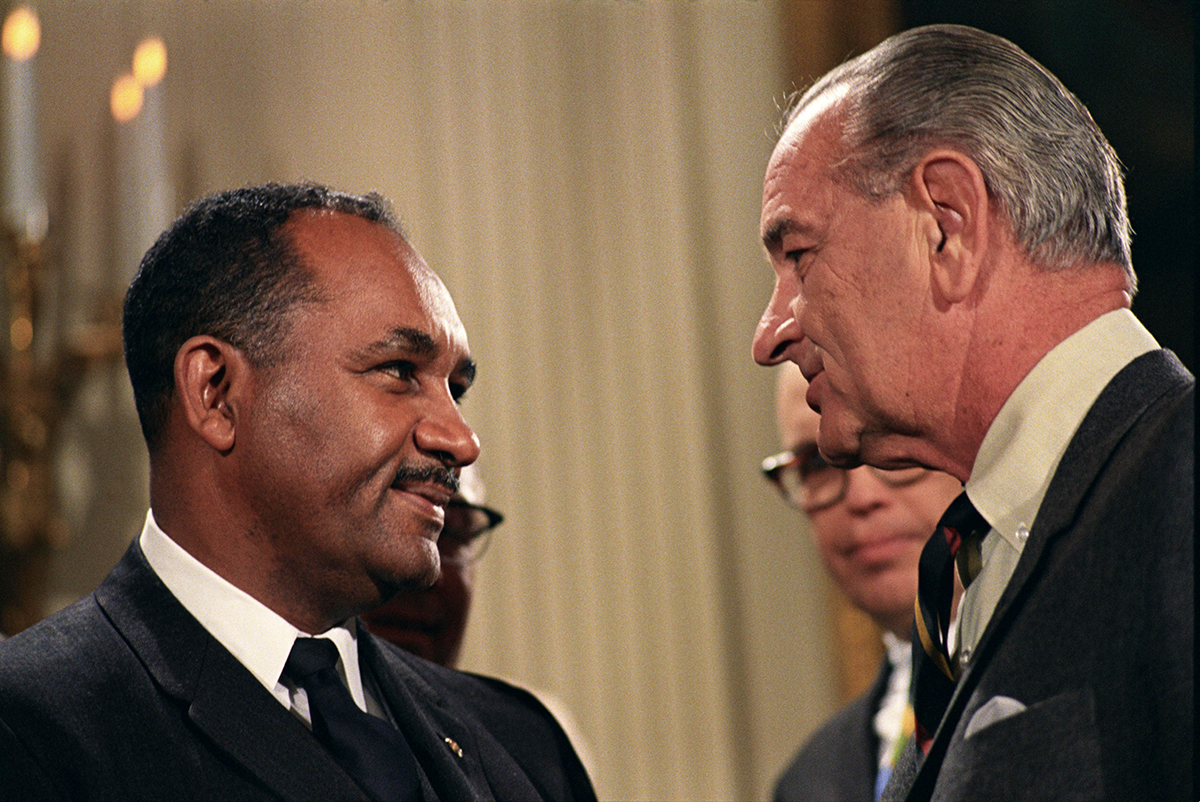
In 1960, Johnson ran for the Democratic nomination for president but was defeated by John F. Kennedy. However, Kennedy chose Johnson as his running mate, and they won the general election. Tragically, President Kennedy was assassinated on November 22, 1963, and Johnson was sworn in as president shortly afterward.
As president, Johnson’s domestic agenda was focused on implementing his vision for a “Great Society.” He introduced numerous programs and legislation aimed at addressing poverty, improving civil rights, expanding access to healthcare, and promoting education. Some of his notable achievements include the Civil Rights Act of 1964, the Voting Rights Act of 1965, and the establishment of Medicare and Medicaid.
However, Johnson’s presidency was also marked by the Vietnam War, which escalated during his tenure. He increased the U.S. military presence in Vietnam and faced significant opposition and protests from the American public. The war became increasingly unpopular, and it had a profound impact on Johnson’s presidency, eventually leading him to decide not to seek re-election in 1968.
After leaving the presidency, Johnson retired to his ranch in Texas. He remained active in Democratic Party politics and worked on his memoirs. Unfortunately, he passed away in 1973 from a heart attack.
Lyndon B. Johnson’s presidency is often remembered for its ambitious domestic agenda and the turbulent era of the Vietnam War. His efforts to advance civil rights and fight poverty left a lasting impact on American society, though his handling of the Vietnam War remains a subject of debate and controversy.