
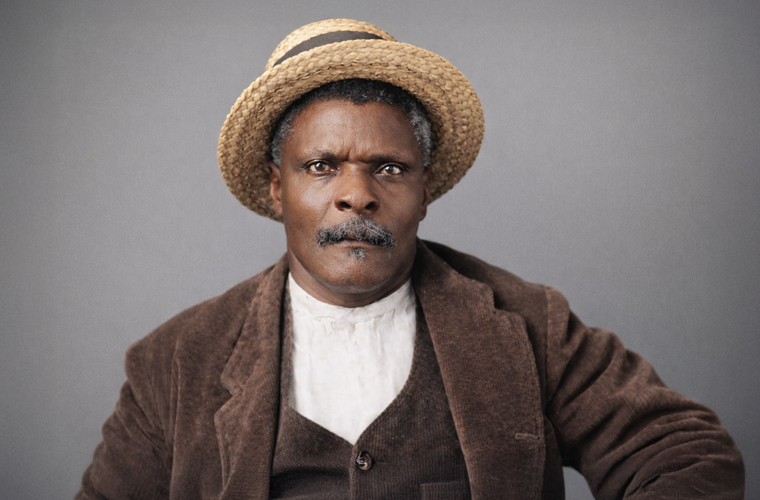
Caesar Bowlegs (ca. 1843–1912) was a prominent Seminole Freedman whose life bridged African American and Native American histories in the post-Civil War era. Born into enslavement within the Seminole Nation in Indian Territory (present-day Oklahoma), he rose to become a respected interpreter, guide, community leader, and facilitator of cultural and medical progress among the Seminole people and freedmen.
Early Life and Enslavement
Caesar Bowlegs was born around 1843 in the Seminole Nation. Eliza Bowlegs, a member of the Seminole community, enslaved both him and his parents. The Seminole Nation had a unique history of relations between Native Seminoles and people of African descent, including enslaved individuals and maroons (escaped enslaved people) who often lived in allied communities. This created complex social dynamics distinct from those in the broader American South.
During the Civil War, Bowlegs joined the Loyal Seminoles and maroons who fled north to Kansas to escape Confederate-aligned forces. He returned to the Seminole Nation after the war’s end. The abolition of slavery through treaties between the United States and the Five Civilized Tribes (including the Seminole) in 1866 granted freedom and certain rights to the formerly enslaved, known as Freedmen.
Post-War Career and Contributions
In the late 19th century, Bowlegs held various roles that showcased his skills and trustworthiness. He worked as a mail carrier between Fort Gibson and Wewoka, and in the 1890s, he operated a toll bridge over Wewoka Creek. His bilingual abilities (likely including English, Creek/Seminole languages, or related dialects) and deep knowledge of the region made him invaluable.
Bowlegs gained greatest recognition as an interpreter and guide for white physicians serving the Seminole Nation. He assisted Dr. C. P. Lynn, the first white doctor to practice among the Seminoles, and later Dr. Virgil Berry, who succeeded Lynn around 1898. In an era when few outsiders understood Seminole customs, Bowlegs served as a cultural intermediary, explaining local mores and facilitating trust.
A key example came during a major smallpox epidemic that struck the Seminole Nation in the late 1890s and early 1900s. Bowlegs worked closely with Dr. Berry to vaccinate the population and combat the outbreak. The two inoculated themselves first to demonstrate safety, then vaccinated widely across communities. Bowlegs’ role as interpreter, guide, and trusted figure helped introduce scientific medicine to a population accustomed to traditional practices. The epidemic persisted until around 1905, but their efforts saved many lives and promoted acceptance of modern medical approaches.
Legacy and Influence
Beyond medicine, Bowlegs aided acculturation and community building. Educated and active in the Presbyterian Church, he helped bridge gaps between Seminoles, freedmen, and white society. He earned widespread respect from Native Americans, freedmen, and whites alike for his integrity and leadership.
He died in 1912 in Seminole County, Oklahoma. His story highlights the experiences of Seminole Freedmen—a group whose history intertwines African and Native American heritage—and underscores themes of resilience, adaptation, and cross-cultural cooperation in the American frontier.
Photographs of Caesar Bowlegs survive in historical archives, such as those from the Oklahoma Historical Society and the University of Oklahoma, often depicting him in formal attire, reflecting his stature in the community.
Today, the town of Bowlegs in Seminole County, Oklahoma, may take its name from related Seminole history (possibly linked to figures such as Chief Billy Bowlegs), serving as a reminder of this era. Caesar Bowlegs’ life remains an important chapter in the broader narrative of Black-Native relations and the transition from enslavement to citizenship in Indian Territory.