
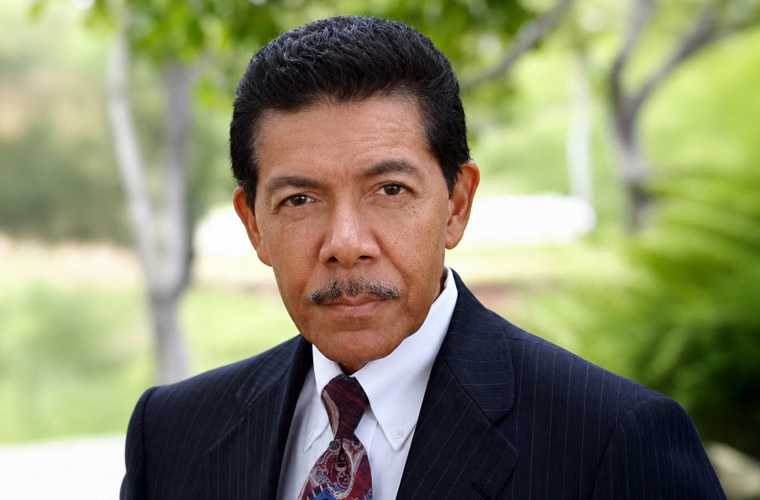
Cecil J. Williams (born November 26, 1937) is an acclaimed American photographer, publisher, author, inventor, and civil rights documentarian from Orangeburg, South Carolina. He is best known for his extensive photographic record of the Civil Rights Movement in South Carolina, including iconic images that captured key moments of defiance, protest, and change during the Jim Crow era and beyond.
Early Life and Entry into Photography
Williams was born and raised in Orangeburg, the third child of Ethel (an educator) and Cecil L. Williams (a tailor with a predominantly white clientele). His family had mixed African-American ancestry, with his mother’s side being half white and his father’s half Native American. At age 9, his older brother passed down a Kodak Baby Brownie camera, igniting a lifelong passion. Williams built a darkroom in an extra bedroom of the family home and began photographing people in their Sunday best. By age 11, he was photographing weddings, and at 12, he documented churches in Clarendon County connected to the Briggs v. Elliott case—the South Carolina desegregation lawsuit that became part of the landmark Brown v. Board of Education decision. Growing up under segregation profoundly shaped him. He experienced daily humiliations, such as “Colored Only” restrictions on water fountains, restaurants, restrooms, and playgrounds. As a young man, he engaged in small acts of defiance, including drinking from “Whites Only” fountains.
Career as a Civil Rights Photographer
By age 14, Williams was one of 25 international freelance photographers for Jet magazine, serving as an on-the-ground correspondent in South Carolina. His work also appeared in the Baltimore Afro-American, Associated Press, Pittsburgh Courier, and other outlets.
He documented pivotal events, including:
- Desegregation efforts tied to Briggs v. Elliott.
- Harvey Gantt’s integration of Clemson University in 1963.
- The 1968 Orangeburg Massacre (where South Carolina Highway Patrol officers killed three Black students and wounded 27 at South Carolina State University).
- The 1969 Charleston hospital workers’ strike.
- Protests, marches, and daily life under segregation.
One of his most famous images, captured in 1956 (sometimes associated with later reflections), shows him drinking from a “Whites Only” water fountain at a closed filling station while returning from photographing segregated beaches for Jet. A friend, Rendall Harper, took the photo. It has become an enduring symbol of resistance against Jim Crow laws. Williams graduated from Claflin University in 1960 with a degree in art and served as the university’s photographer. He later worked as the official photographer for the South Carolina NAACP, South Carolina State University, Claflin University, and the National Conference of Black Mayors.
In addition to photography, he has excelled in painting, graphics, and architectural design (despite barriers preventing him from studying architecture at Clemson). He invented the FilmToaster, a device for efficiently digitizing film negatives.
Later Work, Museum, and Legacy
Williams has published several books, including:
- Freedom and Justice: Four Decades of the Civil Rights Struggle as Seen by a Black Photographer of the Deep South (1995)
- Out-of-the-Box in Dixie (2012)
- Others on Orangeburg history, his art, and more.
In 2019, he opened the Cecil Williams South Carolina Civil Rights Museum in Orangeburg (housed in a modern home he designed in 1983). It features hundreds of his photographs and artifacts, with the theme “The South Carolina Events that Changed America.” He has received numerous honors, including the Order of the Palmetto (South Carolina’s highest civilian award), the Bythewood Award from Claflin University, and recognitions from the NAACP and South Carolina African-American Heritage Commission. His work continues to be exhibited nationally, including at the National Gallery of Art.
Personal Life
Williams is married to Barbara Johnson Williams, a retired educator. He remains active in Orangeburg, where he operates a portrait and event photography studio, serves as director of Historic Preservation at Claflin University, and gives presentations on his experiences. At nearly 89 years old (as of 2026), he continues to share his story and advocate for preserving civil rights history. Cecil J. Williams’s work stands as a powerful visual testimony to the struggles and triumphs of the Civil Rights Movement, ensuring that the courage and sacrifices of that era are not forgotten. His iconic self-portrait at the water fountain remains a poignant reminder of personal defiance in the face of systemic injustice.