
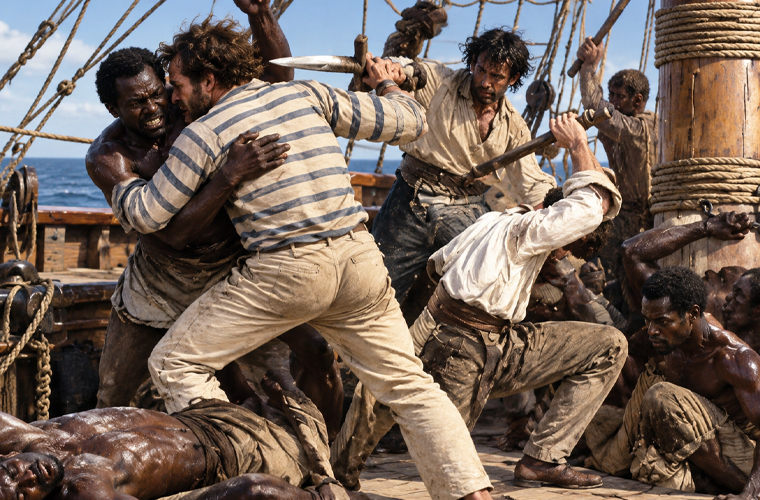
Resistance to enslavement began the instant Africans were seized in their homelands. Bound and marched toward the coast, captives still sought chances to break free. Inside the coastal forts, castles, and barracoons, men and women continued to resist—plotting escapes or fighting their captors. Even after boarding the ships that would carry them across the Atlantic, many attempted mutiny or flight before the vessels ever left African waters.
That determination did not end upon arrival in the Americas. Newly enslaved Africans and their American-born descendants fled plantations and households to escape forced labor, brutal punishment, torture, abuse, and the constant threat of being sold away from family. Some ran alone; others fled in groups. Their destinations varied: reunion with kin, refuge in remote hills or swamps, or any place beyond the reach of slave society. Slaveholders often anticipated these routes and placed newspaper advertisements describing the fugitives and offering rewards for their capture.
Collective resistance also took organized forms. In North America, clandestine networks such as the Underground Railroad guided people toward freedom. Across Atlantic ports, Black sailors carried news and coordinated aid. In Jamaica, Suriname, and Brazil, maroon communities built lasting societies complete with defensive systems, communication networks, and ways of sustaining themselves—frequently in quiet alliance with those still held on plantations.
Armed rebellions repeatedly challenged slaveholders and colonial authorities throughout the era of the transatlantic trade. The most far-reaching erupted during the Age of Revolutions on the French Caribbean islands of Guadeloupe, Martinique, and especially Saint-Domingue (Haiti). There, enslaved people joined forces with free people of color, turning a revolt into a revolution that abolished slavery in the French colonies within three years.
Yet the great majority of enslaved people never rose in open rebellion. Most survived by adapting to a lifetime of bondage while finding quieter ways to push back—meeting the demands placed upon them yet reducing risk and preserving dignity wherever possible. Parents passed these hard-won strategies to their children, teaching them how to endure the daily dangers and humiliations of slavery.