
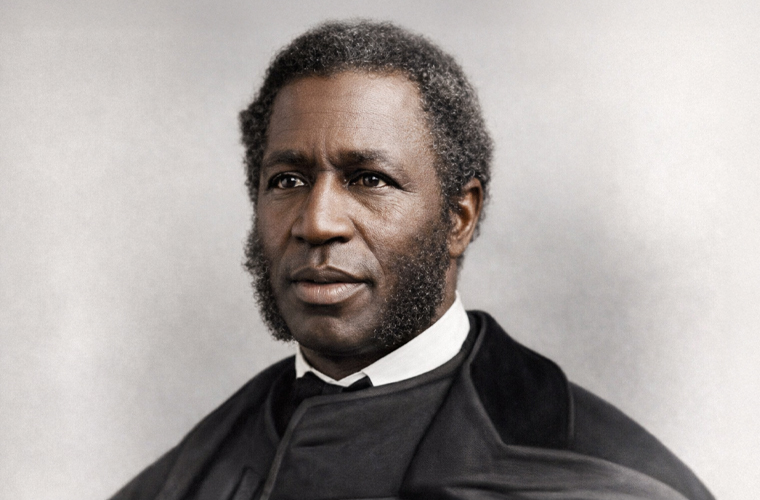
Richard Harvey Cain (April 12, 1825 – January 18, 1887) was a prominent African American minister, bishop, abolitionist, newspaper editor, and politician during the Reconstruction era.
Born free to free parents—an African American father and Cherokee mother—in Greenbrier County, Virginia (now West Virginia), Cain moved with his family to Gallipolis, Ohio, in 1831 at age six. There, he attended school and grew up in a free Black community. As a young man, he initially joined the Methodist Episcopal Church but left due to discrimination and segregationist practices by white members, eventually affiliating with the African Methodist Episcopal (AME) Church in the 1840s or 1850s. He served as an AME minister starting in the late 1840s, including time in Illinois, where he worked as a barber and engaged in abolitionist activities and Black convention movements.
By the early 1860s, Cain pastored an AME church in Brooklyn, New York (1861–1865). Following the Civil War, he relocated to Charleston, South Carolina, in 1865 as a missionary appointed by Bishop Daniel Payne of the AME Church. He played a key role in establishing and expanding AME congregations in the South, aiding enslaved people through religious leadership, education, and community building.
Politically active during Reconstruction, Cain participated in South Carolina’s 1868 constitutional convention. He served in the South Carolina State Senate from 1868 to 1872 and managed a newspaper in Charleston in 1868. A Republican, he was elected to the U.S. House of Representatives from South Carolina, serving in the 43rd Congress (1873–1875) and the 45th Congress (1877–1879). In Congress, he advocated for civil rights, including support for the Civil Rights Act of 1875, and delivered notable speeches demanding equal laws and rights for African Americans. Known for his wit and eloquence, he was sometimes called “Daddy Cain.”
After leaving Congress, Cain returned to church leadership. In 1880, he was elected and consecrated as a bishop in the African Methodist Episcopal Church, overseeing districts including Louisiana and Texas. He continued advocating for Black rights, criticizing colorism, opposing the Ku Klux Klan, and supporting federal civil rights measures.
Cain died in Washington, D.C., on January 18, 1887, at age 61, and was interred in Graceland Cemetery.
His life bridged antebellum abolitionism, Reconstruction politics, and post-Reconstruction religious leadership, making him a significant figure in African American history.