
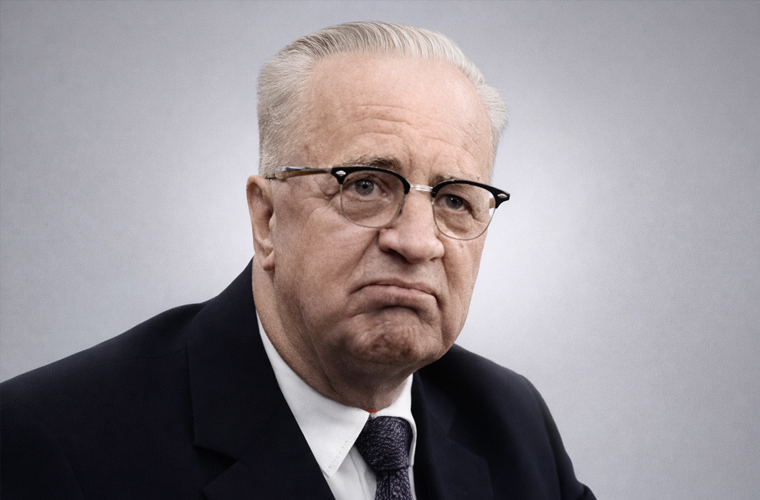
Theophilus Eugene “Bull” Connor (July 11, 1897 – March 10, 1973) was a prominent Alabama politician and law enforcement official whose long career in public service became synonymous with the violent enforcement of racial segregation in the American South. As Birmingham’s Commissioner of Public Safety for over two decades, Connor wielded unchecked power over the city’s police and fire departments, using it to suppress civil rights activism with tactics that shocked the nation and galvanized the broader movement for equality. His infamous deployment of police dogs and high-pressure fire hoses against nonviolent protesters in 1963 transformed him into a symbol of white supremacist resistance, ultimately accelerating the push for federal civil rights legislation.
Born in Selma, Dallas County, Alabama, Connor was the son of Hugh King Connor, a railroad dispatcher and telegraph operator, and Molly Godwin Connor. His childhood was nomadic, marked by frequent relocations across the South and Midwest as his father’s job demanded. Tragedy struck early when, at age eight, Connor’s mother died of pneumonia in Atlanta, Georgia, leaving him to live with relatives in Plantersville, Chilton County, and later in Birmingham, Jefferson County. He attended schools in these areas but dropped out before graduating high school, instead learning the telegraph trade from his father—a skill that would later prove useful in his early career.
In 1920, Connor married Beara Levens (sometimes spelled Levin), the daughter of a lumber-mill operator, and the couple welcomed a daughter. The family settled in Birmingham in 1922, where Connor took on various roles, including telegraph operator and salesman. His big break came in the 1930s as a charismatic radio sportscaster, announcing baseball and football games with a booming voice that earned him widespread popularity. It was during this period that friends bestowed upon him the nickname “Bull,” a playful nod to his initials (T.E.C.) and a local newspaper cartoon character named Dr. B.U.L. Conner.
Connor’s foray into politics was almost accidental. In 1934, he entered the Democratic primary for a seat in the Alabama House of Representatives on a whim, campaigning minimally but leveraging his radio fame for name recognition. To his surprise, he won and served from 1935 to 1937, during which he aligned himself with the interests of white working-class voters. He championed bills like poll tax reform to ease voting access for the poor while opposing tax hikes, legislative pay raises, and anti-union sedition measures—positions that endeared him to labor unions and everyday Alabamians.
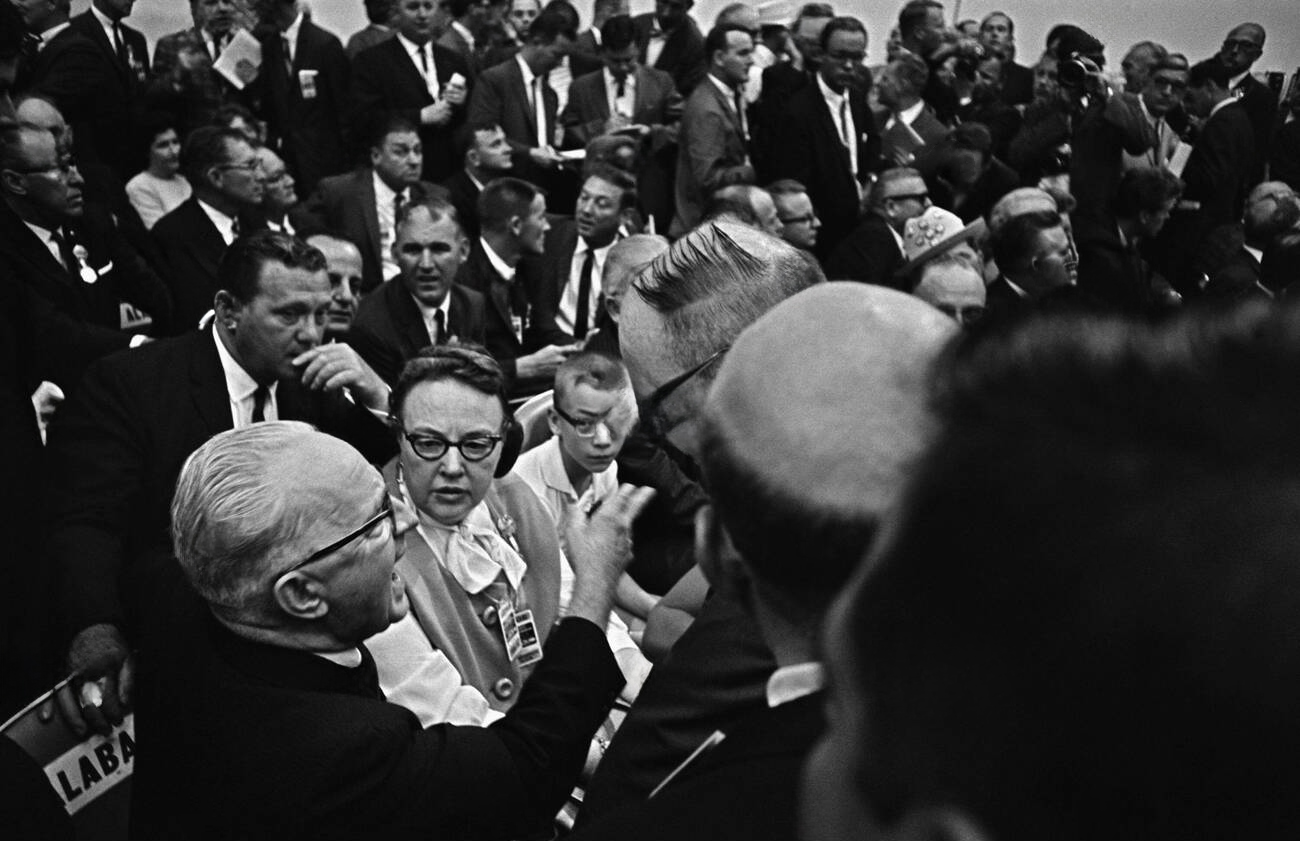
Emboldened, Connor ran for Birmingham’s Commissioner of Public Safety in 1937, a powerful role overseeing not just police and fire services but also schools, public health, and libraries. Campaigning as a tough-on-crime champion of the working man and staunch defender of segregation, he secured victory and aligned himself with the city’s business elite, advocating low taxes and limited government. He won reelection in 1941, 1945, and 1949, solidifying his grip on local power. Connor also emerged as a national figure in Southern Democratic politics, serving as a delegate to four Democratic National Conventions (1948, 1956, 1964, and 1968). At the 1948 convention, he led a walkout by Southern delegates protesting President Harry S. Truman’s civil rights platform, helping birth the short-lived Dixiecrat Party. His gubernatorial ambitions faltered twice—in 1950 and 1962—but these losses only reinforced his entrenchment in Birmingham. A 1953 scandal involving an extramarital affair and allegations of police corruption briefly ousted him, but he roared back to win reelection in 1957 and served as Alabama’s Democratic National Committeeman in 1960.


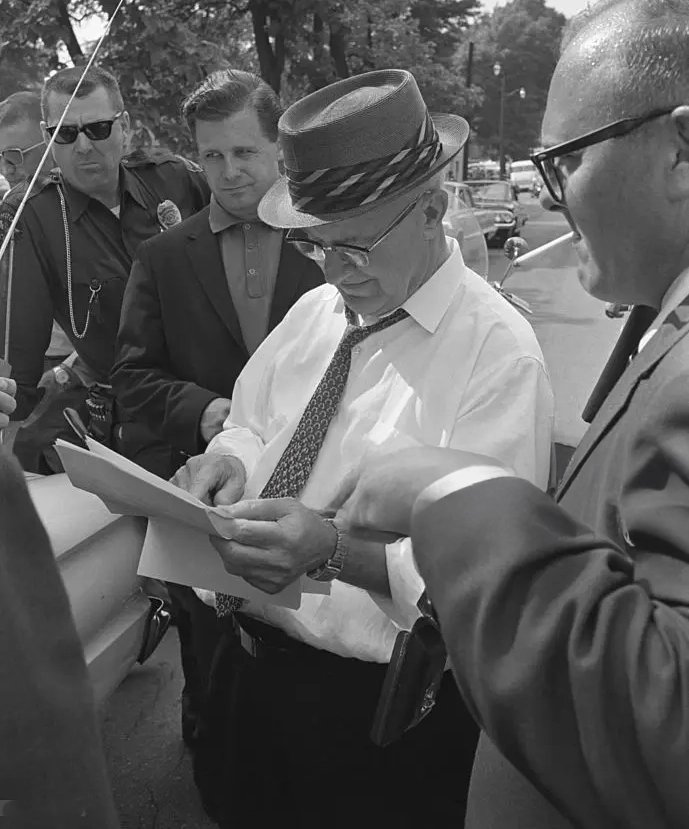


Connor’s worldview was unapologetically rooted in white supremacy, and he used his office to maintain Jim Crow laws with an iron fist. He clashed publicly with civil rights advocates, once barring First Lady Eleanor Roosevelt from a meeting in Birmingham over her integrationist views and arresting folk singer Pete Seeger for attempting to perform at a racially mixed event. Though never a member of the Ku Klux Klan, he shielded Klansmen from prosecution for racial bombings and violence, allowing unsolved attacks to plague Black neighborhoods. In 1961, during the Freedom Rides, Connor infamously ordered police to stand down at the Trailways bus station, enabling a mob to brutally assault the interracial activists without interference. To evade court-ordered desegregation, he shuttered public parks and threatened to close schools, tactics that tarnished Birmingham’s image and spurred voters in 1962 to overhaul the city commission system in a bid to oust him. Connor and his allies sued to block the changes, clinging to power until a state supreme court ruling in May 1963.
Connor’s legacy is indelibly tied to the 1963 Birmingham Campaign, a pivotal effort by the Southern Christian Leadership Conference (SCLC) and the Alabama Christian Movement for Human Rights (ACMHR), led by Rev. Fred Shuttlesworth, to dismantle segregation in the city Martin Luther King Jr. dubbed “the most segregated city in America.” Launching in April 1963, the protests challenged discriminatory practices in stores, parks, and schools. When mass arrests overwhelmed city jails, the movement escalated with the “Children’s Crusade” on May 2, drawing over 900 young participants.
On May 3, Connor unleashed his most notorious response: He directed police to sic attack dogs on unarmed demonstrators and ordered fire hoses—capable of blasting water at 120 pounds per square inch—to disperse crowds, including children as young as six. The visceral images, captured by journalists and broadcast worldwide, evoked comparisons to Nazi atrocities and horrified the nation. “You can call them n*****s and dogs if you want to,” Connor reportedly sneered to reporters, encapsulating his defiance. The violence prompted President John F. Kennedy to intervene, pressuring Birmingham’s white business leaders to negotiate an end to segregation on May 10.
King later reflected on the campaign in his 1964 book Why We Can’t Wait, praising the protesters’ courage amid Connor’s brutality and crediting the events with building momentum for the Civil Rights Act of 1964. The episode not only integrated Birmingham but also exposed the moral bankruptcy of segregation to a global audience.
Ousted from Birmingham by the 1963 court decision, Connor pivoted to state-level politics, winning an election to the Alabama Public Service Commission in 1964 and serving two terms as its president until 1972, where he regulated utilities with the same conservative zeal. He remained a vocal segregationist, attending the 1968 Democratic National Convention as a delegate.
Connor suffered a stroke and died on March 10, 1973, in Birmingham at age 75. To the end, he expressed no remorse for his actions, viewing them as a defense of “Southern traditions.”
Today, Eugene “Bull” Connor is remembered not for his populist radio persona or legislative wins, but as a cautionary figure in the fight against racism. His tactics in Birmingham—detailed in works like Diane McWhorter’s Carry Me Home (2001)—highlighted the raw power of institutional violence in upholding white supremacy. While he saw himself as a protector of order, history judges him as an obstacle to justice, whose excesses inadvertently advanced the cause he sought to crush. Birmingham’s Kelly Ingram Park, site of the 1963 clashes, now stands as the Birmingham Civil Rights Institute, a testament to the resilience that outlasted men like Connor.