
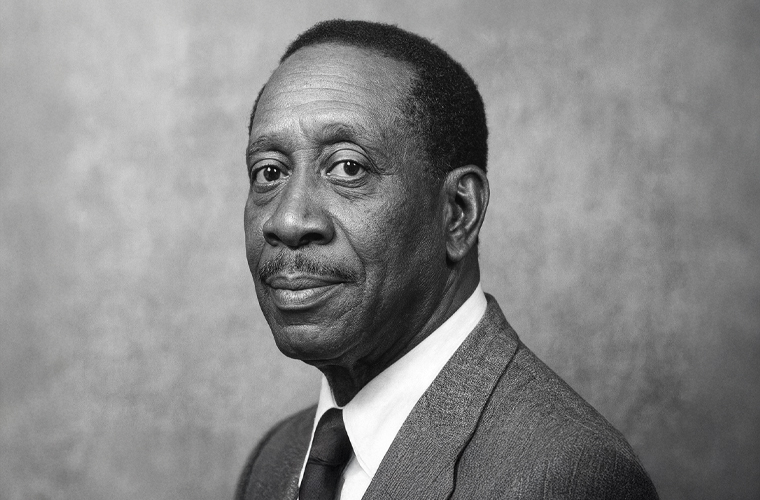
Harry Haywood, born on February 6, 1898, in South Omaha, Nebraska, emerged from a working-class background to become a pivotal figure in African American history, dedicating his life to the pursuit of equality and justice. Growing up in an environment marked by pervasive racism and discrimination, Haywood’s early experiences shaped his resolve to challenge systemic inequities. Despite these challenges, he distinguished himself as an exceptional student, excelling academically and pursuing higher education with determination. He initially attended the University of Nebraska before transferring to the University of Chicago, where he immersed himself in the study of sociology. In Chicago, Haywood encountered Marxist ideas that profoundly influenced his worldview, prompting him to examine the social and economic structures that perpetuated inequality critically. This intellectual awakening led him to embrace Marxism as a framework for understanding and addressing societal injustices, ultimately guiding him toward active involvement in the Communist Party, which he saw as a vehicle for transformative social change.
Haywood’s engagement with the Communist Party marked the beginning of a lifelong commitment to activism. He traveled extensively across the United States, dedicating himself to organizing labor unions, participating in protests, and advocating for the rights of African Americans and other marginalized groups. His efforts focused on mobilizing communities to confront systemic racism and economic exploitation, emphasizing the power of collective action. As a writer and editor for Communist Party publications such as The Daily Worker and The Negro Liberation, Haywood wielded his pen as a formidable weapon against oppression. His articles and essays, characterized by sharp analysis and impassioned calls for change, resonated widely and helped shape the national conversation on civil rights and social justice. Haywood argued fervently for African Americans to unite and organize, advocating a radical approach that challenged the status quo and sought to dismantle entrenched systems of inequality. His writings not only addressed the immediate struggles of his time but also articulated a vision for a more equitable society, blending Marxist theory with the urgent realities of racial injustice.
Beyond his domestic activism, Haywood’s international perspective enriched his contributions to the struggle. He traveled to the Soviet Union in the 1920s, where he studied at the Communist International’s Lenin School and engaged with global revolutionary movements. This experience deepened his understanding of class struggle and imperialism, which he later applied to his analysis of African American oppression, notably through his development of the “Black Belt Thesis.” This theory posited that African Americans in the southern United States constituted an oppressed nation with the right to self-determination. This groundbreaking idea influenced Communist Party policies and sparked significant debate within civil rights circles. Haywood’s ability to connect local struggles to global revolutionary movements distinguished him as a thinker who saw the fight for racial justice as part of a broader battle against capitalism and imperialism.
Haywood’s legacy endures as a source of inspiration for activists, scholars, and organizers today. His unwavering commitment to Marxism and collective action remains relevant in addressing contemporary issues of racial and economic inequality. His writings continue to be studied for their incisive critiques and strategic insights, offering lessons on the importance of unity, radical thought, and perseverance in the face of systemic challenges. Haywood’s life serves as a testament to the power of combining intellectual rigor with grassroots activism, encouraging new generations to draw from his ideas in their own struggles for justice. His contributions remind us that the fight for equality is an ongoing endeavor, requiring both ideological clarity and practical action to effect meaningful change. Through his tireless efforts, Harry Haywood left an indelible mark on the history of civil rights and social justice, embodying the spirit of resistance and the pursuit of a world free from oppression.