
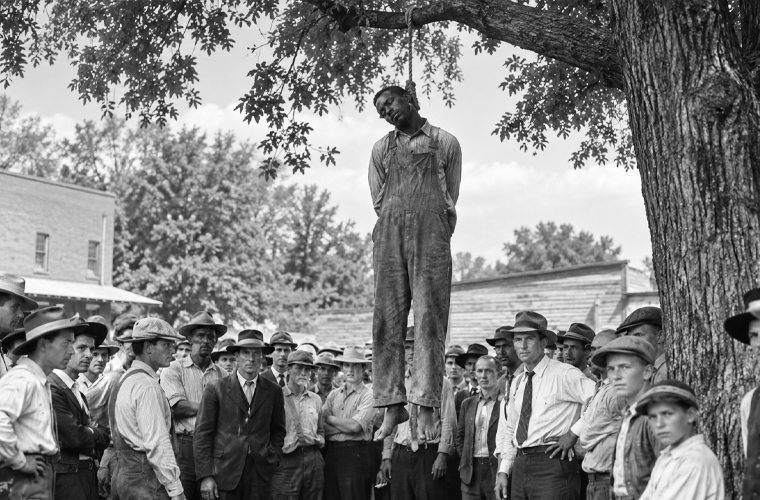
On April 23, 1899, near Newnan in Coweta County, Georgia, a large white mob tortured and burned to death Sam Hose, a young African American laborer, in one of the most widely publicized spectacle lynchings of the post-Reconstruction era. The event occurred during the Nadir of American race relations, a period of intense racial violence, disenfranchisement, and Jim Crow segregation following the collapse of Reconstruction. Hose’s killing, witnessed by an estimated crowd of up to 2,000 people, involved prolonged mutilation before he was burned alive; body parts were taken as souvenirs. It drew national and international attention, intensified debates over lynching, and influenced figures such as W.E.B. Du Bois.
Background and Identity
Sam Hose was the alias of Samuel Thomas Wilkes (also referred to as Tom Wilkes), born around 1875 near Marshallville in Macon County, Georgia. He grew up on a farm owned by the Jones family, for whom his mother had worked (and who had previously enslaved her). Contemporary descriptions portrayed him as intelligent and literate—unusual for many Black Southerners of the era under the constraints of the time—and responsible for supporting his aging mother and a brother with intellectual disabilities. He abandoned plans for further education to work as a manual laborer. Newspaper accounts from 1899 claimed he left the Marshallville area and adopted the name Sam Hose (sometimes rendered Holt) after an accusation of assaulting an elderly Black woman, though this detail is secondary to the events that followed.
By early 1899, Wilkes/Hose was employed as a farm laborer by Alfred Cranford, a white farmer in his mid-twenties living near Palmetto in Coweta County, not far from Atlanta. The Cranfords were from established local families; Alfred’s relatives owned significant land, and his wife Mattie (née McElroy) was from a prominent Newnan background. Hose had worked for them for roughly six months.
The Killing of Alfred Cranford
On the evening of April 12, 1899, Alfred Cranford was killed by an ax blow to the head at or near his home. According to accounts attributed to Hose, the incident arose from a dispute: Hose had requested time off to visit his ailing mother, or there was disagreement over wages. Hose claimed Cranford threatened him with a revolver; working with an ax at the time, Hose threw or swung it in self-defense, fatally striking Cranford, and then fled.
White newspapers and local accounts rapidly escalated the narrative. They portrayed Hose as having entered the Cranford home, killed Alfred in a particularly brutal fashion (splitting his skull), assaulted or injured the children (one account claimed an infant was left with lasting injury, including partial blindness in one eye for the youngest son), and raped Mattie Cranford—sometimes described in lurid detail as occurring in the presence of her dying husband or multiple times. Mattie Cranford maintained throughout her life that she had been raped. No formal police investigation of the crime scene, medical examination of Mattie, or trial ever occurred. Details largely originated from family members and associates relayed to authorities and the press.
Rewards for Hose’s capture quickly mounted to approximately $1,600 (a substantial sum), including contributions from Georgia Governor Allen D. Candler, The Atlanta Constitution, Coweta County, the town of Palmetto, and a private Atlanta citizen. A large-scale manhunt ensued across west-central Georgia.
Capture and the Lynching
Hose was captured near Marshallville around April 22–23, 1899, by men seeking the reward. He was placed on a train bound ultimately toward Atlanta or delivery to authorities. Crowds gathered along the route. In the Newnan area, an armed mob seized him from custody. Former Georgia Governor William Yates Atkinson and Judge Alvan Freeman appealed to the crowd to turn Hose over to the law; these pleas were ignored. The mob grew as news spread, with special trains bringing spectators from Atlanta and elsewhere. Estimates of the final crowd ranged from several hundred to about 2,000.
Hose was taken to a site known as the old Troutman field (or a nearby clearing north of Newnan). There, in broad daylight on a Sunday afternoon (around 2:30 p.m.), the mob stripped him, chained him to a pine tree or sapling, and systematically mutilated him. Contemporary newspaper reports described the severing of his ears, fingers, and genitals; repeated stabbing; and the removal of skin from his face. Kindling was piled around him; he was doused with kerosene, and the pyre was set alight. He was burned alive over a period of roughly 20–30 minutes. Witnesses reported him crying out “Oh my God! Oh Jesus!” as the flames consumed him. The crowd reportedly watched with satisfaction. After death, further dismemberment occurred; pieces of bone, flesh, the heart, and liver were taken or sold as souvenirs (bones reportedly for 25 cents). A sign reading “We Must Protect Our Southern Women” was attached to the tree. Participants did not wear masks and freely identified themselves to journalists.
Immediate Aftermath and Related Violence
The next day, April 24, a Black Baptist preacher named Elijah (or Lige) Strickland was seized from his home near Palmetto, mutilated (ears and a finger cut off), and hanged. He was accused—without substantiation that held up under later scrutiny—of having paid Hose to kill Cranford. Other acts of racial violence followed in the region in the surrounding weeks. Governor Candler publicly described Cranford’s killing as “the most diabolical in the annals of crime,” blamed the broader Black community for shielding Hose, and criticized protests against the lynching.
Investigations and Contested Facts
The lynching received extensive coverage in the national and international press and was widely condemned outside the South. Ida B. Wells-Barnett, the prominent anti-lynching journalist and activist, organized an investigation through Chicago Colored Citizens. They hired detective Louis P. Le Vin, whose report appeared in Wells-Barnett’s 1899 pamphlet Lynch Law in Georgia. Le Vin concluded after more than a week of inquiry in the area that Hose had killed Cranford in self-defense during a dispute and that the rape allegation had been added to inflame public sentiment and justify the mob action. He noted he could not interview Mattie Cranford due to her condition. His report stated that while Hose’s responsibility for the killing was clear, the precise circumstances could never be proven in a court, and ended with the observation that “a Negro’s life is a very cheap thing in Georgia.” Wells-Barnett framed the violence as intended to demonstrate that Black people in the South had “no rights that the law will enforce” and to deter any resistance to white authority.
Historian Leon Litwack later referenced a separate white detective’s investigation in which Mattie Cranford reportedly indicated Hose had not entered the house and had acted in self-defense. These findings remain disputed; Mattie Cranford’s public statements affirmed the rape, and many white residents of the area continued to regard Hose as guilty of both murder and rape. No legal proceedings ever tested the evidence.
Broader Significance and Legacy
The Sam Hose lynching exemplified the “spectacle” form of lynching that became more common around the turn of the century: public, prolonged, ritualized torture and killing attended by large crowds, including women and children, often with photographic documentation and the distribution of body-part souvenirs. It occurred amid a surge of such violence in Georgia and across the South.
For W.E.B. Du Bois, then a young professor at Atlanta University, the event was a personal turning point. On his way to meet Atlanta Constitution editor Joel Chandler Harris to discuss the case and urge restraint, Du Bois learned that knuckles from Hose’s body were on display for sale in a local shop. He abandoned the meeting. In later writings (including Dusk of Dawn), he described how the episode shattered his earlier faith that reasoned appeal and scientific study alone could overcome racial injustice, contributing to his shift toward more direct advocacy and activism.
The case featured in contemporary anti-lynching literature and later historical studies of racial violence, including works by Philip Dray, Leon Litwack, and specialized monographs such as Edwin T. Arnold’s What Virtue There Is in Fire (examining cultural memory of the event) and Donald G. Mathews’s At the Altar of Lynching. Local memory in Coweta County remained contested for generations. Efforts in the early 2000s to hold memorial services or place historical markers met significant local resistance, with many residents continuing to emphasize the original accusations against Hose and the suffering of the Cranford family.
The lynching of Sam Hose stands as a stark documented instance of extrajudicial racial terror in the Jim Crow South. It illustrates how accusations—especially those involving interracial violence or alleged sexual assault—could rapidly escalate into organized mob violence with broad community participation, media amplification, and official acquiescence or encouragement, while due process was entirely bypassed. Primary newspaper accounts, the Wells-Barnett investigation, and subsequent scholarship provide the core historical record, even as precise details of the initial confrontation remain forever unresolved by formal legal means.