
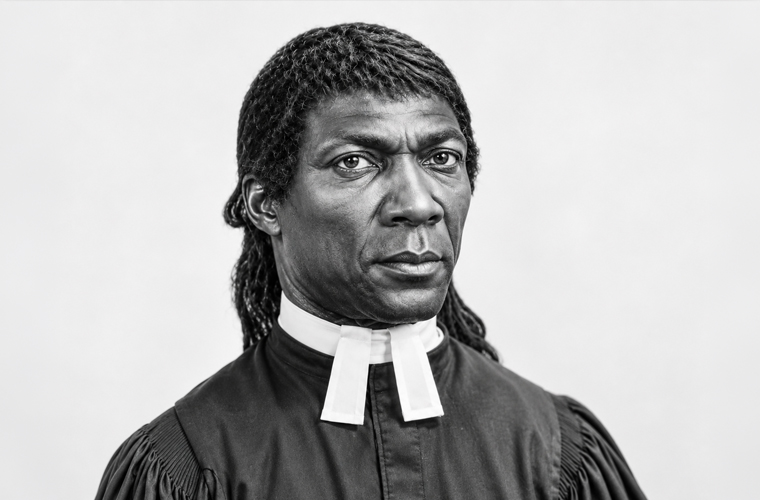
John Marrant (June 15, 1755 – April 15, 1791) was a freeborn Black American author, Methodist preacher, missionary, and one of the earliest ordained Black ministers in North America. He is best known for his autobiographical A Narrative of the Lord’s Wonderful Dealings with John Marrant (1785), a Black American, which became a popular spiritual autobiography blending themes of conversion, captivity, adventure, and faith. Marrant was born free in New York City on June 15, 1755, the second-youngest of several siblings (two older sisters, an older brother, and a younger sister). His father died in 1759 when John was four years old. His mother then moved the family south, first to St. Augustine, Florida (then under British control), where Marrant began his education. After about 18 months there, amid the Seven Years’ War, they relocated to Georgia, and later to Charleston, South Carolina. In Georgia and South Carolina, he continued schooling until age 11—an opportunity rare for Black children at the time—learning to read and write. He developed a strong interest in music, mastering the violin and French horn. He performed at balls and social gatherings for the local gentry and briefly apprenticed as a carpenter before pursuing music more seriously.
Religious Conversion and Cherokee Captivity
Around age 13 (circa 1768), while heading to a musical engagement with a friend intending to disrupt a service, Marrant encountered the renowned evangelist George Whitefield. Struck by Whitefield’s sermon (reportedly beginning with “Prepare to meet thy God, O Israel”), Marrant experienced a dramatic conversion: he collapsed, was carried home, and underwent a period of intense spiritual conviction. He studied the Bible fervently, which strained relations with his family, who viewed his behavior as erratic or unstable.
Disagreements led him to leave home and wander into the wilderness. There he met a Cherokee hunter, traveled and hunted with him, and eventually reached a Cherokee settlement. Initially sentenced to death as an intruder, Marrant’s prayers and hymns—delivered in English and interpreted or understood in Cherokee—reportedly moved the executioner and king, sparing his life and leading to his acceptance in the community. He lived among the Cherokee for about two years, learning their language and customs, converting some to Christianity (including the king reportedly), and visiting neighboring tribes such as the Catawba, Housaw, and Creek. He adopted elements of Native dress and later described this period as one of profound spiritual trial and growth. Historians note that his interactions may have helped foster early bonds between Black and Cherokee communities. Upon returning to Charleston, his family barely recognized him (his youngest sister did). He worked as a free carpenter on plantations, conducted informal missionary work among enslaved people (sometimes facing opposition from owners), and continued his faith journey.
Revolutionary War Service
During the American Revolutionary War, Marrant was impressed (forcibly recruited) into the Royal Navy, serving as a musician for over six years. He was present at events including the Siege of Charleston (1780) and was wounded at the Battle of Dogger Bank (1781). He was discharged in 1782. His service aligned him with the British side; many Black individuals, including those promised freedom for loyalty to the Crown, became known as Black Loyalists. After the war, thousands were evacuated to Nova Scotia.
Ministry, Authorship, and Later Travels
In London after his naval service, Marrant reconnected with Methodist circles. He shared his story with Rev. William Aldridge and was introduced to Selina Hastings, Countess of Huntingdon, a key patron of Calvinistic Methodism. He joined the Countess of Huntingdon’s Connexion and was ordained on May 15, 1785, in Bath. With support from the Connexion, he published his Narrative in 1785 (transcribed/edited with Aldridge’s help), which detailed his conversion, wilderness experiences, and Cherokee sojourn. It went through multiple editions and became influential as an early spiritual autobiography by a person of African descent in North America. Critics note its blend of literal events with symbolic or evangelical framing, common in such conversion narratives.
In late 1785, Marrant sailed to Nova Scotia as a missionary, arriving after an 11-week voyage (during which he reportedly preached and saw conversions amid a storm). He settled in Birchtown, the largest Black Loyalist settlement, where he founded a Huntingdonian church and ministered to Black communities. He traveled to other settlements (e.g., Shelburne, Jordan River, Cape Negro), preached to Mi’kmaq people and white congregations, and faced opposition from some established Methodist groups. He endured smallpox and financial hardship but emphasized themes of suffering, perseverance, and divine favor. In 1788, he married Elizabeth Herries in Birchtown. Health and support issues led him to Boston in 1787–1788, where he became chaplain to the African Lodge No. 1 (Prince Hall Freemasonry). In 1789, he delivered a notable sermon to the lodge tracing Masonic history biblically and calling for brotherly love and anti-slavery principles. He published a journal covering his Nova Scotia years.
Final Years and Legacy
Marrant returned to London around 1790. He continued to preach occasionally but died young on April 15, 1791, at age 35 (or 36), in Islington, London, and was buried there. Marrant’s life and writings left a lasting impact. His Narrative contributed to early African American literature and evangelical traditions, inspiring resilience, faith, and community-building amid racial challenges. He influenced Black Loyalist communities, some of whom later migrated to Sierra Leone. As one of the first Black ordained preachers addressing both Black and white audiences in North America, he helped lay groundwork for independent Black Christian traditions emphasizing liberation and spiritual empowerment. His story remains a vivid example of transatlantic faith, survival, and identity in the late 18th century.
Marrant’s extraordinary journey—from freeborn musician and wilderness survivor to ordained missionary and author—embodies the complexities of race, religion, and revolution in the Atlantic world.