
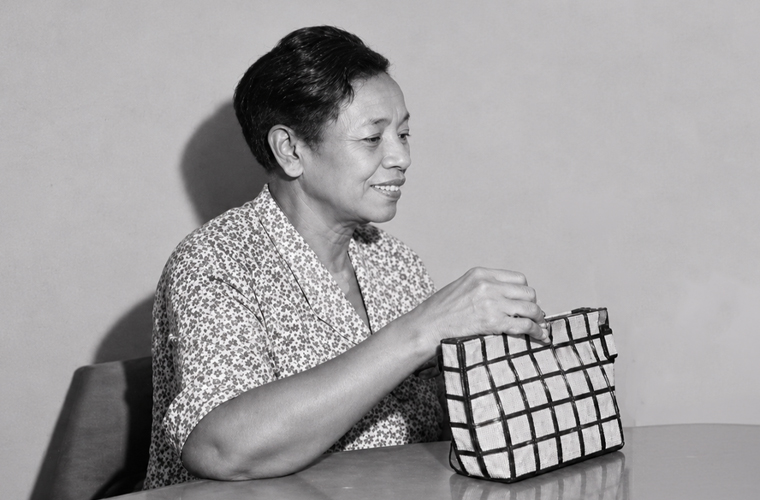
Maude Evangeline Craig Sampson Williams (February 1880 – March 13, 1958) was an African American educator, suffragist, civil rights leader, and community activist based primarily in El Paso, Texas. She was born in Austin, Texas, in February 1880 to George Washington Craig (a grocer, born in Louisiana) and Marie (or Maine) Sanders Craig (a homemaker, born in Tennessee). She was the oldest of five children and grew up in the historic African American neighborhood of East Central Austin.
In 1900, she graduated from Prairie View State Normal and Industrial College (now Prairie View A&M University). She taught in African American schools for much of her career, including the Emile School in Bastrop, Texas; Gregory Town School (later Edward L. Blackshear Elementary) in Austin; Frederick Douglass School in El Paso; and Central Elementary in La Union, New Mexico, in the 1920s–1930s.
She moved to El Paso around 1904 to teach at Douglass School (the city’s only school for Black students until desegregation). She helped found the school’s Parents’ Organization. On June 8, 1907, she married Edward D. Sampson (a barber, realtor/janitor, and later city teamster), who was also active in the NAACP. He died on March 12, 1926. On May 10, 1929, she married dentist Emerson Milton Williams, who died in 1947.
In 1914, she was a founding member of the El Paso Phyllis Wheatley Club, a Black women’s civic organization focused on community improvement, education, and welfare. During World War I, she led local campaigns for Liberty Bonds, Junior Red Cross membership, and support for Black soldiers at Fort Bliss and Biggs Field.
In 1918, she became a leading Black suffragist in El Paso. After Texas granted women the right to vote in Democratic primaries, she hosted an interracial meeting in her home on June 12, 1918, with members of the white El Paso Equal Franchise League. That evening the El Paso Negro Woman’s Civic and Equal Franchise League (also called the Civic and Enfranchisement League) formed at the Black Masonic Temple, and she was elected chair/president. The group organized registration drives; African American women were among the first to register in some precincts for the July 1918 primary.
She sought affiliation of her league with the National American Woman Suffrage Association (NAWSA) through the Texas Equal Suffrage Association (TESA). White leaders, including Carrie Chapman Catt, rejected or delayed the request due to segregationist concerns about alienating southern white support. Despite this, she continued suffrage and political work, serving as a precinct organizer and supporting candidates such as Robert E. Thomason.
She was a charter member and vice president (1917–ca. 1924) of the El Paso NAACP branch—the first in Texas (organized 1914)—and remained active throughout her life. The branch supported landmark challenges to Texas’s white primary, including the U.S. Supreme Court cases Nixon v. Herndon (1927) and Nixon v. Condon (1932).
In the 1940s–1950s, as chair of the El Paso NAACP Legal Redress Committee and through groups like the Council of Church Women and Women’s Federated Clubs and Societies, she advocated for better housing, recreation facilities, and school integration. She helped host World War II Black troops, supported the hiring of the first Black El Paso police officers (1947), and served as a trustee of the Mary L. Peyton Foundation. She also lectured on Frederick Douglass during Negro History Week in 1930.
In 1954–1955, shortly after Brown v. Board of Education, she accompanied Douglass School valedictorian Thelma Joyce White to register at Texas Western College (now the University of Texas at El Paso). When segregation laws denied White admission, the NAACP filed White v. Smith. The U.S. District Court ordered desegregation in July 1955, making Texas Western the first state-supported undergraduate institution in Texas desegregated by court order (outside a direct Supreme Court ruling). Future Supreme Court Justice Thurgood Marshall was involved in the case; the judge was Robert E. Thomason (whom she had earlier supported politically).
In May/June 1957, she moved to Oklahoma City to live with her sisters Ruby Craig King and Katie Craig Jones. On March 13, 1958, she was struck by a truck and killed while crossing a street there, at age 78. She was buried in Evergreen Cemetery in Austin near family.
In 1968, the El Paso Interdenominational Ministerial Alliance established a Memorial Scholarship Fund at what is now UTEP in honor of her and other local civil rights leaders (including Lawrence A. Nixon). A historic marker for her was dedicated at the El Paso County Courthouse in 2022. The Phyllis Wheatley Club of El Paso continues as an active organization. She is remembered as a key figure in Texas Black women’s suffrage, early NAACP organizing, and the desegregation of higher education in the state.