
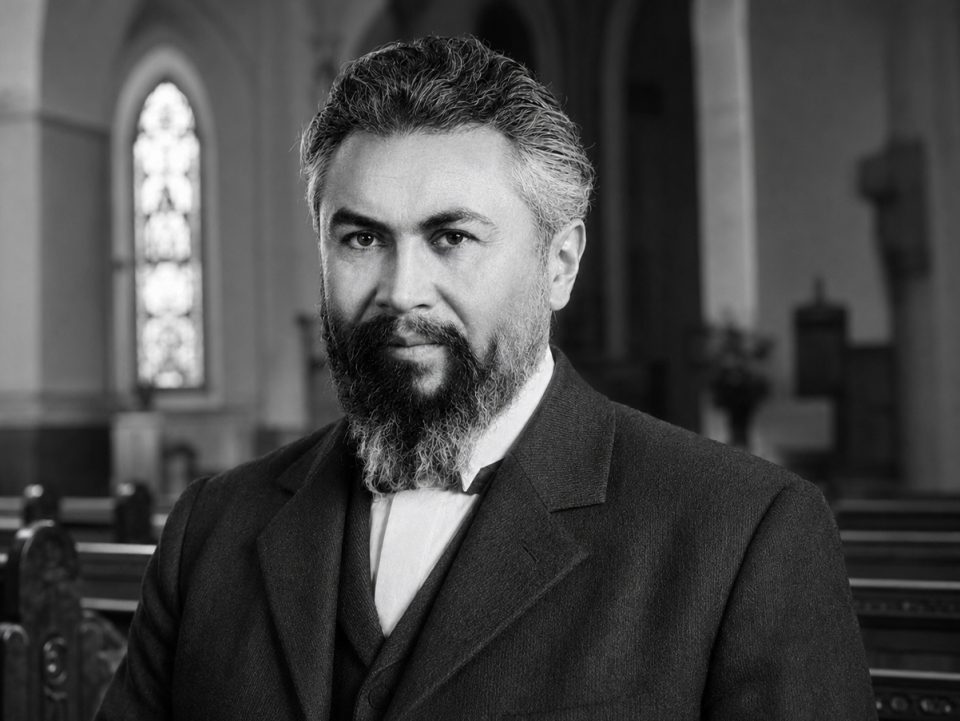
William J. Seymour (1870–1922) was an African-American Holiness Pentecostal preacher and the central figure behind the Azusa Street Revival, widely regarded as the catalyst for the modern Pentecostal movement that reshaped global Christianity in the 20th century. Born William Joseph Seymour on May 2, 1870, in Centerville, St. Mary’s Parish, Louisiana, he was the second of eight children in a family of emancipated slaves. His parents, Simon and Phyllis Seymour, had only recently gained freedom before his birth. Raised Baptist, Seymour experienced dreams and visions from a young age. At around age 25, he moved north to Indianapolis, Indiana—then predominantly white—where he worked as a railroad porter and waiter. Around this time, he contracted smallpox, which left him blind in his left eye. He later moved to Cincinnati, Ohio, and joined the “Evening Light Saints” (Church of God Reformation Movement), embracing Holiness teachings on divine healing, sanctification as a second work of grace, premillennialism, and justification by faith.
In 1905, Seymour attended a Bible school in Houston, Texas, led by Charles Parham, a key early Pentecostal leader. Due to racial segregation laws, Seymour often had to listen from outside the classroom or a hallway. He adopted Parham’s distinctive teaching that speaking in tongues was the initial physical evidence of baptism in the Holy Spirit.
In February 1906, Seymour was invited to Los Angeles to pastor a small Holiness congregation. His emphasis on tongues as evidence of Spirit baptism quickly caused controversy; he was locked out of the church after his first sermon. He continued meeting with a small group at a home on North Bonnie Brae Street. On April 9, 1906, several participants, including Edward Lee and Jennie Evans Moore (whom Seymour later married), began speaking in tongues during intense prayer meetings. The group soon moved to an old African Methodist Episcopal building at 312 Azusa Street. What began as a small gathering exploded into the Azusa Street Revival—a multi-year outpouring characterized by fervent worship, speaking in tongues, divine healing, prophecy, and interracial fellowship in an era of deep racial division in the United States.
The revival drew thousands from across the U.S. and around the world, including Black, White, Latino, and immigrant believers. Seymour published the newspaper The Apostolic Faith, which spread reports of the revival globally and helped launch Pentecostal missions worldwide. Though the revival’s peak intensity waned after a few years, its influence endured. Seymour eventually parted ways with Parham over theological and leadership differences. He emphasized humility, unity across racial lines, and the leadership of the Holy Spirit, often preaching from a simple wooden box behind the pulpit. Seymour continued pastoring and traveling in ministry, though the mission faced challenges and decline in later years. He died of a heart attack on September 28, 1922, in Los Angeles at age 52.
His legacy is immense: The Azusa Street Revival is credited with birthing the Pentecostal and Charismatic movements, which today number hundreds of millions of adherents worldwide. Seymour’s emphasis on experiential faith, racial reconciliation (however imperfectly realized), and the power of the Holy Spirit made him one of the most influential yet often underrecognized religious leaders of the 20th century. He remains a powerful symbol of how God can use humble, unlikely vessels—regardless of background or physical limitations—to ignite worldwide spiritual renewal.