
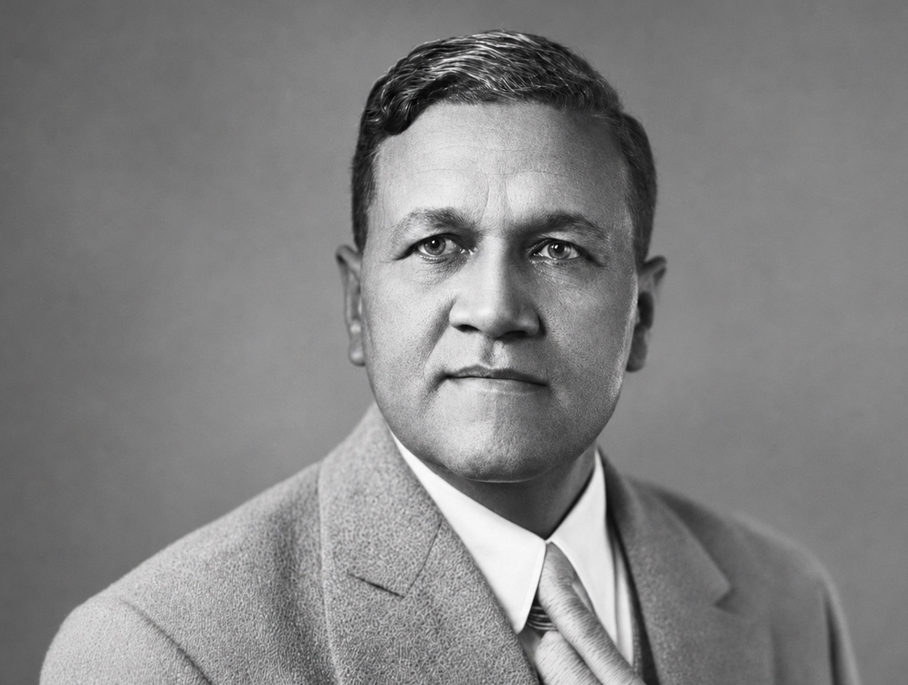
Channing H. Tobias (1882–1961) was a prominent African American civil rights activist, religious leader, educator, and philanthropist known for his tireless work advancing racial equality, interracial cooperation, and opportunities for Black Americans in the early to mid-20th century. Often called “the Booker T. Washington of his day,” he broke barriers at major institutions such as the YMCA and the NAACP while advising U.S. presidents and influencing national policy.
Born Channing Heggie Tobias on February 1, 1882, in Augusta, Georgia, to Fair and Belle (Robinson) Tobias, he was orphaned young and raised by a widowed friend of his mother’s. He attended public schools in Augusta before earning his Bachelor of Arts degree from Paine College in 1902. He later studied at Drew Theological Seminary (earning a Bachelor of Divinity), spent time at the University of Pennsylvania, and received a Doctorate in Divinity from Gammon Theological Seminary. He was ordained in the Colored Methodist Episcopal Church in 1911 and taught biblical literature at Paine College for several years.


Tobias joined the YMCA as early as 1905 and rose to become a key figure in its efforts on race relations. From 1911 to 1946, he served in various roles, including as Senior Secretary of the Colored Work Department (or Department of Interracial Services) for 23 years. In this position, he worked to improve race relations within the organization and broader society, both in the U.S. and internationally. He chaired the committee on race relations for the 1937 YMCA World Conference in India, where he met Mahatma Gandhi, and spoke at the 1926 World Conference in Finland. His leadership helped expand opportunities and challenge segregationist practices.
After retiring from the YMCA in 1946, Tobias became the first Black director of the Phelps-Stokes Fund, a philanthropic organization supporting educational opportunities for African American children. He was deeply involved with the NAACP, serving on its Board of Trustees from 1943 and as chairman from 1953 to 1960. As chairman, he launched the “Fight for Freedom” campaign aimed at ending state-imposed racial segregation by the 100th anniversary of the Emancipation Proclamation.
President Franklin D. Roosevelt appointed him to the National Advisory Committee on Selective Service during World War II. In 1946, President Harry Truman named him to the President’s Committee on Civil Rights. He also served as an alternate U.S. delegate to the United Nations General Assembly in 1951. Tobias played a role in developing New York State’s Fair Employment Law and resigned from the New York State Commission Against Discrimination to protest slow progress on anti-discrimination measures.
In 1948, Tobias received the prestigious Spingarn Medal from the NAACP for his distinguished achievements on behalf of African Americans. He was a member of the Alpha Phi Alpha fraternity and received numerous honorary degrees, including the first awarded to an African American by New York University, as well as honors from Morehouse College, the Jewish Institute of Religion, and others.
Channing H. Tobias died on November 5, 1961, in New York City after a long illness. His life exemplified dedication to education, moral leadership, interracial understanding, and the fight for civil rights. Through his work in religious organizations, philanthropy, and government service, he helped pave the way for greater equality in 20th-century America. His papers and collections are preserved at institutions like the University of Minnesota and the New York Public Library, serving as valuable resources on the history of the civil rights movement and interracial cooperation.