
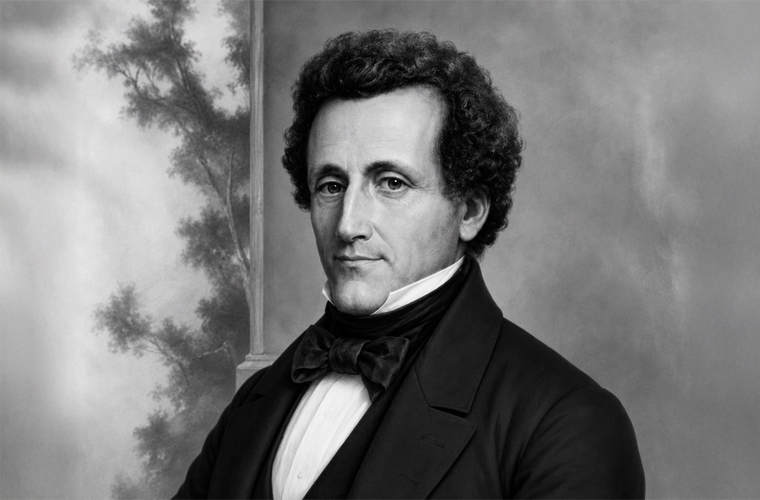
Charles Lynch was a Virginia planter, justice of the peace, politician, and militia colonel whose extrajudicial actions during the American Revolutionary War originated the term “Lynch’s Law,” which later evolved into the word “lynching.” Born in 1736 in colonial Virginia (likely Goochland or Albemarle County), Lynch was the son of Charles Lynch Sr., an Irish immigrant who arrived as an indentured servant. Raised in a Quaker family, he married fellow Quaker Anne Terrell in 1755 and settled in Bedford County on the Virginia frontier. He prospered as a planter and became involved in lead mining operations that later supplied the Patriot war effort. Lynch was expelled from the v faith after taking the oath of office as a justice of the peace in 1767, illustrating the tension between his religious background and his growing public and military roles.
Revolutionary Service
Lynch served in the Virginia House of Burgesses from 1769, participated in resistance to British policies, attended the 1776 Virginia constitutional convention, and later served in the House of Delegates. Commissioned as a colonel in the Bedford County militia, he played a key role in 1780 when Loyalist (Tory) threats endangered critical lead mines. With other officers and justices, he conducted summary “drumhead” trials of suspected Loyalists. Punishments typically included whippings (often 39 lashes), property confiscation, forced oaths of allegiance, and conscription into the Continental Army. These actions occurred under wartime pressure when formal courts were scarce on the frontier.
In 1782, Lynch himself referred to these measures as “Lynch’s Law” in correspondence—the earliest known use of the phrase. Governor Thomas Jefferson supported vigorous action against internal threats, and the Virginia General Assembly later passed an act of indemnity protecting Lynch and his associates from legal repercussions. Lynch also led Virginia riflemen in support of General Nathanael Greene’s southern campaign in 1781. After the Revolution, Lynch served in the Virginia Senate (1784–1789) and backed ratification of the U.S. Constitution. He continued as a planter until his death on October 29, 1796, in Campbell County, Virginia.
Legacy and the Evolution of “Lynching”
Charles Lynch’s name became permanently attached to the concept of extrajudicial punishment. In its original Revolutionary context, “Lynch’s Law” referred to rough frontier justice—primarily corporal punishments—used to secure the Patriot cause during a time of crisis. Historic markers in modern Bedford and Campbell Counties commemorate these events, including sites associated with the punishments.
Over time, the term “lynching” underwent a profound transformation. While Lynch’s actions rarely, if ever, involved execution, the word came to describe mob violence and extrajudicial killings, particularly in the 19th and 20th centuries. In the post-Civil War South, lynching evolved into a systematic tool of racial terror and white supremacy. White mobs, often with community participation or tacit official tolerance, used public murders—frequently by hanging, but also burning and torture—to enforce racial hierarchy, intimidate Black communities, suppress voting and economic progress, and punish perceived violations of social norms (real or imagined).
Historians note that while the later practice borrowed the name derived from Charles Lynch’s Revolutionary-era activities, it represented a far more lethal and racially targeted form of violence. Estimates suggest thousands of African Americans were lynched in the South between the 1880s and the mid-20th century (with peaks in the 1890s), alongside smaller numbers of white victims. These acts were not direct replicas of Lynch’s methods but rather a dark evolution of the idea of “popular justice” outside the law, repurposed to maintain social control after emancipation and Reconstruction.
Charles Lynch exemplified the determined, often harsh spirit of Virginia frontier Patriots who helped secure American independence through decisive action. His legacy is complex: a zealous Patriot whose wartime measures protected key resources, yet whose name became synonymous with a form of extrajudicial violence that took on far more brutal and racially charged dimensions in later American history. He remains a foundational figure in the etymology of “lynching,” even as the term’s modern associations far exceed his original actions.