
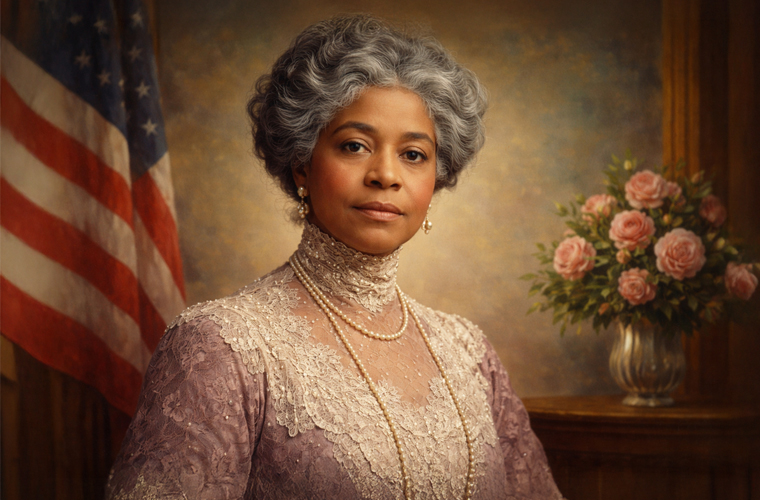
Mary Church Terrell (September 23, 1863 – July 24, 1954) was a trailblazing African American civil rights activist, educator, suffragist, journalist, lecturer, and author whose activism spanned nearly seven decades—from the post-Civil War Reconstruction era through the early years of the modern civil rights movement. Known for her eloquent speeches, fearless advocacy, and intersectional approach to fighting racial and gender discrimination, she bridged 19th-century abolitionist ideals with 20th-century equality efforts.
Born Mary Eliza Church (often called “Mollie”) in Memphis, Tennessee, just months after the Emancipation Proclamation, she was the daughter of formerly enslaved parents who achieved remarkable success. Her mother, Louisa Ayres Church, owned a successful hair salon. At the same time, her father, Robert Reed Church, became one of the South’s first African American millionaires through savvy real estate investments and business ventures, including founding Memphis’s first Black-owned bank. This economic stability allowed young Mary access to a quality education uncommon for Black Americans at the time. After her parents’ divorce, she was sent north for schooling, attending the Antioch College Model School (laboratory school) in Yellow Springs, Ohio.
Terrell enrolled at Oberlin College in Ohio, a progressive institution known for admitting women and African Americans. She earned a Bachelor’s degree in Classics (with honors) in 1884—one of the first African American women in the U.S. to graduate from college—and returned to complete a Master’s degree in Education in 1888. During her time at Oberlin, she met influential figures and developed a lifelong commitment to education and activism.
Her professional career began in education. In 1885, she taught at Wilberforce University in Ohio (where she briefly served as a professor and principal). In 1887, she moved to Washington, D.C., to teach Latin at the prestigious M Street Colored High School (later renamed Paul Laurence Dunbar High School), the nation’s first public high school for African Americans. There she worked alongside Anna Julia Cooper and met Robert Heberton Terrell, a fellow educator and lawyer. They married on October 18, 1891. Due to discriminatory D.C. rules barring married women from teaching in public schools, she resigned but redirected her energy toward broader public advocacy.
In 1895, Terrell achieved another historic milestone as the first African American woman appointed to a major U.S. city’s school board, serving on the District of Columbia Board of Education until 1906 (some sources note that she was briefly appointed superintendent as well).
Terrell became a central figure in the Black women’s club movement. She helped found the Colored Women’s League of Washington in 1892 and co-founded the National Association of Colored Women (NACW) in 1896, serving as its first national president until 1901. Under her leadership, the v adopted the motto “Lifting as We Climb” and focused on education, suffrage, anti-lynching efforts, and community uplift. She also helped establish the National Association of College Women (later National Association of University Women) in 1923.
A committed suffragist, Terrell advocated for women’s voting rights while insisting that the movement address racial injustice. She addressed the predominantly white National American Woman Suffrage Association, highlighting the unique challenges faced by Black women, and participated in suffrage parades and campaigns.
In 1909, at the invitation of W.E.B. Du Bois, she became a charter member of the National Association for the Advancement of Colored People (NAACP), remaining active for decades. She was also involved with the National Council of Negro Women and supported organizations like Delta Sigma Theta Sorority.
An accomplished writer and international lecturer, Terrell published articles in outlets like the North American Review (including her powerful 1904 piece “Lynching from a Negro’s Point of View”). She spoke across the United States and Europe (becoming fluent in French, German, and Italian during travels in the late 1880s), often addressing audiences on race, gender, and justice. Her 1940 autobiography, A Colored Woman in a White World, candidly detailed her experiences with discrimination.
Even in her 80s, Terrell remained a forceful activist. In 1950, at age 86, she chaired the Coordinating Committee for the Enforcement of the District of Columbia Anti-Discrimination Laws. On February 28, 1950, she and interracial companions were denied service at Thompson’s Restaurant in downtown Washington, D.C.—a deliberate test of long-ignored Reconstruction-era “lost laws” prohibiting discrimination in public accommodations. The resulting lawsuit reached the U.S. Supreme Court, which ruled in 1953 (District of Columbia v. John R. Thompson Co.) that these laws remained valid, effectively ending legal v in D.C. restaurants and theaters.
Terrell lived to witness the Supreme Court’s landmark Brown v. Board of Education decision in May 1954, which declared school segregation unconstitutional.
Mary Church Terrell died on July 24, 1954, in Highland Beach, Maryland, at age 90—just months after the Brown ruling. Her legacy endures as a foundational figure in American civil rights and women’s rights history. Posthumously honored (including induction into the National Women’s Hall of Fame in 2020 and naming of Oberlin College’s main library after her in 2018), she exemplified tireless, intersectional activism that demanded equality for all.