
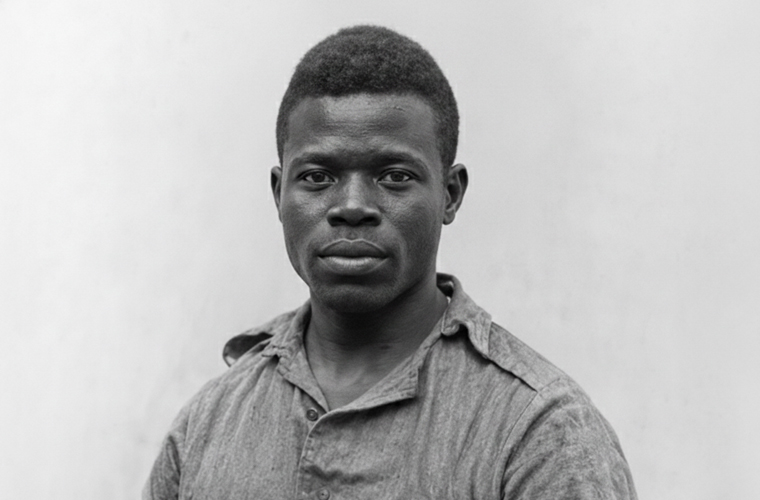
George Meadows, an African American man and recent arrival to the Pratt Mines area in Jefferson County, Alabama, was lynched by a mob of white coal miners on January 15, 1889. His death exemplifies the racial terror and mob justice that characterized the post-Reconstruction South, where accusations—often unsubstantiated—against Black men could lead to swift, extrajudicial violence.
The Crime and the Accusation
On January 14, 1889, J.S. Kellam (sometimes spelled Kellman), a white woman, and her 9-year-old son were attacked in a forest near Pratt Mines. The assailant beat and raped Kellam, who survived by playing dead. Her son was forced to lie beside her and was beaten to death. In the immediate aftermath, over 400 white coal miners mobilized, rounding up several Black men and presenting them to Kellam for identification. None was positively identified at first. The next day, the miners brought forward George Meadows. Described as a newcomer who had drawn attention by talking excessively about the murder, Meadows became the focus. After a cursory investigation—including the discovery of bloodstains on his undershirt and hat—Kellam indicated he was “most likely” the attacker.
The Lynching
Despite pleas for restraint, the mob proceeded. Kellam expressed uncertainty about Meadows’ guilt and begged the mob not to lynch him. Her husband, J.S. Kellam, also appealed to the crowd in a public letter, urging them to let the law take its course rather than resort to mob violence. He invoked Christian principles, quoting Romans 12:19 (“Vengeance is mine; I will repay, saith the Lord”), and argued that torturing or killing Meadows without certainty would be unjust. The mob ignored these appeals. They hanged Meadows near the Pratt Mines. After his death, the crowd fired hundreds of shots—reportedly around 500—at his body, striking it approximately 100 times. His corpse was then displayed publicly by an undertaker, where crowds viewed it, and photographs were taken and distributed as souvenirs.
Aftermath and Questions of Guilt
The day after the lynching, on January 16, the sheriff determined that Meadows was not the perpetrator and arrested another Black man, Lewis Jackson. However, Kellam could not identify Jackson either, leading to his release. Contemporary accounts reveal shifting narratives. Kellam later confessed she had never truly doubted Meadows’ guilt but had feigned uncertainty to avoid personal responsibility for his death at the hands of the mob. A coroner’s inquest and local reports also referenced a prior accusation against Meadows by a Black woman, Patsy Hamilton, who claimed he had raped her daughter two years earlier. Meadows’ body was buried in a pauper’s grave in what was then Red Mountain Cemetery (now the site of Lane Park, home to the Birmingham Zoo and Botanical Gardens). Efforts in later years, including by the Jefferson County Memorial Project, have sought to locate or memorialize his grave.
Historical Context
The lynching of George Meadows occurred during a period of intense racial violence in Alabama and the broader South. Jefferson County saw numerous racial terror lynchings between 1877 and 1950. Mob violence often bypassed due process, fueled by white supremacist attitudes, economic tensions in mining communities, and a desire to maintain racial hierarchies. Photographs of Meadows’ lynched body, like many others from this era, were circulated widely, serving both as gruesome mementos and tools of intimidation. One such image, held by the Library of Congress, captures his bound body hanging from a tree.
Legacy
The story of George Meadows highlights the fragility of justice for African Americans in the Jim Crow era. Even with expressed doubts from the alleged victim and calls for legal proceedings, racial prejudice and mob fervor prevailed. Modern remembrance efforts, such as those by the Jefferson County Memorial Project and references in the National Memorial for Peace and Justice, seek to honor victims like Meadows and confront this painful history.
His case stands as a stark reminder of how accusations, combined with systemic racism, could result in irreversible tragedy—often before the truth could fully emerge.