
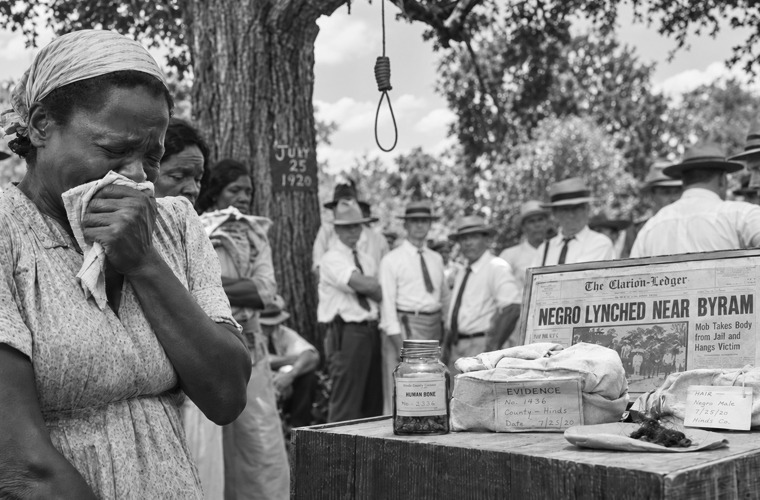
The practice of taking body parts as souvenirs from Black people who were lynched was a documented feature of many racial terror lynchings in the United States, particularly during the late 19th and early 20th centuries. From the end of Reconstruction through the mid-20th century, thousands of African Americans were killed by white mobs in extrajudicial acts of racial violence. The Equal Justice Initiative and other researchers have documented more than 4,000 racial terror lynchings of Black people in Southern states between 1877 and 1950, with additional cases elsewhere. While not every lynching involved the collection of body parts, the practice was common enough in public “spectacle” lynchings to be repeatedly described in contemporary newspaper accounts, investigations, and later historical scholarship.
Nature of the Practice
In many cases, after a victim was hanged, burned, shot, or otherwise killed, members of the crowd mutilated the body. Fingers, toes, ears, genitals, pieces of skin, bones, teeth, and other remains were cut or broken off and taken home. These items functioned as trophies, keepsakes, or “souvenirs.” Some were displayed in homes or businesses, preserved in alcohol, or sold. Pieces of the rope, the tree or stake used in the killing, clothing, or ashes were also collected. Photographs of the mutilated bodies were frequently turned into postcards that circulated through the mail until postal authorities restricted them. The practice was not hidden. Participants often acted openly, sometimes fighting over remains. Local newspapers in the white press sometimes described the events in celebratory or matter-of-fact language, while Black newspapers and civil rights investigators recorded the horror.
Notable Historical Examples
One of the most widely reported cases was the 1899 lynching of Sam Hose (also referred to as Sam Holt) near Newnan, Georgia. Accused of killing his white employer and assaulting the employer’s wife—charges that later investigations and contemporary Black observers strongly contested—Hose was seized by a large mob. Before being burned alive, his ears, fingers, and genitals were severed. After his death, the body was further dismembered. Contemporary accounts reported that pieces of bone sold for 25 cents and portions of liver for 10 cents. W.E.B. Du Bois later recalled learning that Hose’s knuckles were on display for sale in an Atlanta grocery store window. The tree to which Hose had been chained was also torn apart for souvenirs.
Similar acts occurred in other cases. In the 1917 lynching of Ell Persons in Memphis, Tennessee, the victim’s body was burned and then dismembered; remains were reportedly scattered or thrown in Black neighborhoods, and photographs of the head were sold as postcards. In the 1934 lynching of Claude Neal in Florida, the victim was subjected to prolonged torture, including castration, before being killed; fingers and toes were later exhibited as souvenirs. Accounts of other lynchings describe teeth, ears, and other parts distributed among participants, including children in some instances. Scholars such as Harvey Young have examined these remains as “souvenirs,” fetish objects, and material traces of the public performance of racial domination. The taking of body parts extended the violence beyond the moment of death, turning the Black body into a commodity and a lasting emblem of white power.
Motivations and Social Context
These acts served multiple functions within the ideology of white supremacy. They dehumanized the victims, reinforced racial hierarchy through the most intimate form of bodily violation, and created shared experiences and tangible mementos that bound participants together. Public spectacle lynchings were often attended by hundreds or thousands of white men, women, and children, sometimes traveling by special trains. Vendors sold food; photographers recorded the scene; and the distribution of body parts and postcards prolonged the terror long after the killing. The practice sent a clear message of racial control and the near-total impunity of the perpetrators. Convictions for lynching were extremely rare.
The targeting of genitals in particular reflected the sexualized racism that underpinned many lynchings, especially those justified by accusations (often false or exaggerated) of rape or sexual contact across the color line. Castration and the display of sexual organs were intended both to punish and to symbolically emasculate Black men while asserting white male dominance.
Documentation and Legacy
Contemporary Black journalists, activists such as Ida B. Wells, and organizations including the NAACP collected and publicized accounts of these atrocities. White newspapers sometimes provided detailed descriptions that later served as historical evidence. Modern scholarship, museum exhibitions (including work by the Equal Justice Initiative), and collections such as Without Sanctuary (which documents lynching photographs and postcards) have brought renewed attention to the practice.
The taking of body-part souvenirs was one of the most extreme expressions of the culture of racial terror that enforced Jim Crow segregation and suppressed Black political, economic, and social advancement. It left deep intergenerational trauma in Black communities and stands as a stark record of the capacity for collective cruelty when racial ideology is left unchecked by law or conscience. Historical markers, soil-collection remembrance projects, and memorials now seek to acknowledge the victims by name and to confront this history rather than erase it.