
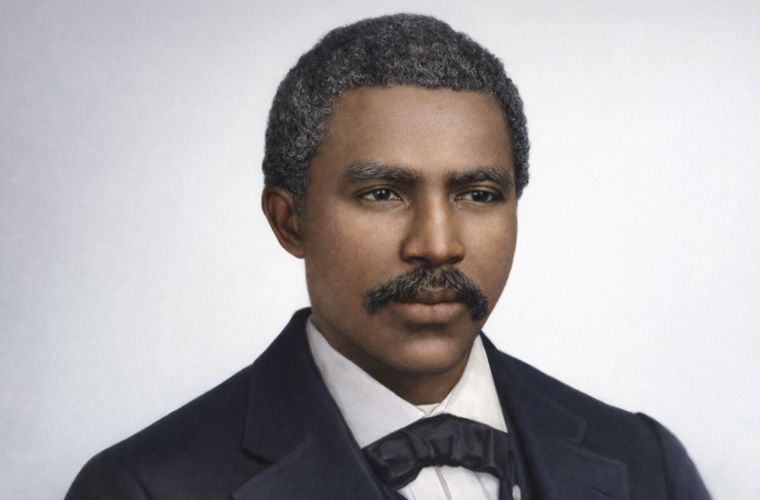
Robert Brown Elliott (August 11, 1842 – August 9, 1884) was a prominent African American politician, lawyer, orator, and military officer during the Reconstruction era, best known for his fierce advocacy of civil rights and his determined opposition to racial violence in the post-Civil War South.
Details of Elliott’s early life remain somewhat uncertain and contested among historians, as some claims he made about his background lack independent verification. He is most commonly believed to have been born on August 11, 1842, in Liverpool, England, to parents likely of West Indian (Afro-Caribbean) origin. Elliott claimed to have attended High Holborn Academy in London and to have studied law, graduating from the prestigious Eton College in 1859—though no records confirm attendance at these institutions. He reportedly served in the British Royal Navy before immigrating to the United States around the end of the Civil War, possibly arriving in Boston and later settling in South Carolina in 1867 amid the opportunities opened by Reconstruction.
Upon arriving in South Carolina, Elliott quickly immersed himself in the state’s emerging Republican politics and Black community leadership. He worked as associate editor of the South Carolina Leader, a Republican newspaper, under future Congressman Richard H. Cain. In 1868, he was elected as a delegate to the South Carolina constitutional convention, where he helped shape the new state framework that expanded rights for African Americans. That same year, he won election to the South Carolina House of Representatives, serving from 1868 to 1870.
Elliott’s military experience proved valuable in the turbulent Reconstruction environment. In 1869, he was appointed assistant adjutant-general of South Carolina and became the first African American commanding general of the South Carolina National Guard (then the state militia). In this role, he helped organize efforts to combat the growing terrorist activities of the Ku Klux Klan and other white supremacist groups targeting Black voters and Republican leaders.
In 1870, the Republican Party nominated Elliott to run for the U.S. House of Representatives from South Carolina’s Third Congressional District. He won the election in November and took his seat in March 1871 as part of the 42nd Congress. During his tenure (serving in the 42nd and 43rd Congresses until 1874), Elliott emerged as one of the most eloquent and aggressive defenders of African American rights in Washington. He delivered powerful speeches condemning the Ku Klux Klan’s violence and supporting enforcement legislation, such as the Ku Klux Klan Act of 1871. Just days after being sworn in, he spoke forcefully against a bill granting amnesty to former Confederate officials, arguing it would undermine Reconstruction gains. He played a key role in debates leading to the Civil Rights Act of 1875, championing equal access to public accommodations and transportation regardless of race.
In 1872, Elliott sought election to the U.S. Senate from South Carolina but lost to fellow Republican John J. Patterson. By 1874, believing he could advance reform more effectively at the state level amid mounting challenges to Reconstruction, Elliott resigned his congressional seat effective November 1. He promptly won re-election to the South Carolina House of Representatives, where he served from 1874 to 1876 and was chosen as Speaker of the House in 1875—a testament to his leadership and oratorical skill.
In 1876, Elliott achieved his highest state office when he was elected Attorney General of South Carolina. However, this victory was short-lived. That year, Democrats regained control of the state government through violence, fraud, and the end of federal military support, marking the collapse of Reconstruction in South Carolina. Elliott was forced out of office amid the Democratic resurgence.
Undeterred, he continued his legal career and public service in other capacities. In 1879, he accepted a federal appointment as a special customs inspector for the U.S. Treasury Department. The following year, he managed Black delegates for John Sherman’s presidential campaign. In 1881, Elliott relocated to New Orleans, Louisiana, where he established a new law practice.
Tragically, Elliott’s life was cut short by malaria. He died in New Orleans on August 9, 1884—two days before his 42nd birthday—leaving behind a legacy as one of Reconstruction’s most charismatic and principled figures. He was interred in St. Louis Cemetery No. 2 in New Orleans. Though much of his early biography remains debated, Elliott’s contributions as a militant advocate for equality, his oratorical brilliance, and his role in fighting for Black political power during a pivotal era in American history remain well-documented and celebrated.