
The History of New Year’s Day and American Slavery
Americans today often greet New Year’s Eve and New Year’s Day as moments of celebration, resolution, and fresh beginnings. Fireworks, champagne, and optimistic toasts mark the turning of the calendar. Yet for generations of enslaved African Americans in the antebellum South, January 1 carried an entirely different meaning—one of dread, uncertainty, and profound heartbreak.
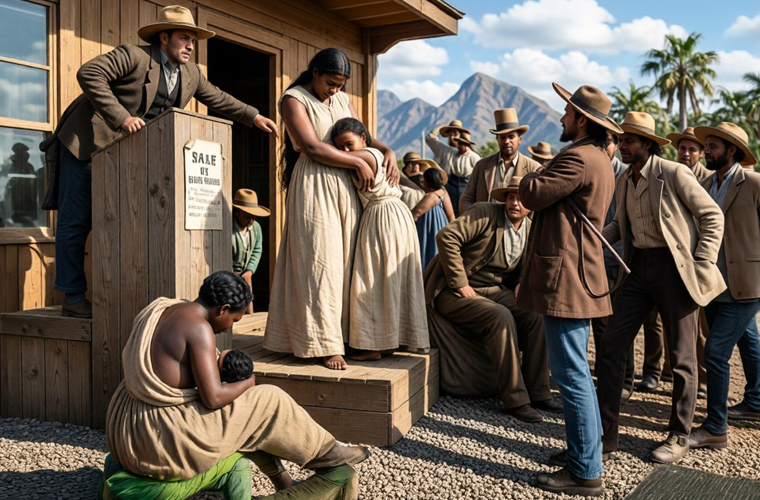
In the years before the Civil War, the first day of the new year was widely known in the African American community as “Hiring Day” or, more poignantly, “Heartbreak Day.” Enslaved people spent the final days of December waiting in anxiety, wondering whether their owners would rent them out to another farm, household, or business for the coming year—or sell them outright. Either outcome frequently meant the forced separation of families.
An Economic Calendar Built on Human Property
The timing was no accident. In the agricultural and commercial cycles of the South, New Year’s Day functioned as a major settlement date. Debts were collected, accounts closed, and contracts renewed. For many white enslavers, renting out enslaved labor provided a reliable source of cash during the quieter months between harvest and the next planting season. Hiring out was common and profitable. Contracts often ran for a full year, from January 1 until the following Christmas. Transactions occurred at auction blocks, on courthouse steps, in town squares, and sometimes privately among neighbors and business associates.
Historian Alexis McCrossen has noted that Hiring Day formed part of a larger economic rhythm in which the new year reset financial obligations. Enslaved people themselves understood the stakes with painful clarity. Those who resisted being hired out risked whipping or imprisonment until they agreed to go and promised not to run away.
Voices from the Record
The terror of the day lives in the testimonies of those who endured it. Lewis Clarke, who escaped slavery, declared in an 1842 account: “Of all days in the year, the slaves dread New Year’s Day the worst of any.” Israel Campbell, in his 1861 memoir, recalled standing on the auctioneer’s block to be hired to the highest bidder for a year. The process, he wrote, “scattered my old associates far and wide, casting each among strangers, and perhaps hard masters.”
Harriet Jacobs provided one of the most detailed and devastating portraits in her autobiography Incidents in the Life of a Slave Girl. In the chapter titled “The Slaves’ New Year’s Day,” she described the scene: from Christmas until New Year’s Eve, families “wait anxiously.” On the appointed day, “the grounds are thronged with men, women, and children, waiting, like criminals to hear their doom pronounced.” Jacobs witnessed a mother lead seven children to the auction block. The woman knew some would be taken; in the end, the trader took them all. When the mother asked where they were going, he refused to say—it depended on where he could obtain the highest price. Her cry, Jacobs never forgot: “Gone! All gone! Why don’t God kill me?”
A former enslaved woman known as Sister Harrison, interviewed in 1937, linked the day to a familiar saying still heard in some circles: “That’s where that sayin’ comes from that what you do on New Year’s Day you’ll be doin’ all the rest of the year.” For those hired out, the statement was literal. William Cooper Nell, the African American abolitionist journalist, captured the collective sorrow by naming the occasion “Heartbreak Day.”
The Shadow Over Christmas
Ironically, the days leading up to January 1 sometimes included limited holiday privileges. Some enslavers granted a few days of rest or a special meal after the crops were laid by. Yet the approaching deadline cast a long shadow. The brief respite only heightened the contrast with what followed. Mothers sat awake on New Year’s Eve watching their children, knowing the morning might tear them away. Elderly or infirm enslaved people were particularly vulnerable, as owners sought to extract whatever remaining value they could by hiring them out for a few dollars.
From Heartbreak to Hope
January 1 also carries later associations with freedom. On that date in 1808, the federal ban on the international slave trade took effect. More powerfully, on January 1, 1863, President Abraham Lincoln’s Emancipation Proclamation went into force, declaring freedom for enslaved people in Confederate-held territory. In African American churches, the tradition of Watch Night services on New Year’s Eve emerged in part from the memory of that proclamation—gatherings of prayer, vigilance, and hope that continue to this day. Communities remember the pain of the past while looking toward justice and equality.
The grim history of Hiring Day does not diminish the modern celebration of the new year. It deepens it. Understanding that January 1 once meant the possible destruction of families reminds us how thoroughly the institution of slavery shaped everyday life—and how thoroughly its legacies still call for remembrance. The dread once felt on New Year’s Day stands as a stark counterpoint to the freedom many now take for granted, and as a summons to honor the resilience of those who endured it.