
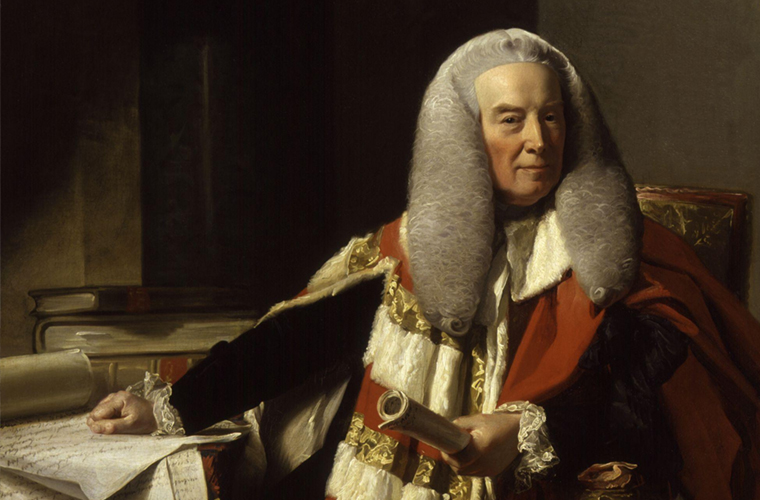
Hearing arguments in the case of the Zong, a slave ship, the Chief Justice of the King’s Bench in London states that a massacre of enslaved African “was the same as if Horses had been thrown overboard” on June 22, 1783. The crew of the Zong had thrown at least 142 captive Africans into the sea, but the question before the court was not who had committed this atrocity but rather whether the lost “cargo” was covered by insurance. The trial laid bare the horror and inhumanity of the Atlantic slave trade and galvanized the nascent movement to abolish it.
The Zong left Accra in August of 1781, carrying 442 enslaved Africans and bound for the colonial plantations of Jamaica. As was common in the slave trade, the Zong was grossly overcrowded, carrying more than double the amount of people a ship its size could safely transport. Running low on water and having lengthened their journey due to a navigation error, the crew voted to jettison some of its human “cargo” in order to ensure the safe delivery of the rest, a loss for which the shipping company could be compensated under British law. Over the course of several days, the crew threw at least 122 Africans overboard. The Zong arrived in Black River, Jamaica with 208 enslaved people on board.
The trial commenced in March of 1783, and the court found that the insurance company was liable for the damages, as enslaved people were the same as any other cargo. Two months later, the Chief Justice overturned the decision due to new evidence, but his statement that the enslaved were equivalent to horses remained the opinion of Britain’s highest court.
Formerly enslaved man and abolitionist Olaudah Equiano told the abolitionist Granville Sharp of the Zong affair, leading Sharp to explore the possibility of having the crew tried for murder. Nothing approaching that level of justice would ever touch those responsible for the massacre, but Sharp and Equiano’s efforts to publicize the story did build momentum for the abolitionist movement. A few months after the Zong trial, the Society of Friends began to campaign against slavery, and the Society for the Abolition of the Slave Trade was founded four years later. Thanks largely to their efforts, in which the story of the Zong featured prominently, Parliament outlawed the Atlantic slave trade in 1807 and abolished slavery throughout the British Empire in 1833.