
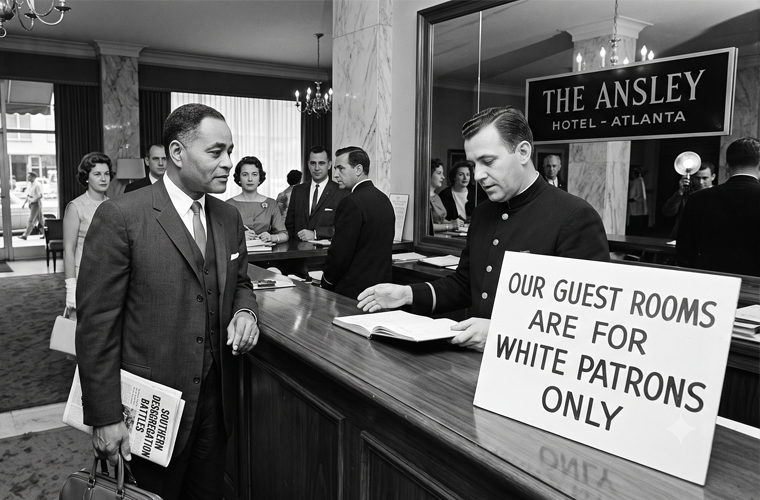
On June 28, 1962, a hotel in Atlanta denied a room to Dr. Ralph Bunche, a distinguished diplomat and Nobel Peace Prize laureate, solely because he was Black.
At the time, Dr. Ralph Johnson Bunche served as Under-Secretary-General of the United Nations for Special Political Affairs. In 1950, he had been awarded the Nobel Peace Prize for his pivotal role in mediating the 1949 armistice agreements between Israel and its Arab neighbors, becoming the first person of African descent to receive the honor. His international stature made the denial of lodging especially stark, highlighting the persistence of racial discrimination in the United States even for prominent figures.
Although Atlanta had officially ended formal municipal mandates requiring segregated public accommodations, the city’s approach left the decision to individual businesses. This policy resulted in widespread refusal of service to Black patrons. Nearly all of Atlanta’s major hotels, including the Dinkler Plaza Hotel where Bunche sought to stay, turned away Black guests during the NAACP’s annual national convention. Many other delegates and attendees faced similar rejections in the days leading up to and during the convention (held July 2–8, 1962). As a result, Bunche and numerous others were compelled to seek alternative lodging in private homes or the dormitories of local historically Black colleges and universities.
In his address to the convention, Dr. Bunche sharply condemned the enduring effects of racism. He denounced the “arbitrarily imposed stigma of color” and declared that “No individual Negro can be free from the degradation of racial discrimination until every Negro is free from it.” He also called upon the press to report comprehensively on all acts of racial exclusion, rather than focusing only on high-profile incidents involving prominent individuals.
In direct response to the hotels’ discriminatory practices, NAACP members and convention participants organized picketing campaigns outside segregated hotels and restaurants throughout the city. Additionally, the NAACP pursued legal action, including a lawsuit against the Atlanta Cabana Motor Hotel after it refused accommodations to Black delegates. Plaintiffs argued that such policies violated the Fourteenth Amendment’s equal protection guarantees. However, a federal judge dismissed the case, ruling that the hotel’s voluntary, privately adopted segregation policy did not constitute state action and was therefore constitutional under prevailing legal interpretations at the time.
This episode formed part of the broader struggle against Jim Crow practices in the South. Voluntary racial segregation in private businesses was not fully prohibited until the passage of the Civil Rights Act of 1964, which included Title II, which banned discrimination in public accommodations such as hotels, motels, and restaurants. The law faced intense and often violent opposition from many white Georgians and other Southern segregationists.
Its constitutionality was quickly tested and affirmed in the landmark Supreme Court case Heart of Atlanta Motel, Inc. v. United States (1964). The owner of the Heart of Atlanta Motel, a large establishment that had long refused Black guests, sued the federal government, arguing that Congress had exceeded its authority under the Commerce Clause. In a unanimous decision, the Supreme Court upheld the Act, ruling that racial discrimination in public accommodations engaged in interstate commerce fell within Congress’s regulatory power. This decision helped dismantle legal barriers to segregation in hotels and other public facilities nationwide.
The 1962 Atlanta incident involving Dr. Bunche served as a powerful illustration of the everyday indignities and systemic barriers faced by African Americans, even as the civil rights movement gained national momentum. It underscored the gap between America’s ideals of equality and the realities of racial exclusion, fueling activism that ultimately contributed to transformative federal legislation.