
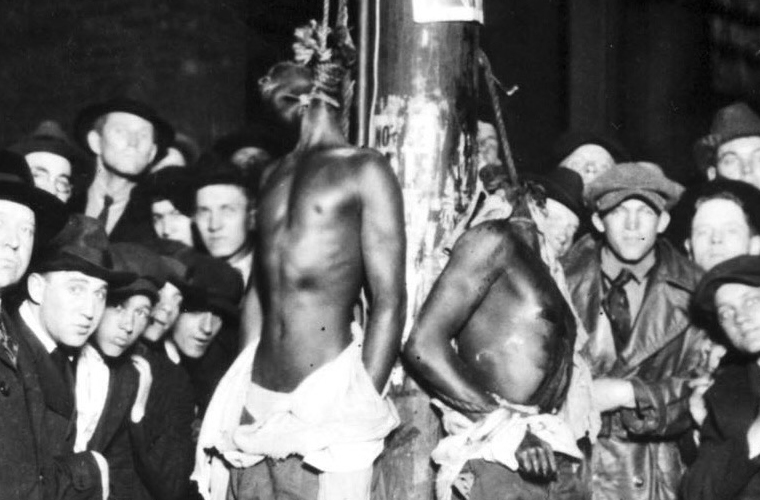
Lynching in the United States represents one of the darkest chapters in the nation’s racial history—a form of extrajudicial violence where mobs publicly executed individuals without due process, often with grotesque brutality, to enforce white supremacy and terrorize marginalized communities. Defined by the NAACP as “the public killing of an individual who has not received any due process,” lynchings were not isolated acts of rage but systematic tools of social control, economic suppression, and political intimidation. Primarily targeting African Americans in the South, they also victimized Mexicans, Native Americans, Chinese immigrants, Italians, and even some white individuals who defied racial hierarchies.
From their origins in the antebellum South in the 1830s to their decline amid the Civil Rights Movement, lynchings claimed thousands of lives, leaving an indelible scar on American society. Historians estimate between 4,000 and 5,000 documented cases from 1882 to 1968, though underreporting suggests the true toll is higher. This article traces the evolution of lynching, its peak as a weapon of racial terror, the courageous resistance against it, and its enduring legacy in modern America.
Origins: From Vigilantism to Racial Terror
The roots of American lynching lie in colonial-era mob justice, imported from British traditions during turbulent times like the Wars of the Three Kingdoms in the 17th century. In the U.S., it manifested as frontier vigilantism in the West and South, where distrust of distant authorities led communities to take “justice” into their own hands. Early examples included the lynching of Mexicans in California during the Gold Rush (1848–1860), with at least 163 documented cases, often tied to land disputes and xenophobia.


The practice crystallized in the pre-Civil War South in the 1830s, amid growing racial tensions over slavery. The first widely recorded lynching occurred on July 28, 1835, in St. Louis, Missouri, when a free Black sailor named Francis McIntosh was chained to a tree and burned alive by a white mob of over 1,000 after killing a deputy in self-defense. This event, publicized in newspapers, set a precedent for spectacle violence.
Post-Civil War, during Reconstruction (1865–1877), lynchings exploded as white Southerners, through groups like the Ku Klux Klan, sought to reassert control over newly freed African Americans. The 13th, 14th, and 15th Amendments granted Black citizens rights, but federal troops’ withdrawal in 1877 unleashed a wave of violence. Lynchings targeted Black voters, landowners, and educators, framing them as threats to the “Southern way of life.” By the 1880s, as Jim Crow laws formalized segregation, lynching became a ritual of white dominance, often justified by fabricated accusations of rape or murder to stoke fears of Black sexuality and criminality.
The Peak Era: A Reign of Terror (1880s–1930s)
Lynching reached its zenith between the 1880s and 1930s, coinciding with the nadir of American race relations. Economic upheaval in the cotton-dependent South—marked by sharecropping debt, falling prices, and competition from Black farmers—fueled resentment. Politically, white Democrats used lynchings to disenfranchise Black voters and suppress Republican alliances. Socially, these acts were communal events: mobs advertised them in advance, families attended with picnics, and photographs were sold as postcards to commemorate the horror.
Statistics and Patterns
Comprehensive data reveals the scale of this terror. The Tuskegee Institute, beginning in 1882, tallied 4,743 lynchings through 1968, with 3,446 victims being Black (73%) and 1,297 white. The Equal Justice Initiative (EJI) provides a more focused count of “racial terror lynchings”—acts aimed at subjugating Black communities—documenting 4,084 in 12 Southern states from 1877 to 1950, plus 300 elsewhere, totaling over 4,400. This exceeds prior estimates by at least 800, highlighting chronic undercounting due to local complicity and media bias.
| State | EJI Racial Terror Lynchings (1877–1950) | Tuskegee Total Lynchings (1882–1968) |
|---|---|---|
| Mississippi | 654 | 581 |
| Georgia | 531 | 531 |
| Texas | 493 | 493 |
| Louisiana | 391 | 391 |
| Alabama | 361 | 299 |
| Arkansas | 335 | 289 |
| Florida | 257 | 257 |
| Tennessee | 236 | 214 |
| South Carolina | 185 | 158 |
| Kentucky | 182 | 205 |
| North Carolina | 123 | 86 |
| Virginia | 87 | 83 |
| Total (South) | 4,084 | 3,687 |
.
Accusations were pretextual: 38% for murder, 16% for rape (often baseless stereotypes), and 24% with no alleged offense, such as “insulting a white person” or economic success. Rates were highest in Black Belt counties with high illiteracy, poverty, and Democratic control. Regionally, the South accounted for 90% of cases, but the West saw anti-Mexican lynchings (597 from 1848–1928), and the Midwest had incidents like the 1920 Duluth lynching of three Black circus workers.
Notable Events and Spectacles
Lynchings were a theater of cruelty. In 1893, Henry Smith, a Black teenager in Paris, Texas, was tortured on a scaffold before 10,000 spectators, his screams broadcast via megaphone. The 1916 Waco Horror saw 17-year-old Jesse Washington dragged from court, castrated, and burned for over two hours, with professional photographers capturing the crowd’s glee—images later decried by NAACP’s W.E.B. Du Bois in The Crisis.
Mass atrocities defined the era. The 1919 Elaine Massacre in Arkansas killed 100–237 Black sharecroppers organizing for better wages, framed as an “uprising.” The 1921 Tulsa Race Massacre razed the prosperous Black Greenwood District, leaving up to 300 dead amid aerial bombings and lynchings. In 1918, pregnant Mary Turner was lynched in Georgia for protesting her husband’s murder: hung upside down, burned alive, and her fetus ripped out and stomped.
These events peaked in 1892 (231 lynchings) and during the 1919 “Red Summer” riots in 25 cities. The revived Ku Klux Klan (1915) amplified them, targeting 11 Black WWI veterans in 1919 alone.
The Purpose: Enforcing White Supremacy
Beyond punishment, lynching was a multifaceted instrument of control. Economically, it crushed Black prosperity: successful farmers or businessmen were killed to eliminate competition, as Ida B. Wells documented in Southern Horrors (1892), arguing that lynchings masked envy of Black wealth. Socially, it policed racial boundaries, with rape accusations (only 28% involving white women, per Wells) enforcing taboos on interracial relations and upholding the myth of the “Black brute.”
Politically, it quashed Black advancement during Reconstruction and Jim Crow. Public spectacles—attended by thousands, including children—normalized violence, as postcards circulated to relive the power dynamic. As PBS notes, lynching “served the broad social purpose of maintaining white supremacy in the economic, social, and political organs of southern life.”
Decline: Resistance and Reckoning (1930s–1960s)
Lynchings waned after the 1920s, dropping below 30 annually by 1929 and to single digits in the 1930s, thanks to multifaceted resistance. The Great Migration (1910–1970) saw 6 million Black Southerners flee North, reducing targets and exposing atrocities via urban media.
Pioneers like Ida B. Wells launched crusades: her 1892 pamphlets and 1893 British lectures shamed the U.S. globally, coining “Ida B. Wells-Barnett” for her fervor. The NAACP, founded in 1909, amplified this: Walter White infiltrated 41 lynchings (1918–1927), publishing exposés like The Crisis’s “The Waco Horror.” They flew a “A Man Was Lynched Yesterday” flag daily from 1936 to 1938, swaying public opinion and costing Southern economies via boycotts.
Legislative pushes included the Dyer Bill (1922, passed House but filibustered) and Costigan-Wagner (1934). Women’s groups, like Jessie Daniel Ames’ Association of Southern Women for the Prevention of Lynching (1930), reframed it as un-Christian. WWII’s hypocrisy—fighting fascism abroad—spurred President Truman’s 1946 civil rights committee.
The 1955 lynching of 14-year-old Emmett Till in Mississippi, for whistling at a white woman, proved pivotal. His mother’s open-casket funeral, Jet magazine photos of his mutilated body, and the acquittal of the killers ignited the Civil Rights Movement. No lynchings were recorded in 1952, the last major one in 1946 (Moore’s Ford, Georgia). The Tuskegee Institute ended tracking after Till.
Modern Legacy: Memorials, Recognition, and Reckoning
Though rare post-1960s, lynching’s shadow persists in hate crimes and symbols. The 1981 murder of Michael Donald by the KKK bankrupted the group via civil suits; James Byrd Jr.’s 1998 dragging death in Texas led to executions and hate crime laws. Recent cases like Ahmaud Arbery (2020) evoke “modern lynchings.”
Recognition accelerated with EJI’s 2015 report and 2018 National Memorial for Peace and Justice in Montgomery, Alabama—the first site dedicated to lynching victims. It’s 800 steel monuments, suspended like bodies, listing 4,400+ names; a parallel Legacy Museum traces slavery to mass incarceration. EJI’s Community Remembrance Project has installed markers at 200+ sites, fostering truth-telling.
The U.S. Senate apologized in 2005 for blocking anti-lynching bills; the Emmett Till Antilynching Act (2022) finally made it a federal hate crime after 200 failures. Cultural works—Billie Holiday’s “Strange Fruit” (1939), films like Mississippi Burning (1988), and exhibits like Brooklyn Museum’s The Legacy of Lynching (2017)—keep memory alive. Yet challenges remain: nooses on statues (2017), disputed “suicide” lynchings (2021, Mississippi claims), and intergenerational trauma.
| Milestone | Date | Description |
|---|---|---|
| National Memorial Opens | 2018 | National Memorial Opens |
| Senate Apology | 2005 | For failing anti-lynching laws. |
| Emmett Till Act | 2022 | Federal hate crime status. |
| Legacy Museum | 2018 | Traces racial injustice history. |
.
Lynching was not mere vigilantism but a cornerstone of America’s racial caste system, claiming lives to preserve inequality. Its history—from McIntosh’s pyre to Till’s casket—exposes the fragility of justice amid unchecked power. Today, memorials and laws signal progress, but as EJI warns, unaddressed terror begets modern disparities. Confronting this legacy demands not just remembrance but reparative action: truth commissions, site preservation, and dismantling systemic racism. Only then can the nation bury the noose and build equity from its ashes.